U.S. futures and global shares fell on Monday as investors expressed concerns over President Donald Trump’s nomination of Kevin Warsh to lead the Federal Reserve. The market reactions were compounded by fears of a potential bubble in the rapidly expanding artificial intelligence sector.
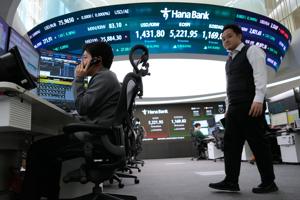
The South Korean stock market reflected this unease, with trading on the Kospi briefly suspended after it lost 5.3%, closing at 4,949.67. Tech giant Samsung Electronics saw a significant decline of 6.3%, while chip manufacturer SK Hynix dropped 8.7%. The Kospi had previously been on a record-setting trajectory, buoyed by major partnerships with companies like Nvidia and OpenAI.
In early European trading, indices mirrored the downward trend. Germany’s DAX dipped slightly by 0.1% to 24,528.57, while France’s CAC 40 fell 0.2% to 8,108.56. The UK’s FTSE 100 declined 0.3%, closing at 10,195.88. Futures for the S&P 500 and Dow Jones Industrial Average also dropped, with the former down 0.7% and the latter 0.4%.
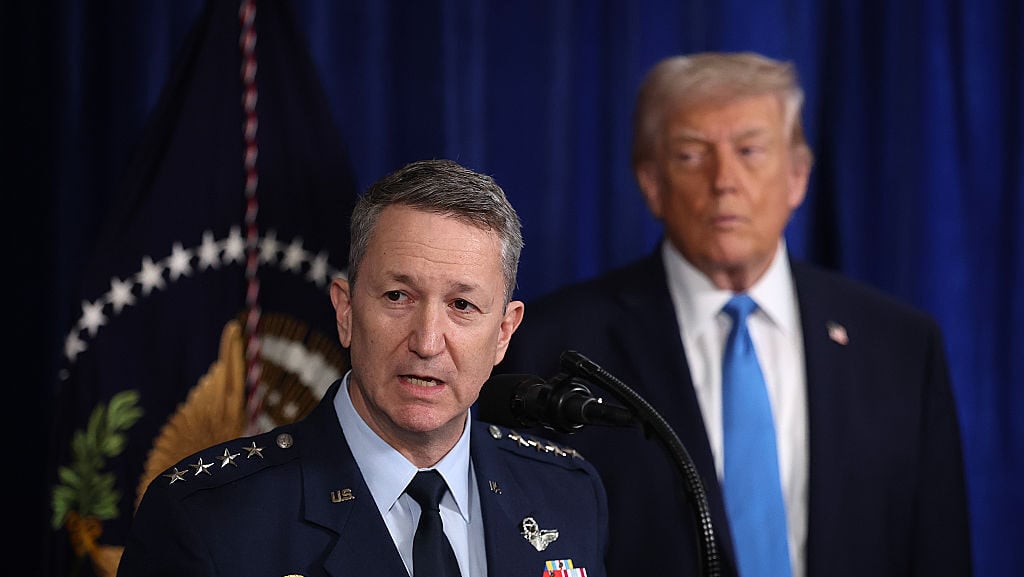
Investor apprehensions stem from Warsh’s potential influence on interest rates. His nomination is pending Senate approval, but market players fear that Trump’s administration may compromise the Fed’s independence. Trump’s advocacy for aggressive interest rate cuts has raised doubts about how the Federal Reserve may approach monetary policy moving forward. As a result, the price of gold has surged significantly, alongside a weakening of the U.S. dollar over the past year. Commenting on the situation, Stephen Innes of SPI Asset Management remarked, “People do not get handed the keys to the most powerful central bank on earth because they plan to drive in the opposite direction of the people who gave them the keys.”
The price of gold experienced a decline of 1.9% early Monday, following a dramatic 11.4% drop on Friday, when it was trading near $5,600. Silver also faced fluctuations, bouncing back slightly with a 0.2% gain, though it had plummeted 31.4% on Friday. Oil prices were similarly affected, with U.S. benchmark crude losing $3.46 to settle at $61.75 per barrel, while Brent crude fell $3.47 to $65.85.
Trump addressed the media over the weekend, urging Iran to negotiate a “satisfactory” agreement to prevent the country from acquiring nuclear weapons. His comments alleviated some concerns regarding potential disruptions to oil supplies, which had been a contributing factor to rising prices in recent weeks.
Asian markets also faced downturns, with Japan’s Nikkei 225 losing 1.3% to close at 52,655.18. Hong Kong’s Hang Seng index fell by 2.2%, ending at 26,775.57, and the Shanghai Composite declined 2.5% to 4,015.75. In Australia, the S&P/ASX 200 slipped 1% to 8,778.60, while Taiwan’s Taiex decreased by 1.4%.
The Federal Reserve’s leadership significantly influences both the economy and global markets by determining interest rate movements. This, in turn, affects investment prices as the Fed aims to maintain a healthy job market without triggering high inflation. Recently released data indicated higher-than-expected wholesale inflation in the U.S. last month, raising questions about the Fed’s approach to interest rates. Maintaining a steady rate may be necessary to address inflation, which is targeted at 2% but may require unpopular decisions to stabilize the economy.
In other currency markets, the U.S. dollar fell to 154.88 Japanese yen from 154.94 yen, and the euro remained stable at $1.1853. As global market participants grapple with these developments, the implications of Warsh’s nomination and the broader economic landscape continue to unfold.