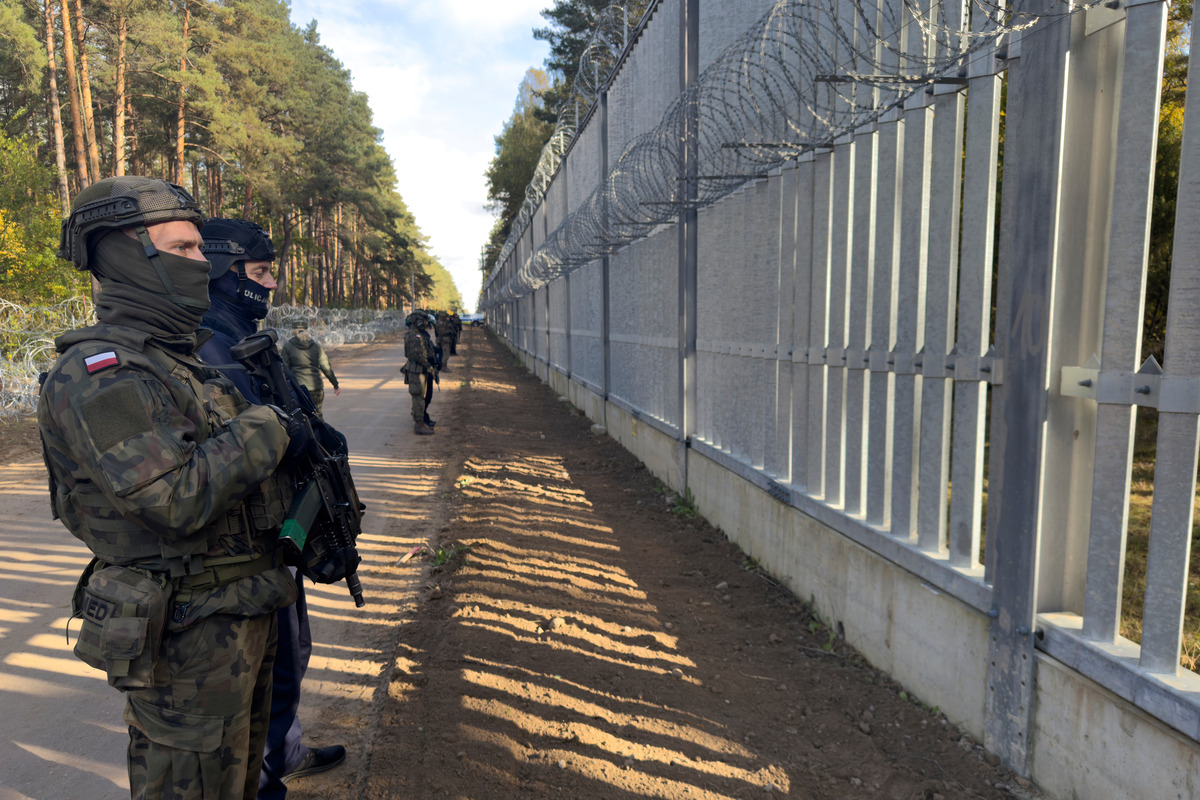
Poland’s military reported that “balloon-like objects” entered its airspace from Belarus overnight, marking a significant incident in what has been described as a “hybrid” action against a NATO member state. This incursion, noted on January 17, 2024, raises concerns as it fits into a pattern of increasing hybrid warfare tactics employed by neighboring Belarus, a close ally of Russia.
Hybrid Warfare Tactics on the Rise
Polish authorities have observed several waves of balloons transporting illegal cigarettes from Belarus over the past month. These activities are seen as part of broader hybrid warfare strategies, which include tactics that do not involve direct military confrontation, such as cyberattacks and disinformation campaigns. The term “hybrid warfare” reflects the complex nature of modern conflicts, where actions are designed to provoke instability without overt military engagement.
Poland’s Operational Command confirmed that military radars “continuously” monitored the objects entering the airspace. In response to this incursion, restrictions on civilian activities were implemented over the Podlaskie region, located in northeastern Poland near the Belarus border. The Polish military emphasized that such incidents are consistent with the hybrid threats it faces along its eastern flank.
Regional Implications and Security Measures
Poland has previously summoned the Belarusian chargé d’affaires following earlier breaches of its airspace attributed to similar balloon incursions. Reports indicate that Polish national police had identified a surge in these smuggling operations, particularly balloons filled with illegal cigarettes, as early as December 26, 2023. The police stated that “the current situation is an element of broader hybrid actions,” suggesting that these operations aim not only to test Poland’s defenses but also to incite social unrest.
In October 2025, Lithuania faced a similar situation when balloons carrying contraband prompted officials to temporarily close the main airport in Vilnius. This highlights the growing concern among Baltic states and NATO members about the potential for hybrid warfare tactics evolving into more aggressive actions.
NATO has responded by ramping up its air presence along the eastern flank of the alliance, particularly after a significant incident involving Russian drones that crossed into Poland on September 10, 2023. Polish Prime Minister Donald Tusk described that event as “the closest we have been to open conflict since World War II,” underscoring the heightened tensions in the region.
The Polish military remains vigilant. “The situation is being monitored on an ongoing basis, and the forces and resources of the Armed Forces of the Republic of Poland remain ready to carry out tasks related to the protection of Polish airspace,” a military spokesperson reiterated on Thursday.
As tensions continue to rise in Eastern Europe, the actions of Belarus and its alignment with Russia prompt ongoing discussions about security measures and the nature of hybrid warfare strategies. The situation underscores the need for NATO members to remain prepared for unconventional threats that could destabilize the region.