The U.S. Air Force is launching significant changes to its Basic Military Training (BMT) by establishing two advanced training ranges designed to create a more realistic environment for new recruits. This initiative, known as BMT Next, aims to improve the training experience and align it more closely with the Air Force’s mission of defending, operating, and generating airpower.
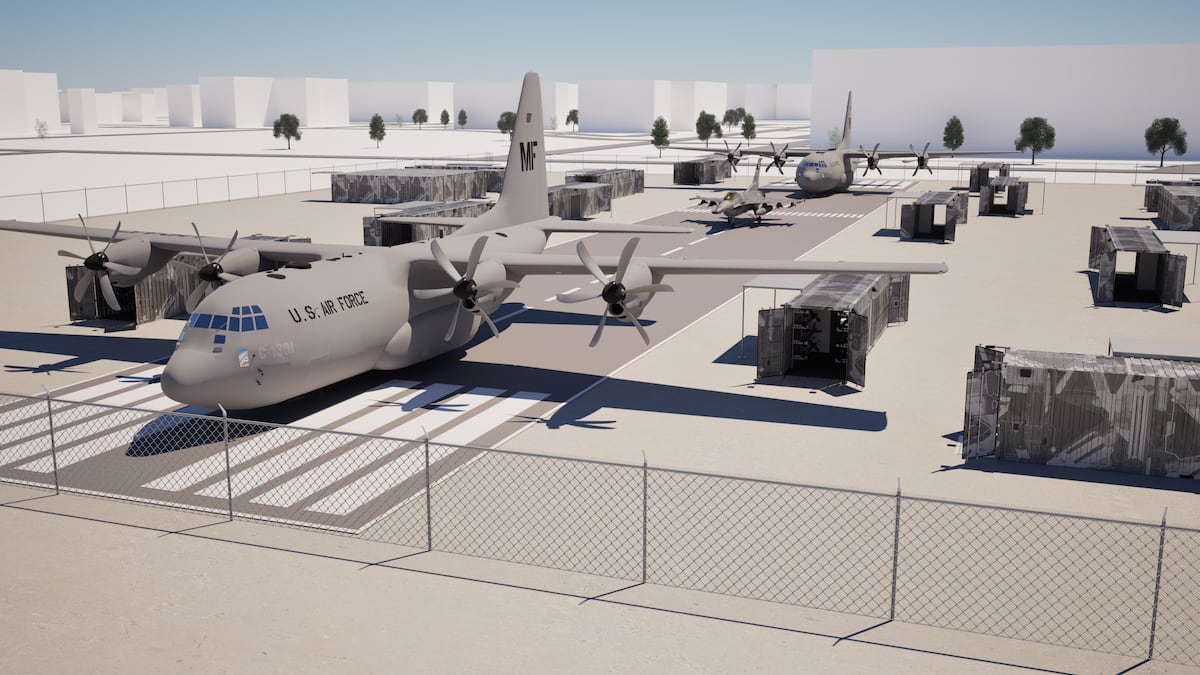
According to Maj. Gen. Wolfe Davidson, Commander of the Second Air Force, the new training facilities will feature mock runways and real aircraft, facilitating a hands-on learning experience for trainees. “By progressing training from the drill pad to a simulated airfield, we give trainees immediate, hands-on context for their role in generating airpower,” Davidson stated.
Transforming Basic Military Training
The transformation of BMT is an ongoing process, with previous updates such as BMT 2.0 introduced in October 2022, which emphasized physical fitness. The latest phase, BMT 3.0, will incorporate the new training ranges, which are set to enhance the overall curriculum. The initiative is part of a broader strategy to instill an “Airmindedness” attitude in every airman, promoting teamwork and a better understanding of their roles within the Air Force.
These training ranges will not focus on specialized technical tasks, such as aircraft maintenance, but will instead provide a foundational understanding of airfield operations. Trainees will learn how their actions contribute to the Air Force’s mission in various operational scenarios, thus preparing them for real-world challenges.
Details on the Training Ranges
The first training range will be located at Joint Base San Antonio-Lackland, utilizing an existing physical training pad to minimize disruptions to training schedules. This range will initially cover an area slightly larger than a football field, with plans to expand it significantly in the future. Davidson highlighted the partnership with the 502d Air Base Wing, which has allowed for an expedited timeline for the project.
The second range, named the Forward Air Base Training Range, will be situated at the Pacer Forge site, which is designed to simulate a forward-deployed environment. This initiative is expected to foster a comprehensive training atmosphere that mirrors real-world operations.
The training strategy will follow a “Crawl, Walk, Run” progression model. Trainees will first learn foundational lessons before moving to initial training on the new ranges, culminating in a multi-day validation exercise at Pacer Forge, where they will apply their skills under simulated stress.
By April 2026, the initial training device at the Air Base Training Range will be operational, with plans for eight containerized training devices to be ready by fall 2026. The expeditionary airfield at the Pacer Forge site is expected to be operational by October 2026, while the final, permanent Air Base Training Range is projected to be completed by 2031.
The total investment for these initiatives is approximately $30 million, allocated across the 2025 and 2026 fiscal years, with long-term costs expected to reach between $50 million and $75 million as plans for permanence are developed.
Davidson emphasized the importance of these changes, stating, “This entire effort is a direct investment in the readiness and lethality of our force. We are creating the foundational ‘Airmindedness’ and warrior ethos in our newest Airmen to ensure we remain the world’s most capable Air Force.” The inclusion of real, historic aircraft, such as the F-16 Fighting Falcon and C-130 Hercules, will provide trainees with authentic, hands-on experience at the ranges.