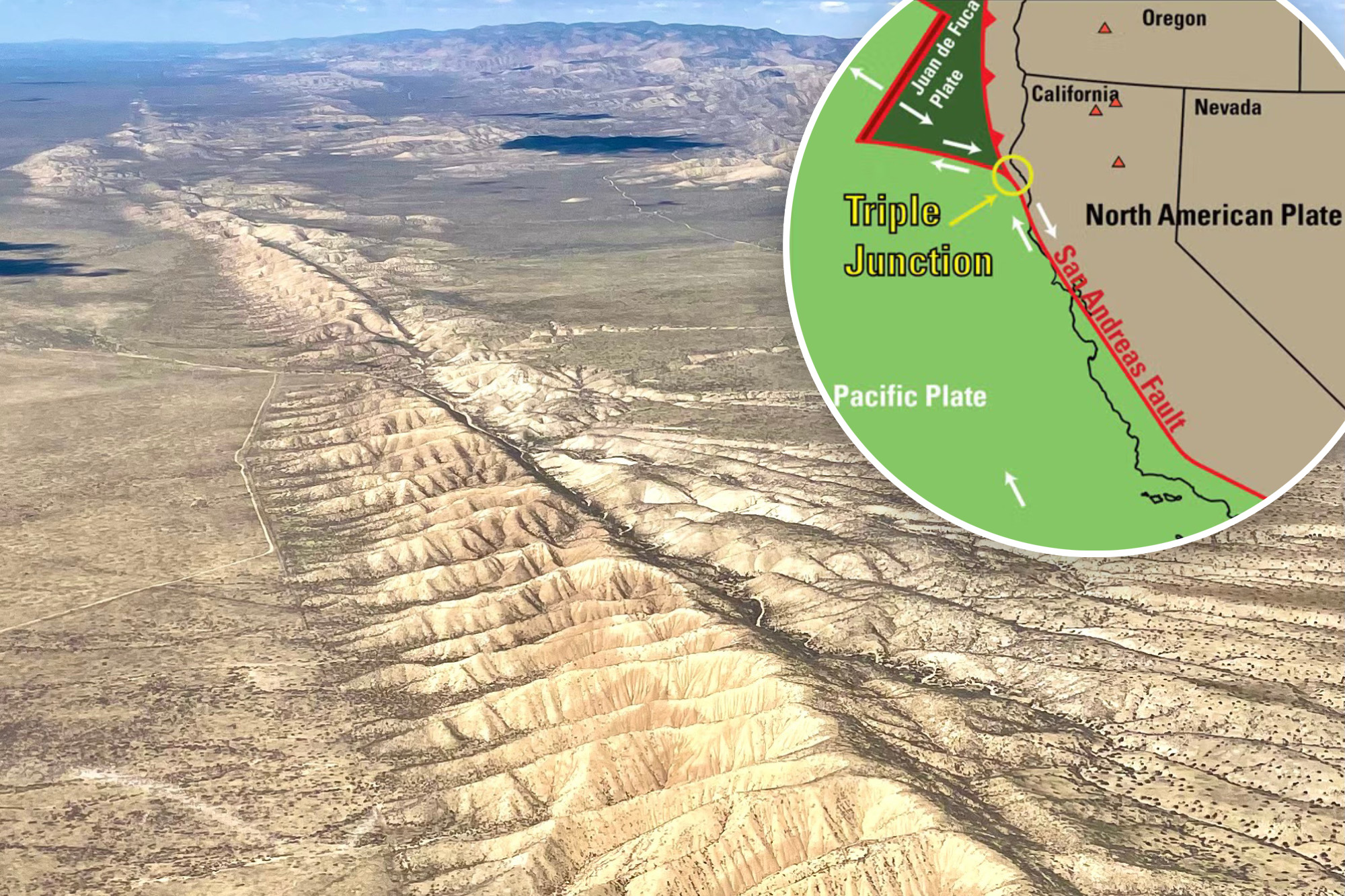
BREAKING NEWS: Scientists have just revealed a shocking discovery that could drastically increase the earthquake risk for millions along California’s north coast. New research published in the journal “Science” confirms the presence of previously hidden fault lines at the Mendocino Triple Junction, a seismic hotspot where three tectonic plates converge.
This urgent finding raises alarms about the potential for catastrophic magnitude 8 earthquakes, following the devastating pattern set by the magnitude 7.2 earthquake that struck Humboldt County in 1992. “If we don’t understand the underlying tectonic processes, it’s hard to predict the seismic hazard,” warns Amanda Thomas, professor of earth and planetary sciences at UC Davis.
The Mendocino Triple Junction is already recognized for its high seismic activity, but this study reveals it is actually composed of five moving tectonic plates, two of which remain concealed beneath the surface. Lead author David Shelly from the USGS Geologic Hazards Center in Golden, Colorado, likens our current understanding to “just the tip of the iceberg,” emphasizing the urgent need for further investigation.
Using a network of seismometers, researchers tracked “low-frequency” earthquakes occurring deep underground, where tectonic plates grind against each other. These tremors, too small to detect at the surface, indicate a complex and potentially dangerous geological environment. The study also confirms the existence of the Pioneer fragment, a remnant of the ancient Farallon plate that has been dragged beneath the North American plate—a process known as subduction.
The implications of this discovery are staggering. As Kathryn Materna, a tectonic geodesist from the University of Colorado Boulder, notes, “It had been assumed that faults follow the leading edge of the subducting slab, but this example deviates from that.” The new analysis shows that the subducting surface is not as deep as previously believed, which may explain the shallow origin of the 1992 earthquake.
This revelation is critical for emergency preparedness and risk assessment in a region where millions live under the constant threat of seismic activity. The urgency cannot be overstated: residents and officials alike must now reassess the risks posed by these hidden geological features.
As scientists continue to analyze the data, attention turns to what measures can be implemented to protect communities from potential future quakes. The research highlights the importance of understanding the full scope of tectonic interactions at the Mendocino Triple Junction and reinforces the need for a proactive approach to earthquake readiness.
Stay tuned for updates on this developing story as more information becomes available. The safety of millions may depend on it.