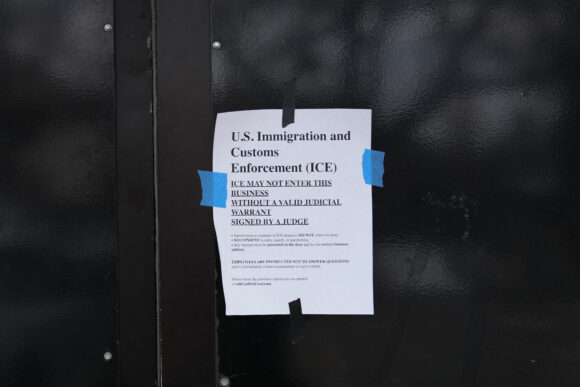
Businesses across the United States are increasingly caught in the crosshairs of the current administration’s immigration enforcement policies. From small family-run cafes to large retail chains, companies are facing both public pressure to address aggressive immigration enforcement and the direct impact of federal raids at their locations. Minneapolis has become a focal point, with the Department of Homeland Security indicating it is conducting its largest operation to date, prompting many businesses to temporarily close their doors or halt new reservations.
The situation escalated on March 15, 2023, when U.S. Border Patrol agents shot and killed Alex Pretti in Minneapolis. In response, over 60 chief executives from Minnesota-based companies, including major players such as Target, Best Buy, and UnitedHealth, signed an open letter urging for “immediate de-escalation of tensions” and collaboration among state, local, and federal officials to find effective solutions to the crisis. Notably, the letter refrained from directly mentioning immigration enforcement or addressing specific arrests occurring at businesses.
In recent weeks, videos circulated showing federal agents detaining two Target employees in Minneapolis. Nationwide, U.S. Immigration and Customs Enforcement (ICE) has reportedly targeted day laborers in Home Depot parking lots and other public areas. A significant raid last year at a Hyundai plant in Georgia resulted in the detention of 475 individuals, highlighting the scope of ICE’s operations.
Understanding ICE’s Authority and Business Impact
ICE’s authority allows agents to enter public areas of businesses, such as dining sections, parking lots, and shopping aisles, without a warrant. Jessie Hahn, senior counsel for labor and employment policy at the National Immigration Law Center, explained, “The general public can go into a store for purposes of shopping, right? And so can law enforcement agents.” This means that immigration officials can question individuals, collect information, and make arrests in these public areas.
However, entering spaces with a reasonable expectation of privacy, such as back offices or kitchens, generally requires a judicial warrant signed by a judge. Recent internal memos from ICE suggest that administrative warrants, which are issued by immigration officers, may suffice for certain actions, raising concerns among immigration rights advocates regarding compliance with established legal standards.
The most straightforward method for ICE to access private areas in businesses is through the consent of the employer. Employers may also feel pressured to comply if ICE cites “exigent circumstances,” which could include situations where agents are in “hot pursuit” of a suspect.
Beyond public raids, ICE has ramped up workplace audits, particularly I-9 audits, which verify employees’ authorization to work in the U.S. Since the beginning of President Trump’s second term, reports indicate an increase in ICE’s physical presence at businesses to conduct these audits. David Jones, a regional managing partner at Fisher Phillips, described the approach of ICE agents as aggressive, often appearing in tactical gear even for routine inspections.
Employers are given three days to respond to an I-9 audit, but the aggressive demeanor of ICE agents can create urgency for businesses to react more quickly than necessary.
Business Rights and Community Response
When ICE agents arrive without a warrant, businesses have the right to ask them to leave and may refuse service based on their company policies, especially if they cite safety concerns. Nonetheless, compliance from immigration officials is not guaranteed, particularly in public spaces. John Medeiros, who leads the corporate immigration practice at Minneapolis-based law firm Nilan Johnson Lewis, commented on the challenges businesses face, stating, “What we’re seeing is they still conduct the activity.”
In cities experiencing heightened immigration enforcement, including Minneapolis, Chicago, and Los Angeles, some businesses have begun to implement protocols for dealing with ICE, such as putting up signs to delineate private spaces. Vanessa Matsis-McCready, vice president of HR at Engage PEO, noted a growing interest in I-9 self-audits and emergency preparedness among businesses nationwide.
The public’s reaction to ICE’s aggressive tactics at businesses has prompted a wave of protests, with some directed at companies perceived as not taking a strong enough stand against immigration enforcement. Smaller business owners have vocalized concerns about the ramifications of ICE’s actions on their workforce and clientele.
In contrast, larger corporations like Target have maintained a low profile regarding public commentary on immigration enforcement. While Target’s incoming CEO, Michael Fiddelke, addressed recent violence in a message to the company’s workforce, he did not specifically mention immigration actions. Fiddelke’s support for the Minnesota Chamber of Commerce’s letter advocating for de-escalation garnered approval from the Business Roundtable, which represents over 200 major corporations.
Activists have called on companies such as Home Depot and Hilton to adopt stronger public stances against ICE’s operations, particularly given the visibility of raids in their locations. However, both companies have refrained from commenting on these requests, with Home Depot previously denying involvement in immigration enforcement.
Worker groups have taken a more pronounced stance, with leaders like Ted Pappageorge from the Culinary Union in Las Vegas expressing outrage over what they describe as a “widening pattern of unlawful ICE behavior.” United Auto Workers have also voiced their solidarity with Minneapolis residents opposing federal actions against working-class communities.
As the debate around immigration enforcement continues, Hahn from the National Immigration Law Center emphasized the broader economic implications of these aggressive actions, asserting, “We know that the raids are contributing to things like labor shortages and reduced foot traffic.”
The evolving landscape of immigration enforcement poses significant challenges for businesses, forcing them to navigate complex legal frameworks while responding to public sentiment and community pressure.