Every day, millions of vehicles traverse bridges in Dallas that have been flagged as structurally deficient. These spans, many of which are aging interstate structures, are critical for both commuter and freight traffic. According to the Federal Highway Administration’s National Bridge Inventory, at least one vital component of these bridges is in poor condition, raising concerns about safety and future maintenance.
Data from the American Road and Transportation Builders Association (ARTBA) reveals that Texas has approximately 680 bridges classified as structurally deficient, alongside 10,621 bridges identified as needing repairs, as of June 2025. The estimated cost to address these issues statewide exceeds $7.1 billion, representing around 1.1% of all bridge deck area in Texas.
High-Traffic Deficient Bridges in Dallas
Several heavily traveled bridges in Dallas are among those identified as deficient. The I-35E over Oak Lawn Avenue and Turtle Creek, for example, accommodates around 194,000 vehicles daily. Similarly, the I-45 northbound connector over I-30 sees comparable traffic levels. Long stretches of I-635 and I-30 also support tens of thousands of trips each day. This high traffic volume contributes to Dallas County’s frequent appearance on lists of bridges requiring significant repairs, according to local reporting and federal data.
Current Projects and Future Plans
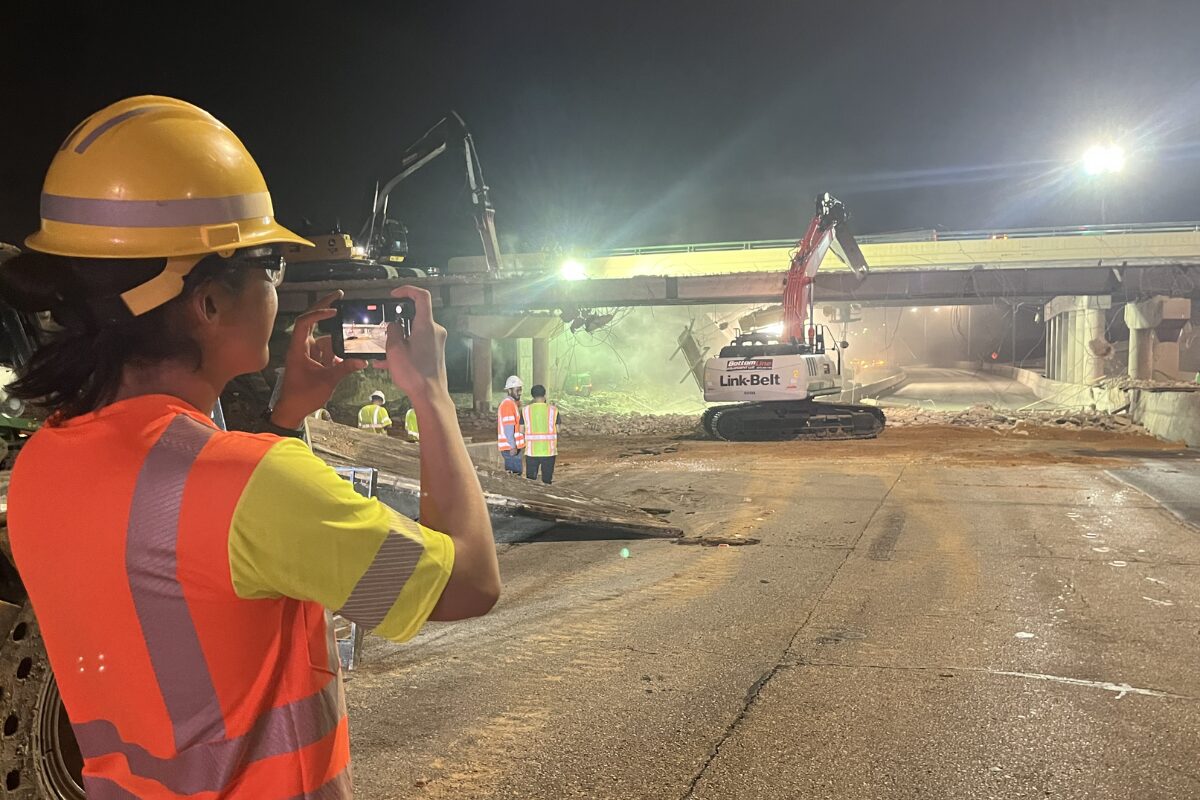
The Texas Department of Transportation (TxDOT) is already active in addressing some of these concerns, notably through the replacement of the US-175 bridge at Lake June Road. This $26.8 million project involves the removal of the old bridge, with completion expected in spring 2026. Additionally, the city of Dallas has approved an $8.79 million contract for the Trinity Strand Hi-Line Span pedestrian bridge to enhance connectivity within the Design District, slated for completion in March 2026.
In Highland Park, just north of downtown Dallas, a capital project is set to begin in early 2026. This initiative involves the Wycliffe Avenue dam and bridge, along with related flood-mitigation work, illustrating a regional commitment to tackling aging infrastructure before it necessitates disruptive closures.
Understanding “Structurally Deficient”
A bridge designated as “structurally deficient” signifies that at least one principal element, such as the deck, superstructure, or substructure, is rated as being in poor condition. Federal guidelines mandate that most highway bridges undergo routine safety inspections every 24 months. While this designation elevates a bridge on the repair priority list, it does not automatically lead to its closure.
Nevertheless, authorities can impose load limits or shut down a bridge if inspections reveal immediate hazards. Thus, being labeled as structurally deficient serves as a critical warning, rather than an indication that failure is imminent.
Funding Challenges and Coordination Efforts
The ARTBA has highlighted that the Infrastructure Investment and Jobs Act allocated approximately $576.8 million in bridge formula funds for Texas throughout the program’s duration. As of June 2025, about $461.4 million was available, with $300.7 million already committed to 301 projects. Despite this funding, it represents only a fraction of the over $7.1 billion backlog, underscoring the need for continued financial and logistical collaboration among state, county, and local entities.
As Dallas continues to grapple with its aging bridge infrastructure, the urgency for additional funding and coordinated efforts remains clear. Addressing these critical repairs is essential not only for maintaining the flow of daily traffic but also for ensuring the safety of all who use these vital roadways.