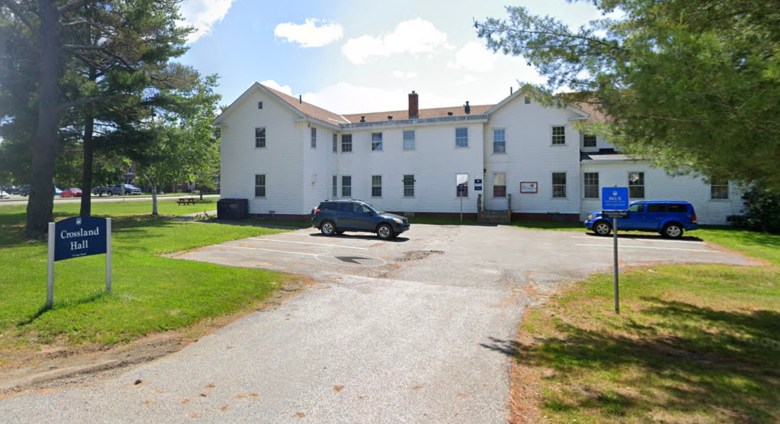
The University of Maine is set to proceed with plans to demolish its oldest building, Crossland Hall, following a decision made by the UMaine System Board of Trustees. This decision comes despite ongoing efforts by students, alumni, and community members to preserve the structure, which has stood since 1833. The demolition is part of a broader infrastructure improvement initiative on the university’s north campus.
Crossland Hall currently houses the Franco-American Centre and the Center for Undergraduate Research. University officials claim that the building has accumulated substantial deferred maintenance issues. They argue that, with plans for a new multipurpose sports facility nearby, replacing Crossland Hall with additional parking spaces is a practical and financially sound decision.
Community Opposition and Historical Significance
Community backlash has been significant, with students leading the charge against the demolition. A petition opposing the plans has garnered over 1,500 signatures, and in December, the university’s student government passed a resolution requesting a delay to reconsider the demolition.
During a public comment period on Monday, speakers voiced their concerns about the decision, emphasizing the building’s historical significance and its role as a community gathering space. They expressed disappointment that parking spaces would replace a site rich in cultural heritage.
“No one spoke in support of the demolition,” remarked Allen Grover, a third-year student and Franco-American. He lamented the erasure of history, stating, “Erasing the past to make way for the future is a shame at best, and a travesty at worst.”
Critics of the demolition span the political spectrum, including Troy Jackson, a Democratic gubernatorial candidate, and Paul LePage, a Republican former governor. LePage’s statement, read to trustees by former UMaine professor Tony Brinkley, highlighted concerns about the displacement of cultural significance to less accessible locations.
Trustees’ Justification and Future Plans
Despite the community’s objections, trustees maintain that Crossland Hall has outlived its usefulness. Trustee Roger Katz stated that an assessment by an external firm concluded the building had a value of zero. He emphasized the necessity of addressing aging infrastructure and noted that Crossland Hall has been earmarked for demolition since 2020.
Katz argued that relocating the Franco-American Centre will ultimately benefit the program, suggesting a “brighter future” for its mission. Some trustees expressed concern that advocates were conflating the demolition with an attack on the Centre and the broader Franco-American community.
Trustee Donna Loring, the sole opponent of the demolition among the trustees, proposed delaying the decision to allow further community input and to explore fundraising options for preserving Crossland Hall. Her proposal was ultimately rejected.
In addition to the demolition discussions, the trustees approved a collective bargaining agreement with the University of Maine Graduate Workers Union, which represents over 900 student workers. This contract was ratified overwhelmingly in December after more than two years of negotiations.
The meeting also authorized the University of Maine at Augusta and the University of Maine at Fort Kent to apply for membership in the National Collegiate Athletic Association (NCAA) Division III. This move aims to enhance the visibility and appeal of these institutions to potential students, aligning them with other schools in the university system and reducing travel distances for athletic events.
As the University of Maine moves forward with its plans, the fate of Crossland Hall serves as a poignant reminder of the tensions between progress and preservation within educational institutions.