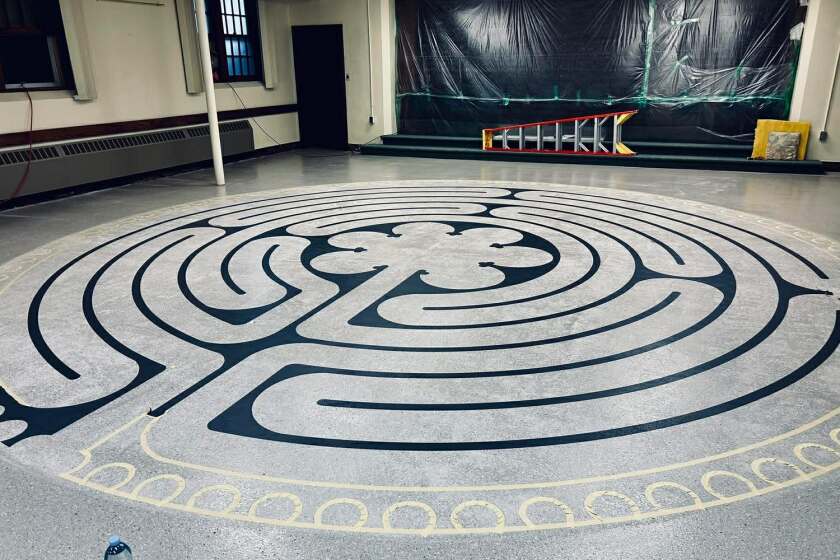
A labyrinth, a symbol of spiritual contemplation, has found a permanent home in the basement of the First Congregational Church in Alexandria, Minnesota. This initiative not only honors the memory of Dr. Mike Mosleth, a retired physician who passed away unexpectedly during a pilgrimage in Ireland, but also seeks to enrich the spiritual lives of the community through an ancient practice of walking meditation.
Bringing the Labyrinth to Life
The journey to establish the labyrinth began about four years ago when the church borrowed a canvas version for an Ash Wednesday service. After opening it to the community, Rev. Dr. Jill Sanders encountered Mike Mosleth, who was drawn to the meditative nature of the labyrinth. Their conversation sparked a deeper interest that ultimately led Mosleth to become involved with the church.
Tragically, during a later pilgrimage in Ireland, Mosleth collapsed and could not be revived. Following his death, Sanders met with his children, who expressed a desire to create a lasting memorial. They decided that a permanent labyrinth would be an ideal tribute to their father’s vision of a holistic healing space.
“They wanted it to be available to the whole community,” said Sanders. The Mosleth family financed the entire project, which included the labyrinth’s design, installation, and the necessary renovations to the church’s basement.
A Historical Perspective on Labyrinths
According to Marcie Watson, a retired Lutheran spiritual director, the concept of the labyrinth is often misunderstood. “A labyrinth is not a maze,” she explained. “It’s designed for walking meditation, with one path in and the same path out, allowing individuals to focus on their thoughts.” Watson emphasized that labyrinths serve as a profound tool for prayer, helping people let go of worries while fostering a connection with the divine.
This practice, which dates back to the Middle Ages, was initially used as a symbolic journey to the Holy Land. “People built labyrinths into cathedrals, like the famous one at Chartres Cathedral in France,” Watson noted. “It’s not a new idea; it’s an ancient spiritual practice that had been lost for a time.”
The church’s labyrinth, patterned after Chartres, aims to provide a space for individuals to meditate and connect with their spirituality. Watson and Sanders hope that it will be a valuable resource for the community, inviting everyone to engage in this meditative practice.
The labyrinth was completed in October 2024, ahead of schedule, thanks to the efforts of a local artist from the Labyrinth Society, who painted the intricate design. Renovations included removing asbestos and installing suitable flooring to create a welcoming environment for visitors.
“I cannot imagine how pleased Mike would be if he knew what his kids had done,” Sanders reflected. The labyrinth stands not only as a memorial but also as a testament to the community’s commitment to holistic healing and spiritual exploration.
As the labyrinth opens to the community, it promises to be a place of solace and connection, allowing individuals to walk their paths of prayer and reflection. The legacy of Dr. Mike Mosleth lives on through this spiritual sanctuary, fostering a deeper understanding of the journey one can embark upon when they take a moment to pause and reflect.