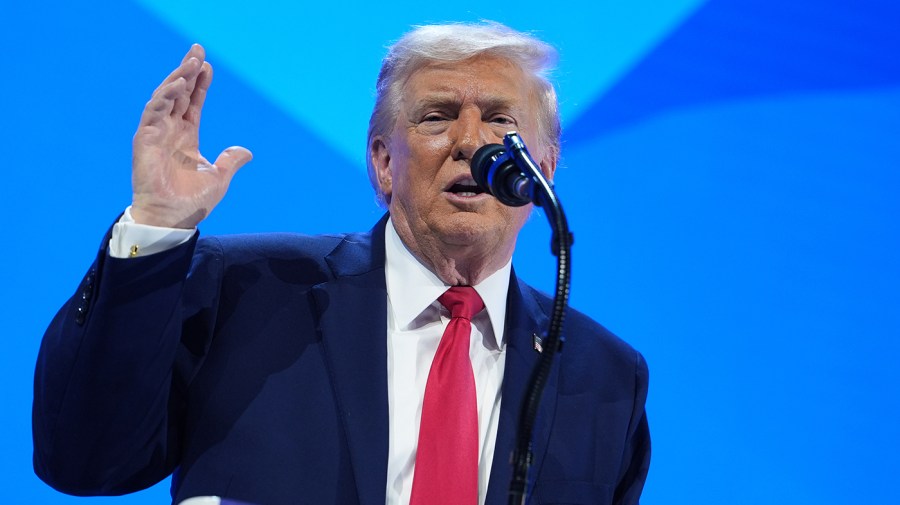
President Donald Trump expressed concerns on January 4, 2024, about a potential government shutdown as funding deadlines approach. During an interview on Fox Business with host Maria Bartiromo, Trump stated, “I think we have a problem, because I think we’re going to probably end up in another Democrat shutdown.”
With the funding deadline set for the end of January, Trump’s remarks highlight the ongoing tensions between the Republican and Democratic parties over budget negotiations. As the U.S. Congress prepares for discussions, the possibility of a shutdown looms, which would impact federal operations and services.
Trump’s comments reflect a broader sentiment among some Republican leaders who accuse Democrats of obstructing budgetary agreements. He emphasized that the current administration’s inability to reach consensus could lead to a repeat of previous shutdowns, which have disrupted government functions in the past.
While the Democratic Party has indicated a willingness to negotiate, the specifics of proposed budgets remain contentious. Key issues include funding for various federal programs and the allocation of resources to address priorities such as infrastructure and social services.
The stakes are high as the January 31, 2024, deadline approaches. Lawmakers are under increasing pressure to resolve disagreements and avert a crisis that could affect millions of Americans. A shutdown would not only halt federal services but could also impact government employees and contractors who rely on timely funding.
Trump’s remarks resonate with constituents who are wary of the political stalemate that often leads to shutdowns. The former president’s prediction adds another layer of urgency to the discussions, as both parties navigate the complexities of budgetary constraints and policy priorities.
As the situation develops, attention will focus on how Congressional leaders from both parties will approach negotiations in the coming weeks. The outcome will likely have significant implications for government operations and the public’s perception of political efficacy in addressing critical issues.