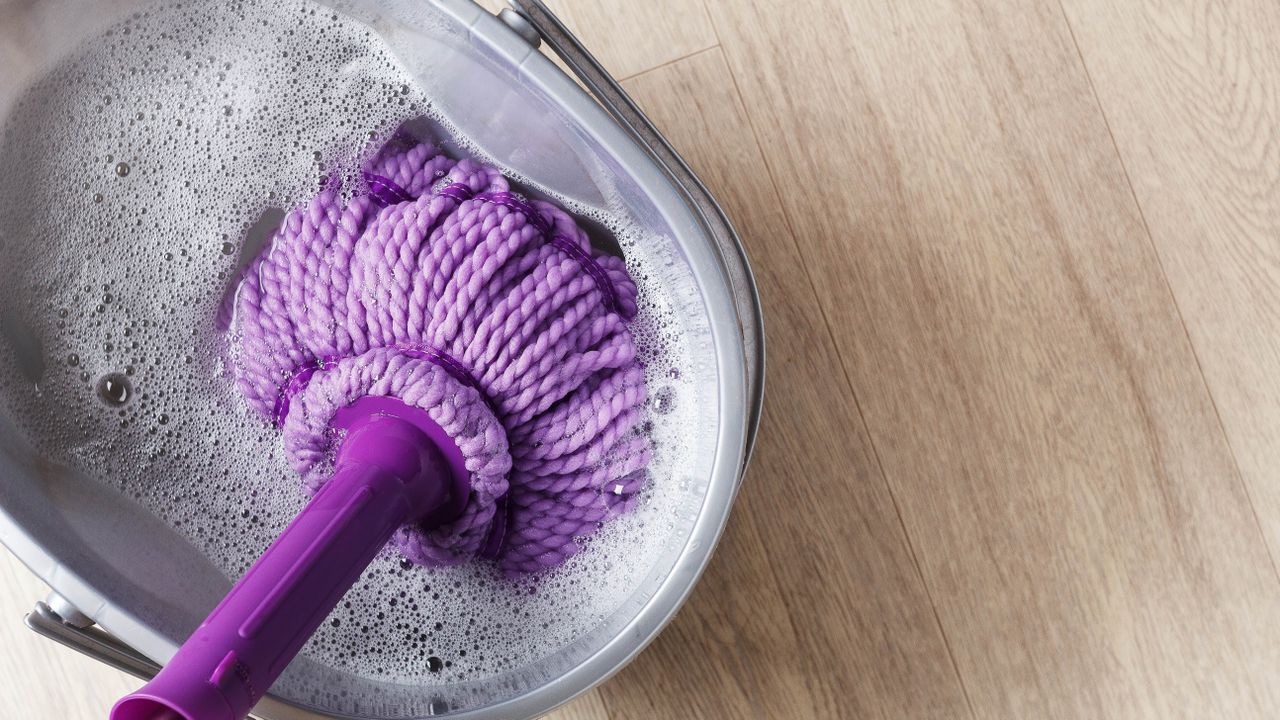
Maintaining clean hard floors can be a demanding task, particularly for those who take pride in their home’s appearance. While many individuals rely on traditional mopping techniques, cleaning experts caution against using certain common household items in mop water that could cause damage rather than enhance cleanliness.
Understanding which substances to avoid can help preserve your floors and ensure they retain their shine. Here are three common additives you should never mix with your mop water.
Avoid Mixing Bleach with Other Cleaners
Bleach is a widely utilized cleaning agent, known primarily for its antibacterial properties. However, experts like Neel Parekh, founder and CEO of MaidThis, stress that mixing bleach with any substance other than water is dangerous. When combined with ammonia-based cleaners, bleach can release chloramine gas, which poses significant health risks in poorly ventilated areas.
In addition to its hazardous reactions, bleach can discolor tiles, grout, and sealed wood floors. Yarl Christie, founder of Stories Flooring, warns that repeated exposure to bleach can weaken wood, making it more susceptible to warping and cracking over time. Instead of bleach, consider using a pH-neutral cleaning solution tailored to your floor type. Sofia Martinez, cleaning expert and CEO at Sparkly Maid Austin, recommends using only warm water with a barely damp microfiber mop for optimal cleaning.
Steer Clear of Oil-Based Soaps
Oil-based soaps are another common mistake in mopping routines. These soaps can leave a slippery residue that dulls the floor’s finish and attracts dirt, complicating future refinishing efforts. Martinez suggests minimizing moisture by using a barely damp microfiber mop and avoiding excessive product.
For laminate floors, wring out the mop until it is nearly dry, and for tile or stone floors, opt for a pH-neutral cleaner or a diluted baking soda solution instead of vinegar. Parekh emphasizes the importance of using only a few drops of dish soap on sealed floors, as overuse can lead to unwanted buildup. Always test any new cleaning solution in a discreet area to ensure compatibility with your flooring.
If mopping is physically taxing, consider investing in advanced cleaning technology. The Roborock Qrevo Curv, for example, combines vacuuming and mopping capabilities, adapting to various floor types to prevent damage while delivering a thorough clean.
Do Not Use Vinegar on Floors
Despite its reputation as a versatile household cleaner, vinegar can be harmful to many floor types. Tanner Berg, owner of Modern Renovations & Contracting, advises against using vinegar on wood flooring, as its acidity can strip the finish and potentially damage natural stone tiles and grout. The etching effect of vinegar can ruin the smooth surfaces of materials like marble and granite, leading to costly repairs.
For maintaining the luster of these high-end surfaces, Berg recommends a simple mixture of warm water and dish soap. This method is effective in preserving the integrity of your floors while ensuring they remain clean and visually appealing.
In summary, while keeping hard floors spotless can be a challenge, it is essential to choose the right cleaning agents to avoid damage. By steering clear of bleach, oil-based soaps, and vinegar, homeowners can maintain their floors’ beauty and longevity.