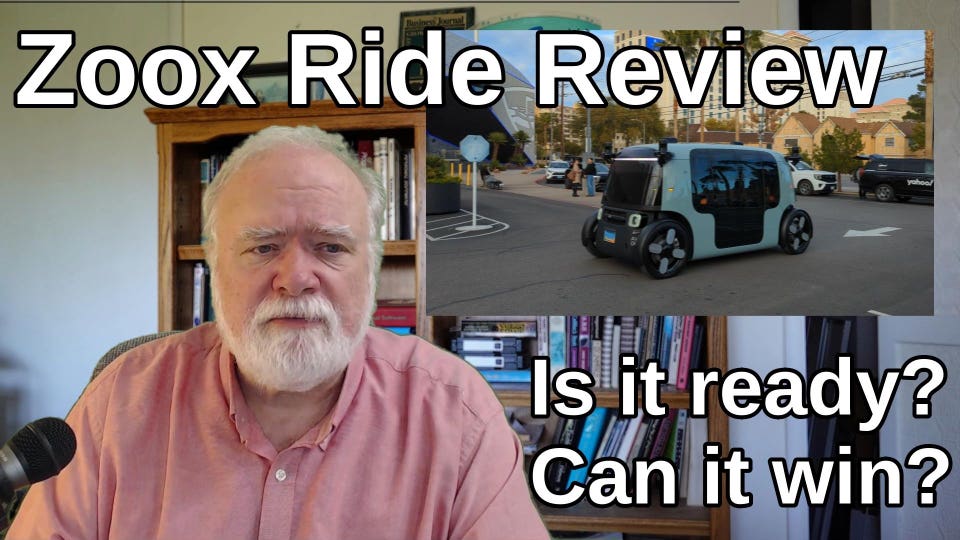
At the recent CES show in Las Vegas, attendees had the opportunity to experience the Zoox Robotaxi, a vehicle that aims to redefine urban transportation. Unlike prominent competitors such as Waymo and Tesla, Zoox has emerged with a unique vision for autonomous ride-hailing services. The company, founded by Tim Kentley-Klay, emphasizes a radically different approach by designing a vehicle specifically for autonomous operation rather than retrofitting existing models.
Zoox’s ambition to create a vehicle that is symmetrical in all directions reflects its intent to innovate beyond traditional automotive designs. The Robotaxi is built from the ground up as a purpose-driven vehicle, aiming to deliver a seamless passenger experience. Yet, during the demonstration ride, several issues highlighted the challenges faced by the company as it navigates the complexities of autonomous driving.
The Las Vegas service currently operates on a limited basis, covering around eight locations with a restricted number of routes. Passengers can book rides through the Zoox app, but this limited operational scope underscores the early stage of the technology. While San Francisco hosts a more flexible service model, the Las Vegas experience revealed some of the vehicle’s limitations.
The design of the Zoox Robotaxi is striking, featuring a clean and comfortable interior that promotes social interaction with seats facing one another. However, the absence of a traditional windshield limits visibility, providing only small windows for front viewing. This unconventional layout, intended to enhance passenger interaction, raises questions about comfort, especially for those who prefer to face forward.
During the ride, the Zoox encountered a significant issue known as “phantom braking,” where the vehicle abruptly stopped without apparent cause. This incident occurred while navigating a corner onto the iconic Las Vegas Boulevard, leading to a series of unexpected stops. According to the vehicle’s system, it detected an approaching school bus, which was not visible to the passengers. Such occurrences highlight the ongoing challenges of ensuring safety in autonomous vehicles, as the balance between caution and responsiveness remains delicate.
Further complicating the ride experience was an incident where the vehicle appeared to run a red light. While it later became clear that the vehicle had crossed the stop line legally, the moment was disconcerting for passengers, emphasizing the need for continued refinement in the vehicle’s navigation systems.
Zoox’s focus on symmetry and unique design features, such as four-wheel steering, allows for distinct maneuverability that could enhance its operational efficiency. The vehicle can seamlessly reverse without needing to turn around, a feature that may offer advantages in urban environments. However, the practicality of such innovations in everyday driving scenarios remains to be fully realized.
The challenges faced during this CES demonstration raise questions about Zoox’s readiness to compete in the burgeoning market for autonomous transport. The company has invested significantly in developing its custom vehicle, which has resulted in some technical hurdles. Although Zoox is currently under the umbrella of Amazon, gaining access to substantial resources and a vast customer base, the early sale indicates a need for strategic adjustments.
With the rise of competitors like Cruise and ongoing developments from Tesla, Zoox’s long-term success will depend on its ability to address these operational challenges. The unique design philosophy presents potential advantages, but the company must ensure reliability and user confidence.
While Zoox’s Robotaxi is an important milestone in the evolution of autonomous vehicles, it is evident that further work is required. The road ahead for Zoox includes not only refining its technology but also establishing a reputation for reliability and safety in a competitive landscape. With time and continued development, Zoox may yet carve out a niche in the future of urban transportation.