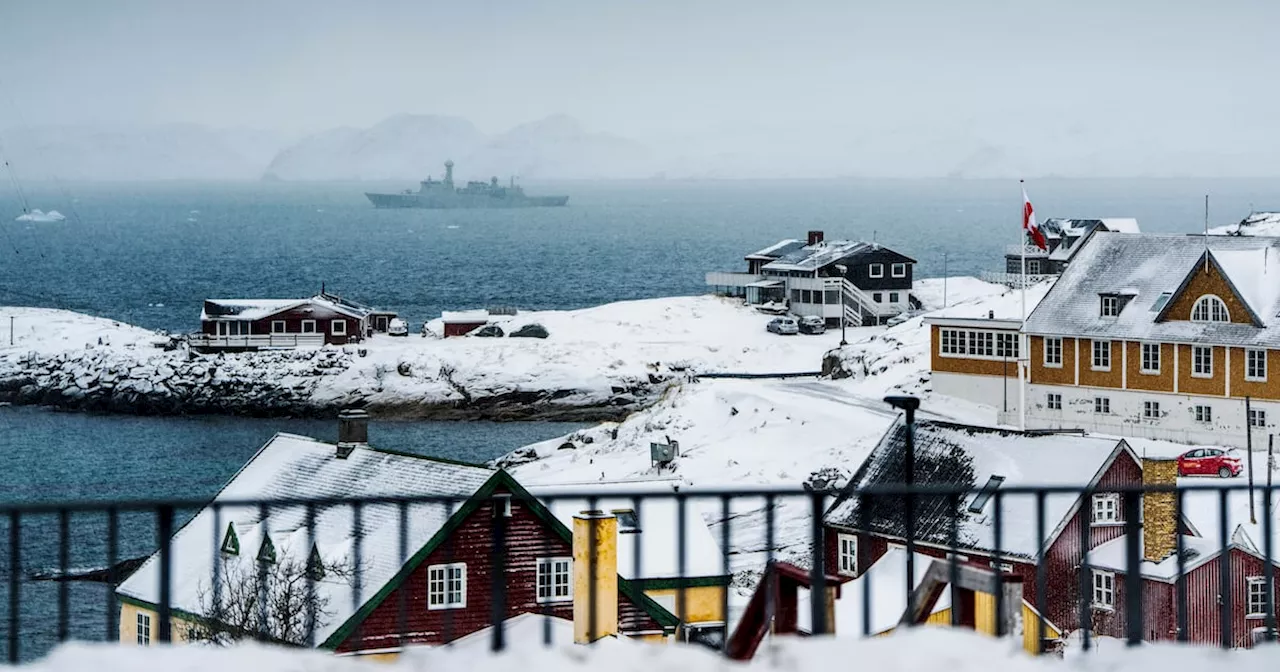
President Donald Trump’s fixation on acquiring Greenland has sparked significant dialogue about the strategic value of the territory. Critics argue that this pursuit distracts from addressing the vast mineral resources available in Alaska, which could play a crucial role in the United States’ energy security. The Danish navy’s inspection ship, the HDMS Vaedderen, was seen near Nuuk, Greenland, on January 18, 2026, amidst these discussions.
Trump has emphasized the critical importance of Greenland’s rare-earth minerals, suggesting that the U.S. must act before other nations, particularly Russia and China, seize these resources. However, the reality is that both countries have shown minimal interest in Greenland. This raises the question: why is the U.S. not focusing more on developing its own rich deposits in Alaska instead of potentially imposing decisions on Greenland’s Inuit population, who largely oppose U.S. involvement?
Alaska possesses significant reserves of critical minerals that are essential for various technologies and industries. For over a year, Alaska’s Division of Geologic and Geophysical Surveys has submitted proposals to the federal government aimed at funding exploration for these resources. Despite the potential, the evaluation of these proposals by relevant agencies, including the National Science Foundation, has progressed slowly.
Additionally, Alaska is home to known deposits of rare-earth minerals at Cape Mountain, located near Teller on the Seward Peninsula. Significant exploration has already been conducted. Yet, the complexity of processing these materials presents challenges. While companies like Ucore are seeking support for their projects, the federal government’s engagement remains lackluster.
The Trump administration has made some moves to support mineral exploration in Alaska. For instance, the U.S. Department of Energy has provided direct investment to a small company exploring in the Ambler Mining District. Graphite and antimony, both crucial for defense technologies, are also being targeted for development in the region. However, there are concerns about the motivations behind these investments, with some suggesting potential conflicts of interest.
One of the most notable mineral discoveries in Alaska is the Pebble deposit, one of the world’s largest undeveloped copper finds. This project has faced fierce opposition from tribal and fisheries groups, raising concerns about environmental impacts and Indigenous rights. Interestingly, while Trump has been vocal about mineral acquisition, he has not prioritized the Pebble project, which is currently on hold.
The National Petroleum Reserve-Alaska (NPR-A) has also been the subject of scrutiny. Federal geologists have identified deposits of zinc, a strategic metal, in this area. However, private exploration remains restricted, indicating a lack of commitment to fully harnessing Alaska’s mineral wealth.
Many argue that Trump’s approach to Greenland and mineral resources reflects a disorganized strategy. While there is valid concern about strengthening U.S. defenses against Russian and Chinese military activities in the Arctic, the focus should be on protecting U.S. interests in the Bering Strait and surrounding areas.
Moreover, the absence of a unified voice advocating for Inuit sovereignty in discussions surrounding Greenland is troubling. Historically, Alaska’s Inuit communities played a leading role in fostering collaboration among Indigenous peoples across the Arctic. Their recent shift in focus toward local oil rights appears to overshadow broader concerns about regional unity.
Trump’s “America First” policy could benefit from a more localized approach that prioritizes Alaska’s resources. As the U.S. grapples with energy security and international relations, it is crucial to consider the potential that lies within its own borders rather than fixating on distant territories. By fostering a balanced approach, the U.S. can better serve its interests and those of Indigenous communities in the Arctic.