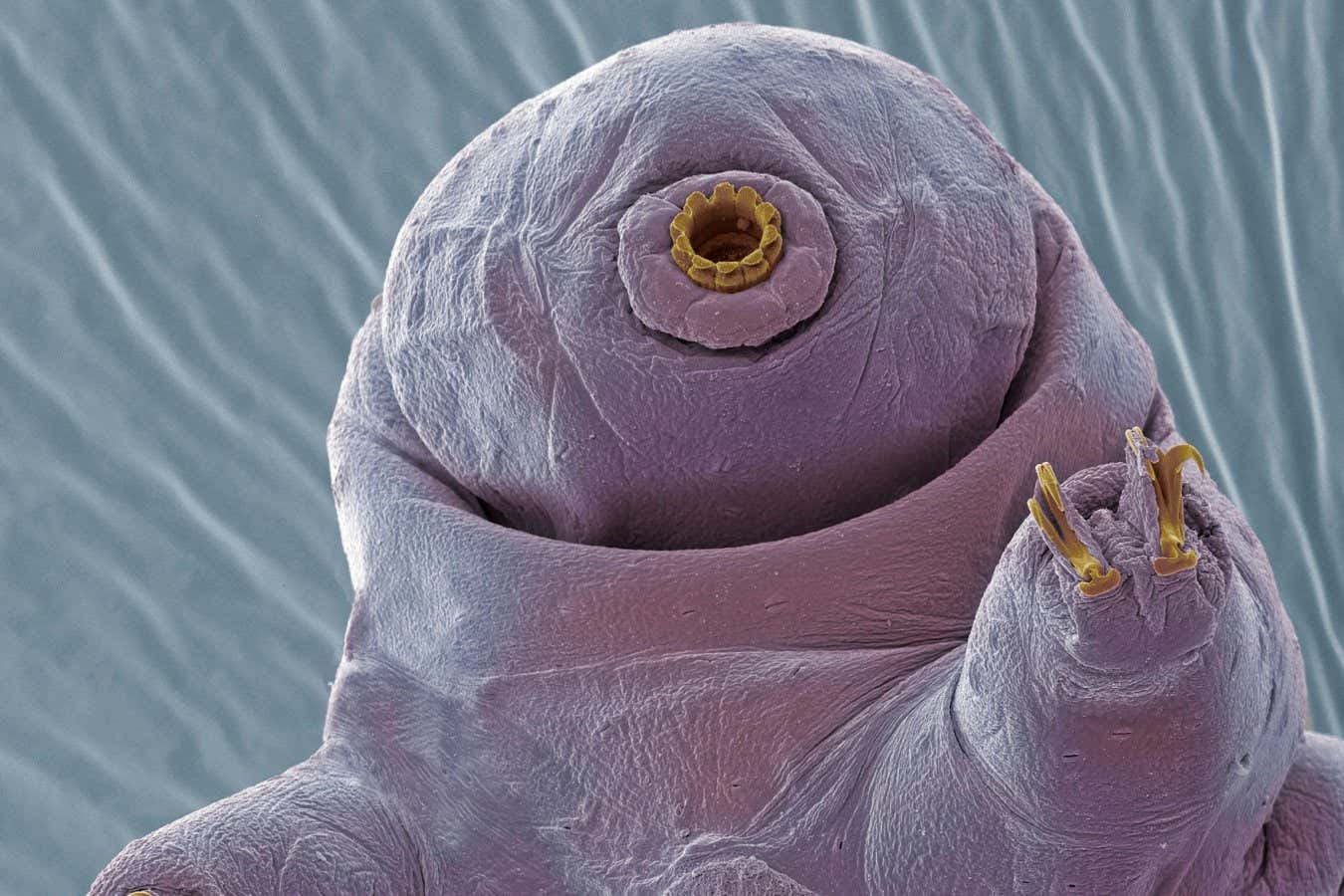
Astronauts may soon face new challenges in their quest to explore deeper into space, particularly regarding protection from cosmic radiation. Researchers at the University of British Columbia have revealed that while the tardigrade-produced protein known as Dsup (damage suppressor) shows promise in shielding cells from radiation, its application in human cells is more complicated than previously thought.
Tardigrades, often referred to as water bears, are renowned for their resilience against extreme conditions, including high radiation levels and the vacuum of space. In 2016, scientists discovered that Dsup plays a crucial role in this remarkable toughness. When human cells were genetically modified to produce Dsup, they exhibited increased resistance to radiation without adverse effects. This led to the hypothesis that administering Dsup could protect astronauts from harmful exposure during space missions.
Corey Nislow, a key researcher on the project, initially supported the idea of using Dsup mRNA encapsulated in lipid nanoparticles (LNPs) to deliver the protein to astronauts, similar to the technology used in mRNA vaccines for COVID-19. His optimism stemmed from the belief that this method could provide a viable defense against radiation without altering human DNA.
However, Nislow’s team conducted extensive studies on yeast cells modified to produce Dsup and uncovered significant drawbacks. They found that elevated levels of Dsup could be fatal, while even moderate levels hindered cell growth. Dsup appears to shield DNA by enveloping it, which complicates access for proteins responsible for DNA replication and repair. The research indicated that in scenarios where DNA repair proteins are limited, the presence of Dsup could prove lethal due to critical repair processes failing to occur.
The findings highlight the necessity of precise control over Dsup production. Nislow noted that while Dsup could potentially protect astronauts, it is vital to ensure that it is produced only in the necessary cells and in appropriate quantities. “There’s a cost for every benefit that we’ve seen,” he remarked, emphasizing the balance required in leveraging Dsup’s protective qualities.
Researchers worldwide are investigating the implications of Dsup beyond space exploration. James Byrne at the University of Iowa is examining whether Dsup can shield healthy cells during radiation therapy for cancer. He cautioned that continuous production of Dsup in human cells could lead to health complications, but temporary production during critical moments might offer benefits.
There are also differing opinions among researchers regarding the effects of Dsup. Simon Galas from the University of Montpellier noted that while high doses could be toxic, low levels of Dsup have shown promise in extending the lifespan of nematode worms by mitigating oxidative stress. This suggests that the protein may have beneficial effects if administered correctly.
Similarly, Jessica Tyler from Weill Cornell Medicine has been working with yeast cells and observed positive outcomes at lower levels of Dsup, without any detrimental impact on cell growth. Tyler emphasized that the effective use of Dsup hinges on precise dosage and timing, aligning with Nislow’s findings about the importance of controlled production.
Looking forward, Nislow remains optimistic about advancements in technology that could facilitate targeted delivery of Dsup. He highlighted the increasing interest and investment from pharmaceutical industries in developing effective delivery systems. “There’s so much money and attention on delivery systems,” he stated, expressing confidence that future innovations will address current challenges.
As research continues, the potential for harnessing tardigrade toughness for human applications in space and medicine remains an exciting frontier. Ensuring the safe and effective use of Dsup could open new pathways for protecting astronauts and potentially benefiting cancer patients on Earth.