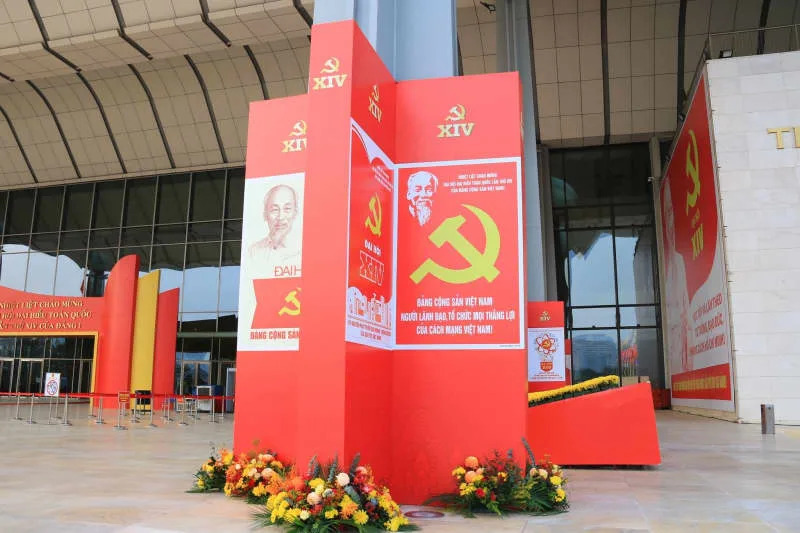
Vietnam’s ruling Communist Party commenced its 14th National Congress on Monday, a significant political assembly that will shape the nation’s leadership and policy direction for the next five years. Running until January 15, 2024, this congress is the most critical political event in the country, held every five years.
Nearly 1,600 delegates from across Vietnam have gathered at the National Convention Centre in Hanoi for a series of closed-door meetings. In this single-party state, voting is limited to senior party members, who will elect a 200-member Central Committee. This committee is responsible for overseeing major state institutions and will select the Politburo, the party’s most powerful decision-making body, before determining the country’s top leaders for the term spanning 2026 to 2030.
Collective Leadership Model and Speculation on Power Dynamics
Vietnam’s leadership model emphasizes collective governance, contrasting with other communist systems such as North Korea and China, where leaders exercise near-absolute authority. The country is officially led by five key figures: the general secretary, president, prime minister, chair of the National Assembly, and the standing member of the Communist Party’s Secretariat, a position created in 2025.
As the congress unfolds, speculation is mounting regarding the potential consolidation of power within the party. Analysts suggest that current party chief To Lam may propose merging the roles of general secretary and president, a move that could centralize authority and mirror the leadership model of Xi Jinping in China.
Heightened Security Measures Amidst Major Political Event
The security measures surrounding the National Convention Centre have been significantly intensified. A heavy police and military presence is evident, with road closures and disruptions to mobile phone signals in the vicinity. The announcement of the new leadership is anticipated on January 14, 2024, an event that will be closely monitored both domestically and internationally.
This congress not only represents a pivotal moment for Vietnam’s political landscape but also reflects the broader trends within the region regarding leadership and governance. As the world watches, the outcomes of this congress will be instrumental in shaping Vietnam’s future trajectory.