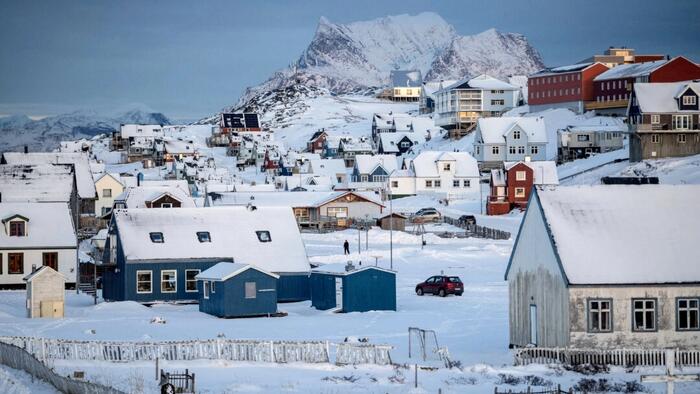
The European Union convened an emergency meeting following U.S. President Donald Trump‘s threats of tariffs against European nations opposing the acquisition of Greenland. This urgent assembly of ambassadors from the bloc’s 27 member states aimed to formulate a robust response to the U.S. administration’s stance, which some view as a significant escalation in transatlantic relations.
U.S. Treasury Secretary Scott Bessent clarified Trump’s position, asserting that “we are not going to outsource our national security.” The remarks come amid Trump’s repeated claims that securing Greenland is vital for American national interests, warning that “world peace is at stake” if the United States does not succeed in its acquisition efforts.
Several European nations, already facing tariffs of 10 to 15 percent from the United States, responded by deploying a small military presence to Greenland. A joint statement from the eight affected countries criticized the tariff threats, stating, “Tariff threats undermine transatlantic relations and risk a dangerous downward spiral.” These nations reaffirmed their commitment to Arctic security, emphasizing their readiness for dialogue based on sovereignty and territorial integrity.
Danish Prime Minister Mette Frederiksen expressed concern about the situation, stating in a written statement that since Trump’s tariff announcement, the Danish government has engaged in intensive discussions with allies. She noted, “It is all the more important that we stand firm on the fundamental values that created the European community. We want to cooperate, and we are not the ones seeking conflict.” Swedish Prime Minister Ulf Kristersson also echoed her sentiments, asserting that only Denmark and Greenland have the authority to decide on matters concerning them.
Germany’s Vice-Chancellor and Finance Minister Lars Klingbeil stated that a “line had been crossed,” emphasizing that affected nations “must not allow ourselves to be blackmailed.” He declared that “there will be a European response to this threat.” Denmark’s Defence Minister Troels Lund Poulsen reinforced this sentiment, highlighting the unacceptable nature of actions against countries contributing to NATO’s collective security.
France’s President Emmanuel Macron has called for the EU to activate its anti-coercion instrument, which could restrict access to the single market for American companies. An official from the Élysée Palace confirmed that Macron would engage with other European leaders throughout the day to advance this initiative.
On the diplomatic front, U.S. Vice President JD Vance and Secretary of State Marco Rubio recently met with Denmark’s Foreign Minister Lars Lokke Rasmussen and Greenland’s Foreign Minister Vivian Motzfeldt. Rasmussen described the discussions as “frank but also constructive.” Trump suggested on social media that efforts to purchase Greenland date back over 150 years to the administration of President Andrew Johnson.
Despite Greenland being under Danish control since the early 1700s, it gained self-governance in the 1970s and further autonomy in 2009. On January 9, local leaders, including Prime Minister Jens-Frederik Nielsen, reaffirmed Greenland’s sovereignty, stating, “The future of Greenland must be decided by the Greenlandic people. … No other country can interfere in this.”
In a related development, German politician Jürgen Hardt hinted at the possibility of Germany withdrawing from the 2026 World Cup as a protest against Trump’s Greenland policy. Speaking to the newspaper BILD, he indicated that such a drastic measure would only be considered as a last resort to prompt the U.S. President to reconsider his position. Other nations, including Spain, have expressed similar concerns regarding their participation in the World Cup due to escalating global political tensions.
As tensions rise and diplomatic discussions continue, the situation regarding Greenland and its implications for international relations remains fluid. The forthcoming responses from both the U.S. and European nations will be closely monitored, particularly as they affect not only geopolitical dynamics but also cultural events such as the World Cup.