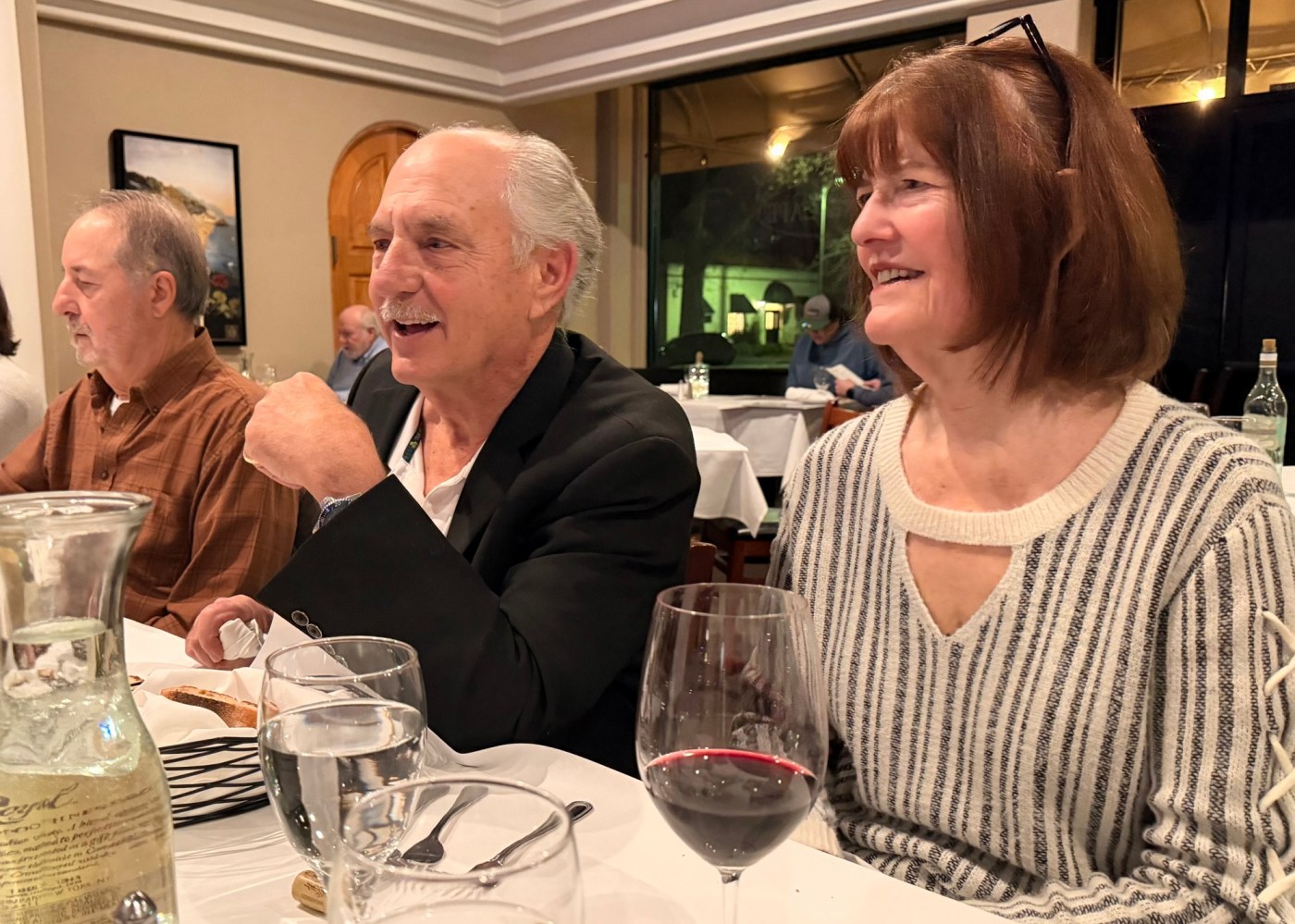
The Vincenzo Bellini Lodge No. 2519, a cherished Italian social organization in Chico, California, has announced its closure after nearly 45 years of operation. Founded in 1982 as part of the Sons and Daughters of Italy, the lodge has served as a gathering place for members to celebrate their heritage, engage in charity work, and foster community spirit.
Sal Aiello, a long-time member who joined the lodge shortly after its inception, shared how the organization made him feel at home. His connection to the lodge began when Marie Del Carlo, a founding member, reached out after seeing his advertisement for a carpet cleaning business. They discovered a shared background from Pittsburg, California, which led to Aiello’s enthusiastic involvement. “It made me feel like I was home,” he recalled during the lodge’s final meeting at the Sicilian Cafe on January 15, 2025.
As the lodge gathered for a final dinner, filled with memories of spaghetti dinners and charity fundraisers, members reflected on the decline in participation. Once boasting around 150 members, the lodge’s numbers dwindled to approximately 40 as younger generations opted for different forms of social engagement. “There’s no younger members to take our jobs,” said Debbie Rossi, who served as the lodge’s financial secretary for 25 years.
The closure of the Vincenzo Bellini Lodge highlights a broader trend in American civic life. According to the Survey Center on American Life, social and civic organizations have seen a significant decline since the mid-20th century. This trend is attributed to changing social dynamics, where younger people increasingly engage through online platforms rather than traditional face-to-face interactions. Rossi expressed concern that this shift impacts charitable involvement and the development of essential life skills such as leadership and accountability.
In addition to social trends, cultural shifts are also affecting participation in Italian heritage organizations. Michael Colletti Smith, a member of the lodge, noted that as families become more diverse, connections to Italian culture weaken. “Now, my kids are a quarter [Italian],” he remarked, highlighting the challenges of maintaining a cultural identity in a mixed heritage family.
Franco Di Lorenzo, originally from Sicily, emphasized the importance of continuity in cultural traditions. While he is proud that his children embrace their Italian roots, he recognizes that it is more challenging for newer generations. Lauri Aiello, Sal’s wife, who is not of Italian descent, noted that the lodge welcomed her with open arms, fostering a sense of belonging regardless of one’s background.
The lodge concluded its journey at the Sicilian Cafe, the very location where the late founder, Antonio Lucido, first gathered friends to establish the community. Lucido’s vision was brought to life with the help of Del Carlo and other members who sought to connect with fellow Italians in the region.
Though the lodge may have closed its doors, many members plan to continue their friendships. Some intend to join the Italian lodge in Shasta, while others look forward to gathering for meals and celebrations. As they parted ways, the members shared one last laugh, reflecting on the bonds formed over the years. “We were all this big around when we joined,” Sal Aiello joked, holding up his pinky finger, a testament to the lasting memories they created together.
The story of the Vincenzo Bellini Lodge encapsulates not just the decline of a local organization but also the shifting landscape of community and identity in contemporary society. As social structures evolve, the memories and friendships forged within these groups remain a cherished legacy for those who participated.