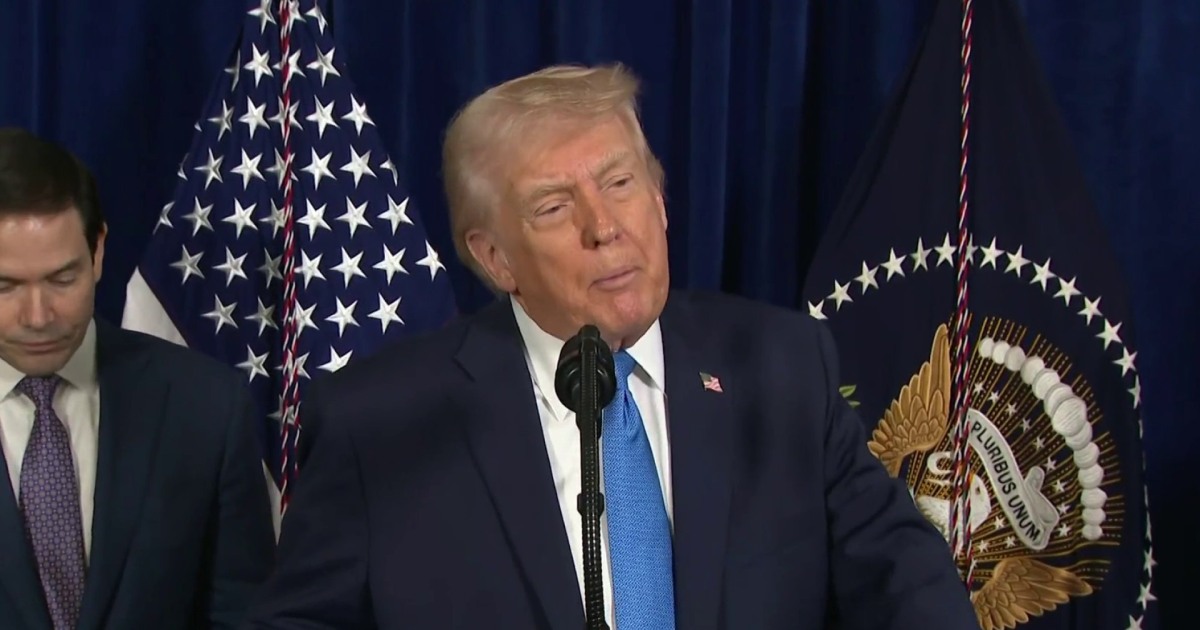
President Donald Trump announced on March 6, 2026, that his administration is engaging with major U.S. technology firms, particularly Microsoft Corporation, to address growing concerns over the financial burden of data center power consumption on American consumers. In a post on Truth Social, Trump stated, “I never want Americans to pay higher electricity bills because of data centers.” He underscored the importance of data centers in the expanding field of artificial intelligence (AI), asserting that tech companies must “pay their own way” to alleviate the financial pressure on households.
The push from the Trump administration comes as utility bills have surged, largely due to the increasing energy demands of data centers. According to a report from BloombergNEF, electricity demand from these facilities is rising significantly faster than the capacity of the U.S. power grid. The report warns that the nation could face reliability risks as power consumption from data centers is set to nearly triple, jumping from 4.4% of total electricity usage in 2023 to 12% by 2028, as projected by the Energy Department.
Power Consumption and Natural Gas Trends
This escalation in demand is causing sharp increases in energy costs for consumers, with some areas experiencing rate hikes of up to 267% over the past five years. Compounding these challenges, the rising power consumption from data centers has been linked to a resurgence in reliance on natural gas, as indicated by a report from the International Energy Agency (IEA). This trend suggests a shift back towards fossil fuels, raising concerns about environmental implications.
Trump’s recent comments align with Microsoft’s broader efforts to enhance its energy strategy. The company has formed a partnership with Iberdrola to advance energy and AI initiatives, which includes two long-term power purchase agreements in Spain. These agreements mark Microsoft’s first such commitments in Europe as it seeks to address energy sustainability.
While Microsoft is taking steps to manage its energy footprint internationally, it faces local opposition regarding its ambitious $1 billion data center project in Michigan. The project has raised concerns among residents about the rapid rezoning of land and the high energy demands that the facility will impose.
Microsoft did not immediately respond to requests for comment regarding Trump’s statements or the ongoing issues in Michigan. As the dialogue around data center energy use continues, the focus will remain on balancing technological advancement with sustainable energy practices to ensure that the costs do not fall disproportionately on American households.