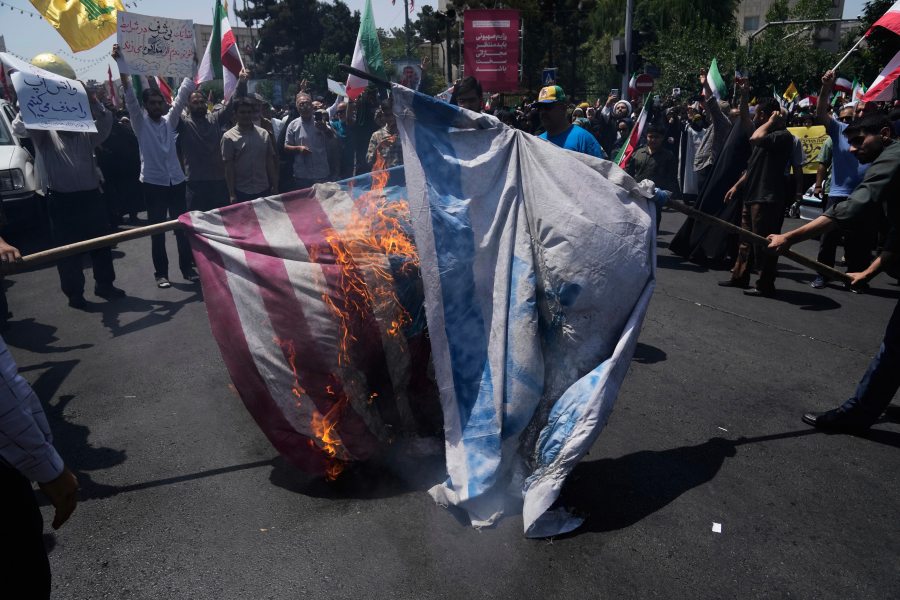
Israeli Prime Minister Benjamin Netanyahu announced on March 10, 2024, that Israel is closely monitoring the escalating protests in Iran. These demonstrations, which have erupted in response to economic hardships and political repression, raise concerns about potential regional instability. Netanyahu’s remarks came amid heightened tensions following threats from U.S. President Donald Trump regarding military action against Iran.
The protests in Iran have seen significant participation from citizens discontent with the government’s handling of various issues, including inflation and human rights abuses. As the situation unfolds, Israel remains vigilant, recognizing the potential for the unrest to spill over into broader regional conflict. Netanyahu emphasized the significance of these developments, stating that both the people of Israel and the international community are observing the situation with great concern.
In his statements, Netanyahu highlighted the importance of understanding the implications of the protests. He suggested that increased violence or military action could lead to a wider conflict, which would have serious repercussions not only for Iran but also for neighboring countries and global security. “The stakes are high,” he said, underscoring Israel’s strategic interests in the region.
The Iranian government has responded to the protests with a heavy hand, deploying security forces to suppress dissent. Reports indicate that clashes between protesters and law enforcement have resulted in numerous injuries and arrests. The situation remains fluid, and the potential for escalation is significant, particularly given the ongoing rhetoric from U.S. leadership.
Israel’s intelligence community is actively assessing the dynamics within Iran. Analysts note that the combination of domestic grievances and external pressures could contribute to a volatile scenario. The possibility of a miscalculation or unintended escalation is a key concern for Israeli officials, who are weighing their options in a rapidly changing environment.
As protests continue, regional actors are also taking note. Neighboring countries, particularly those with significant Iranian influence, are wary of the potential fallout from any escalation. The geopolitical landscape is delicate, and actions taken in response to the protests could have far-reaching effects.
In light of these developments, Israel’s position remains one of cautious observation. The Israeli government is prepared to respond to any shifts in the situation, while also advocating for stability in the region. The ongoing protests in Iran serve as a reminder of the complex interplay between domestic politics and international relations, highlighting the challenges faced by governments in managing both internal dissent and external threats.
As the situation develops, the world will be watching closely. The convergence of domestic protests and international tensions creates a scenario that could reshape the landscape of the Middle East. Israel’s commitment to monitoring these events underscores the importance of vigilance in a region where the stakes have never been higher.