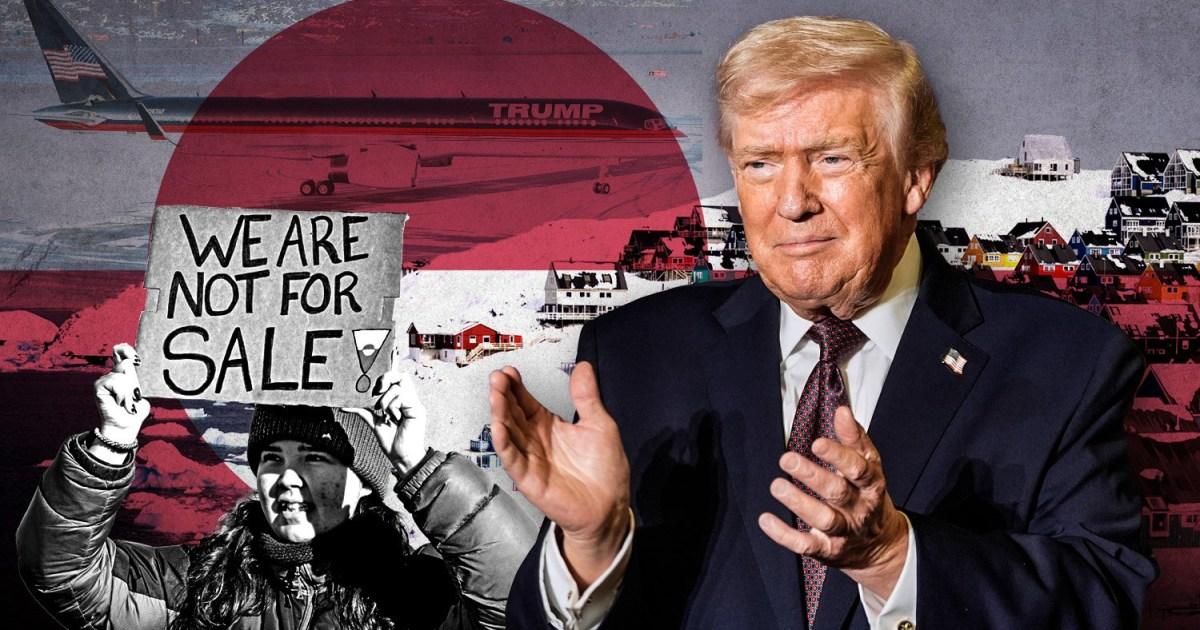
In a recent statement, President Donald Trump asserted the necessity for the United States to acquire Greenland, a self-governing territory of Denmark, citing its strategic importance for national defense. Following a significant military operation in Venezuela, Trump expressed, “We do need Greenland, absolutely. We need it for defense,” during an interview with The Atlantic. This assertion has reignited tensions with Denmark, where Prime Minister Mette Frederiksen firmly rejected the notion of U.S. annexation.
In a statement issued on Sunday, Frederiksen emphasized that discussions regarding the U.S. taking over Greenland are “out of the question.” She urged the United States to cease threats against what she described as a historically close ally, stating, “The U.S. has no right to annex any of the three countries in the Danish Kingdom.” Her comments highlight the diplomatic strain resulting from Trump’s repeated claims regarding Greenland.
Jens-Frederik Nielsen, Greenland’s Prime Minister, also condemned Trump’s remarks as “disrespectful.” He pointed out that linking Greenland to military interventions, such as those in Venezuela, is not only erroneous but also undermines the dignity of the Greenlandic people. The comments have raised concerns about potential military implications, as Trump hinted at not ruling out the use of force in the pursuit of Greenland.
The island, home to approximately 57,000 residents, mostly indigenous Inuit, has long been viewed as a treasure trove of natural resources, including minerals and fossil fuels. These resources have made Greenland increasingly appealing to global powers, particularly as climate change alters its accessibility. Trump has previously expressed interest in Greenland, mentioning that it could be a future asset for the U.S. His ambitions are not unprecedented; past U.S. administrations sought to purchase the territory in 1846 and again in 1946.
The strategic significance of Greenland has historical roots. The United States maintains a military presence on the island, exemplified by the Thule Air Base, now known as Pituffik Space Base. This base serves as a critical site for monitoring missile activities, essential for U.S. national security. The geopolitical landscape surrounding Greenland has shifted, with increasing interest from both Russia and China, further complicating the territory’s future.
Professor Mikkel Vedby Rasmussen from the University of Copenhagen highlighted the challenges of resource extraction in Greenland. While the island is rich in resources like uranium and rare earth minerals, the harsh climate and lack of infrastructure pose significant obstacles. He noted, “There is plenty of everything… But it is winter ten months a year, and Greenland hardly has any paved roads. It means that it is very expensive to extract those raw materials.”
Despite its potential, Greenland remains firmly under Danish governance, with recent surveys indicating that approximately 85% of Greenlanders oppose joining the U.S. and nearly half view Trump’s interest as a threat. The current geopolitical climate, intensified by rising tensions with Russia and expanding Chinese influence, has led some experts to speculate about the implications for international relations.
Rasmussen pointed out that the U.S. could theoretically exert military control over Greenland due to its significant power disparity with Denmark. He stated that invading Greenland would not be complicated given its small population concentrated in a few urban centers. Nevertheless, there is skepticism about whether Trump would pursue such drastic actions, especially considering NATO’s collective defense commitments.
The absence of crisis talks amid this diplomatic spat has raised concerns about the future of U.S.-Denmark relations. While some experts believe Trump may use military posturing to leverage negotiations, others argue that a direct military action against a NATO ally would destabilize the alliance considerably. For now, European leaders, including British opposition leader Sir Keir Starmer, have expressed solidarity with Denmark, reinforcing the notion that Greenland’s future should be determined by its people and the Danish government.
Ultimately, while Trump’s ambitions for Greenland may capture headlines, the reality of its governance, the sentiments of its residents, and the complex web of international relations stand firmly against any notion of annexation. As Prime Minister Frederiksen succinctly stated, “Greenland is not for sale.”