Elon Musk and Donald Trump’s relationship has undergone significant transformations, marked by moments of camaraderie, public spats, and renewed alliances. The world’s wealthiest individual and the former U.S. president have transitioned from political foes to allies, particularly during Trump’s 2024 campaign, where Musk positioned himself as a key supporter, contributing over $200 million to pro-Trump super PACs.
In the early days of Trump’s presidency, Musk was appointed to two economic advisory councils, aiming to influence policies related to immigration and the environment. Yet, this collaboration faced challenges. After Trump announced the United States’ withdrawal from the Paris Agreement in June 2017, Musk resigned from his advisory roles, stating, “Climate change is real. Leaving Paris is not good for America or the world.”
The relationship fluctuated over the next few years. In January 2020, Trump praised Musk as “one of our great geniuses,” acknowledging Tesla’s escalating market value. In May 2020, during the COVID-19 pandemic, Trump supported Musk amid a dispute with California health officials, tweeting, “California should let Tesla & @elonmusk open the plant, NOW.” Musk’s gratitude was evident in his response: “Thank you!”
However, tensions resurfaced in July 2022 when Trump labeled Musk a “bullshit artist” for allegedly denying his support for the former president. Musk, in turn, suggested Trump should not run for president again, indicating a growing rift between the two. The situation escalated further in June 2025, following Musk’s public criticism of Trump’s “Big Beautiful Bill,” which led to Musk threatening to establish his own political party and Trump vowing to “destroy” Musk’s companies.
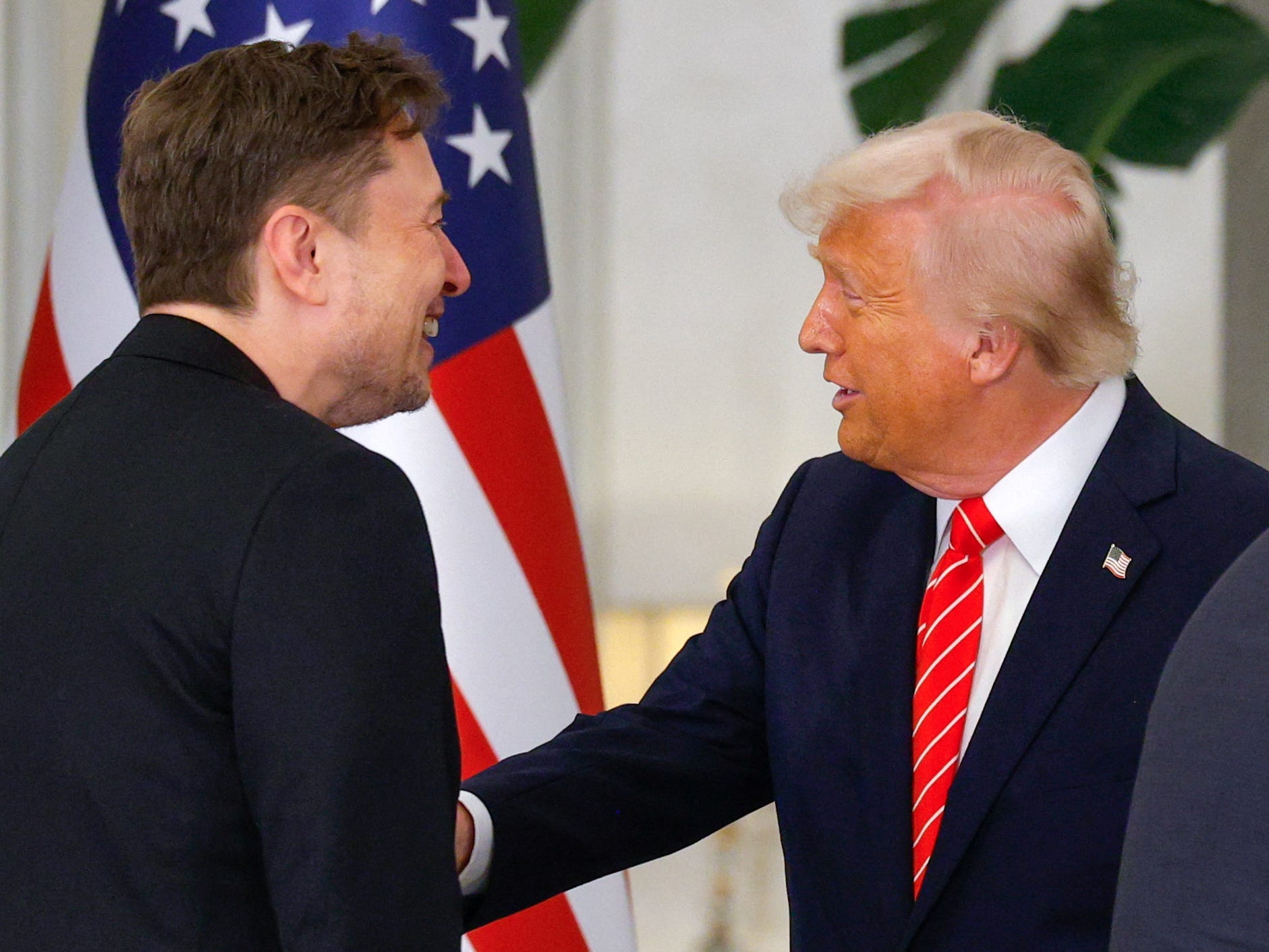
Despite these conflicts, a thawing of relations began in late 2025. In September, Musk and Trump were seen shaking hands at a memorial service for conservative commentator Charlie Kirk. Trump later commented on their relationship, referring to a “stupid moment” during their feud and expressing that he liked Musk, stating, “I suspect I always will.”
As the political landscape evolved, Musk’s endorsement of Trump following an assassination attempt on the former president marked a pivotal moment in their relationship. By July 2024, Musk had publicly supported Trump and even expressed interest in an advisory role within Trump’s administration. Following Trump’s victory in the 2024 election, Musk was appointed to lead the newly established Department of Government Efficiency, affectionately referred to as DOGE, a nod to the meme-inspired cryptocurrency.
Throughout 2025, Musk’s involvement in politics fluctuated, with Musk eventually stepping back from his role in DOGE by May. Despite his retreat from the political arena, Musk continued to influence discussions around key policies, including immigration, where he echoed Trump’s calls for a border wall.
The relationship between Musk and Trump reached a new level of camaraderie in early 2026. After the U.S. raid on Venezuela and the capture of President Nicolás Maduro, Musk publicly congratulated Trump, calling it a “win for the world.” The two were also seen together at social events, highlighting their personal friendship alongside their political alliance.
In summary, the relationship between Elon Musk and Donald Trump illustrates a complex interplay of political ambition, personal rivalry, and eventual reconciliation. As they continue to navigate the evolving political landscape, their partnership remains a focal point of both business and political discourse.