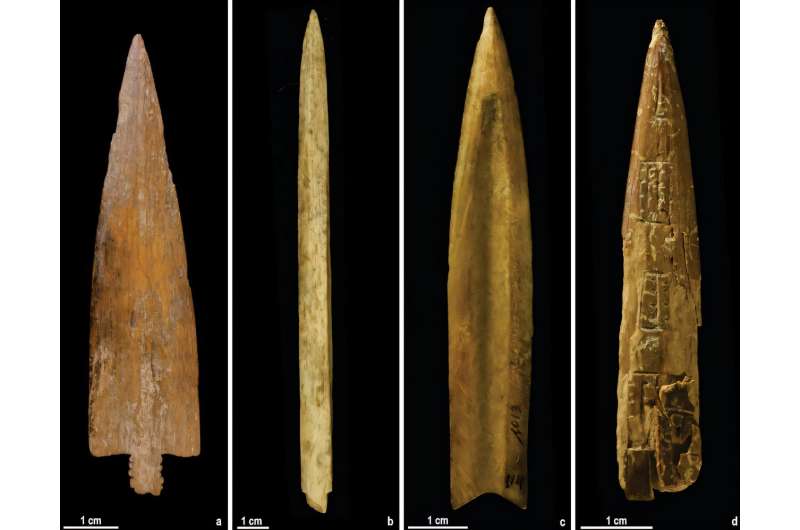
Recent research conducted by a team led by Dr. Matías Medina has shed light on the organized craft production of bone arrow points in the Sierras de Córdoba, Argentina, during the Late Prehispanic Period, which spanned approximately from 1220 to 330 cal BP. The study, published in the International Journal of Osteoarchaeology, provides significant insights into how these ancient communities managed their daily lives and production techniques.
Understanding the bone tools of this region has long been limited. Previous archaeological efforts focused primarily on chronological questions, resulting in minimal analysis of the manufacturing techniques of bone artifacts. According to Dr. Medina, publications detailing bone technology in South America have been scarce, often providing only basic descriptions without in-depth exploration of their utility or production methods.
Examining the Craft of Arrow Point Production
To bridge this knowledge gap, the research team analyzed 117 bone artifacts collected from the Museo Arqueológico Numba Charava. These artifacts, gathered non-systematically throughout the 20th century, originated from various sites within the southern Punilla Valley, leading to challenges in establishing precise provenance.
The primary material identified for crafting the arrow points was bones from the guanaco, a type of llama hunted for sustenance. The bones were typically processed from metapodia, or long bones, which were split, flattened, and shaped through grinding and scraping techniques. The end products were functional arrowheads, some adorned with decorative elements. Dr. Medina noted that only three of the studied points featured incised decorations, primarily consisting of lines and triangles similar to those found on other artifacts from central Argentina.
Interestingly, the study posits that these arrow points were predominantly employed for warfare rather than hunting. The inclusion of stylistic features like extra-barbs and decorations reflects the cultural identity of their makers, serving as a reminder of their affiliations during conflicts.
Implications for Understanding Social Structures
The findings from this study offer a fresh perspective on the social organization of the communities in the Southern Punilla Valley. It appears that the production of arrow points was a meticulous process, likely passed down through generations within nuclear families. This reinforces evidence that the nuclear family served as a fundamental social unit for food and tool production during the Late Prehispanic Period.
Dr. Medina emphasized the importance of comparative studies with neighboring regions, such as the Low Paraná and Uruguay River floodplains, which are over 500 km away. These areas developed distinct bone technologies that adapted to their unique environmental challenges, particularly regarding the availability of stone materials. He suggested that examining these differences may uncover vital insights into the technological choices made by prehistoric communities.
Overall, this research not only enriches the understanding of ancient crafting techniques but also paints a broader picture of the social dynamics and economic strategies of prehistoric societies in Argentina. As archaeological methodologies continue to evolve, such studies will be crucial in revealing the complexities of human history and cultural development.
This article has been edited and reviewed according to rigorous editorial standards, ensuring that the information presented is accurate and credible. For further information, refer to the original study by Matías E. Medina et al in the International Journal of Osteoarchaeology.