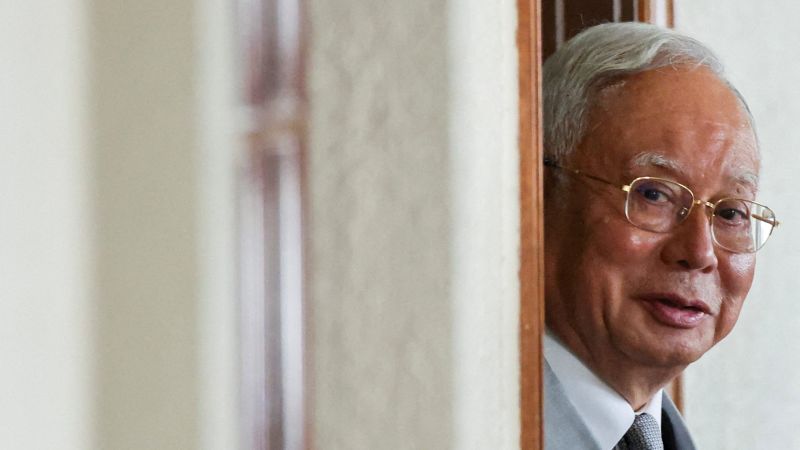
Former Malaysian Prime Minister Najib Razak was convicted of abuse of power on March 15, 2024, in a landmark ruling related to the massive 1Malaysia Development Berhad (1MDB) scandal. This trial is considered the most significant of its kind, with potential political repercussions for Malaysia. The verdict was delivered by Judge Collin Lawrence Sequerah, although the full details of the sentence are still pending.
The scandal revolves around allegations that approximately $4.5 billion was misappropriated from 1MDB, a state fund co-founded by Najib in 2009. Investigators from both Malaysia and the United States have traced over $1 billion to accounts linked to Najib himself. He faces multiple charges, including four counts of corruption and 21 counts of money laundering, for accepting illegal transfers exceeding 2.3 billion ringgit (approximately $569.45 million).
During the trial, Judge Sequerah emphasized the weight of the evidence against Najib, stating that the claims of a politically motivated witch hunt were unfounded. The judge remarked, “The cold, hard and incontrovertible evidence against him pointed towards the accused having abused his own powerful position in 1MDB.”
Potential Sentencing and Political Implications
Najib could receive a lengthy prison term, with each charge carrying a maximum sentence of between 15 and 20 years, along with fines up to five times the value of the alleged misappropriations. The former prime minister has been in incarceration since August 2022, following a previous conviction linked to 1MDB, which resulted in a 12-year sentence. This sentence was later reduced by a pardons board.
The former leader has consistently maintained his innocence, asserting that he was misled by Jho Low, a fugitive financier linked to the scandal. Najib claimed that funds deposited into his accounts were donations from the Saudi royal family. Judge Sequerah dismissed these assertions as implausible and noted that the evidence suggested that the funds were actually derived from 1MDB.
In a significant moment during the court proceedings, the judge stated that Najib had an “unmistakable bond and connection” with Low, who acted as a proxy in various dealings related to 1MDB. Low, who is wanted by authorities in the United States, has denied any wrongdoing.
Government Stability at Stake
The timing of the verdict raises concerns about the stability of the current Malaysian government led by Prime Minister Anwar Ibrahim. Just days before the ruling, a court denied Najib’s request to serve his jail sentence under house arrest. This decision has led to renewed tensions within Anwar’s administration, particularly among members of Najib’s party, the United Malays National Organisation (UMNO).
Some UMNO leaders expressed disappointment over the house arrest denial and voiced frustration at comments made by members of Anwar’s coalition celebrating the verdict. In response, Anwar urged all parties to accept the court’s decision with “full patience and wisdom,” emphasizing the need for stability in governance.
As the political landscape in Malaysia shifts, the implications of this ruling could resonate far beyond the courtroom, affecting party dynamics and public trust in leadership. The ongoing developments in the 1MDB case continue to captivate national and international attention, underscoring the complexities of accountability and governance in the region.