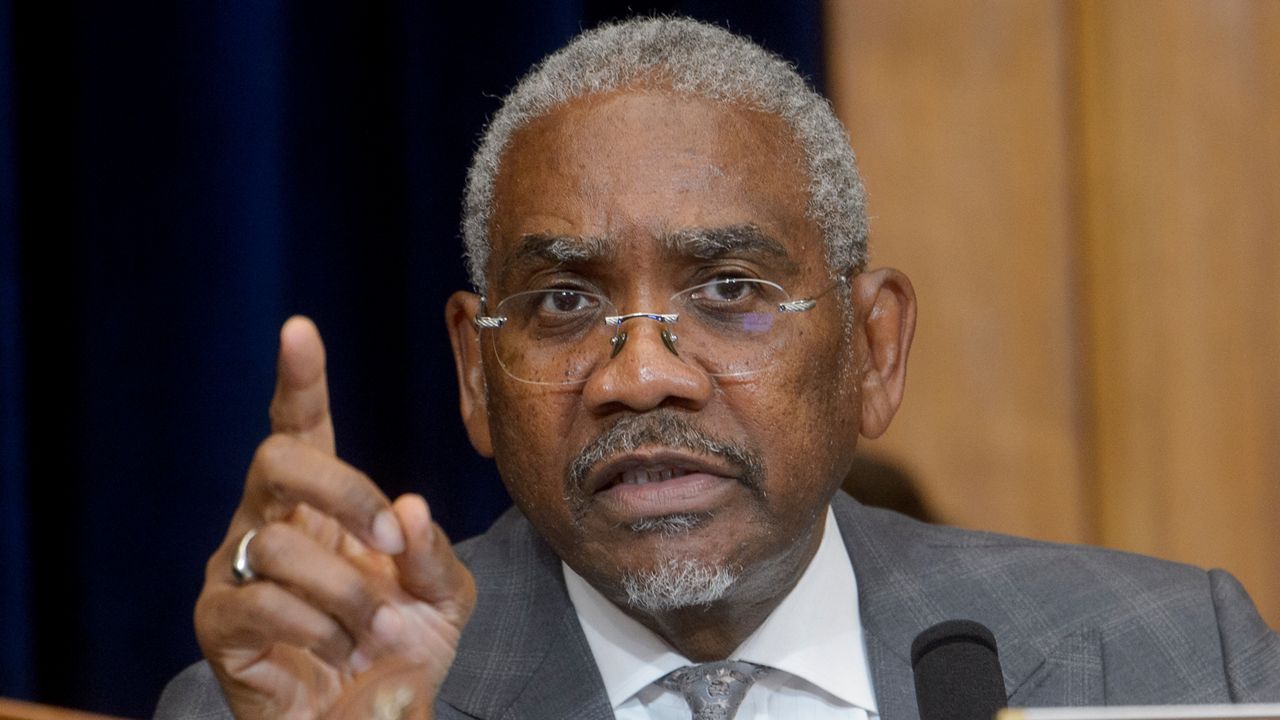
URGENT UPDATE: In a pivotal move, Rep. Gregory Meeks, the top Democrat on the House Foreign Affairs Committee, has introduced groundbreaking legislation aimed at blocking the sale of advanced AI chips to foreign adversaries, including China, Russia, and Venezuela. This development comes in response to growing concerns over what officials are calling an “AI arms race” with China.
Just announced, the proposed legislation targets export licenses for advanced artificial intelligence chips, particularly the H200 chips recently approved for sale to China by President Donald Trump. Meeks expressed deep concern over the implications of this deal, stating, “American national security cannot be sold for the benefit of a profit.”
The urgency of this matter intensifies as the Department of Justice recently revealed the arrest of two individuals for allegedly smuggling H100 and H200 chips to China, branding them as “the building blocks of AI superiority” and crucial for modern military applications. “We’re in a strategic competition with China. We want to make sure that we lead it,” Meeks emphasized.
While Meeks advocates for a complete ban on these exports, Florida Republican Rep. Brian Mast, the head of the House Foreign Affairs Committee, has introduced competing legislation that would allow the continuation of export approvals, giving Congress a narrow window of 30 days to block any licenses with a majority vote.
Meeks remains skeptical about Congress’s ability to effectively block such licenses, stating, “No,” when asked if he felt they would typically succeed. With a Republican majority in the House, he is now contemplating a discharge petition to bring his legislation to the floor, a strategy that could force a vote if enough lawmakers support it.
“It seems as though this is the way that we are legislating,” Meeks remarked, reflecting on the current political climate.
In defending the controversial deal, Trump argued that it reduces demand for Chinese chips and positions U.S. firms ahead of Chinese manufacturers, claiming that the transaction would benefit the U.S. economy through a 25% fee on the deal. He also mentioned that Chinese President Xi Jinping responded “positively” to the arrangement, further complicating the geopolitical landscape.
This ongoing legislative battle highlights the critical intersection of technology, national security, and international relations. As Congress grapples with these complex issues, the implications for U.S. security and global technological dominance are profound.
What happens next remains to be seen. Lawmakers are now poised for a showdown over the future of U.S.-China tech relations, and the outcome could reshape the landscape of artificial intelligence in military and commercial spheres. Stay tuned for updates on this developing story.