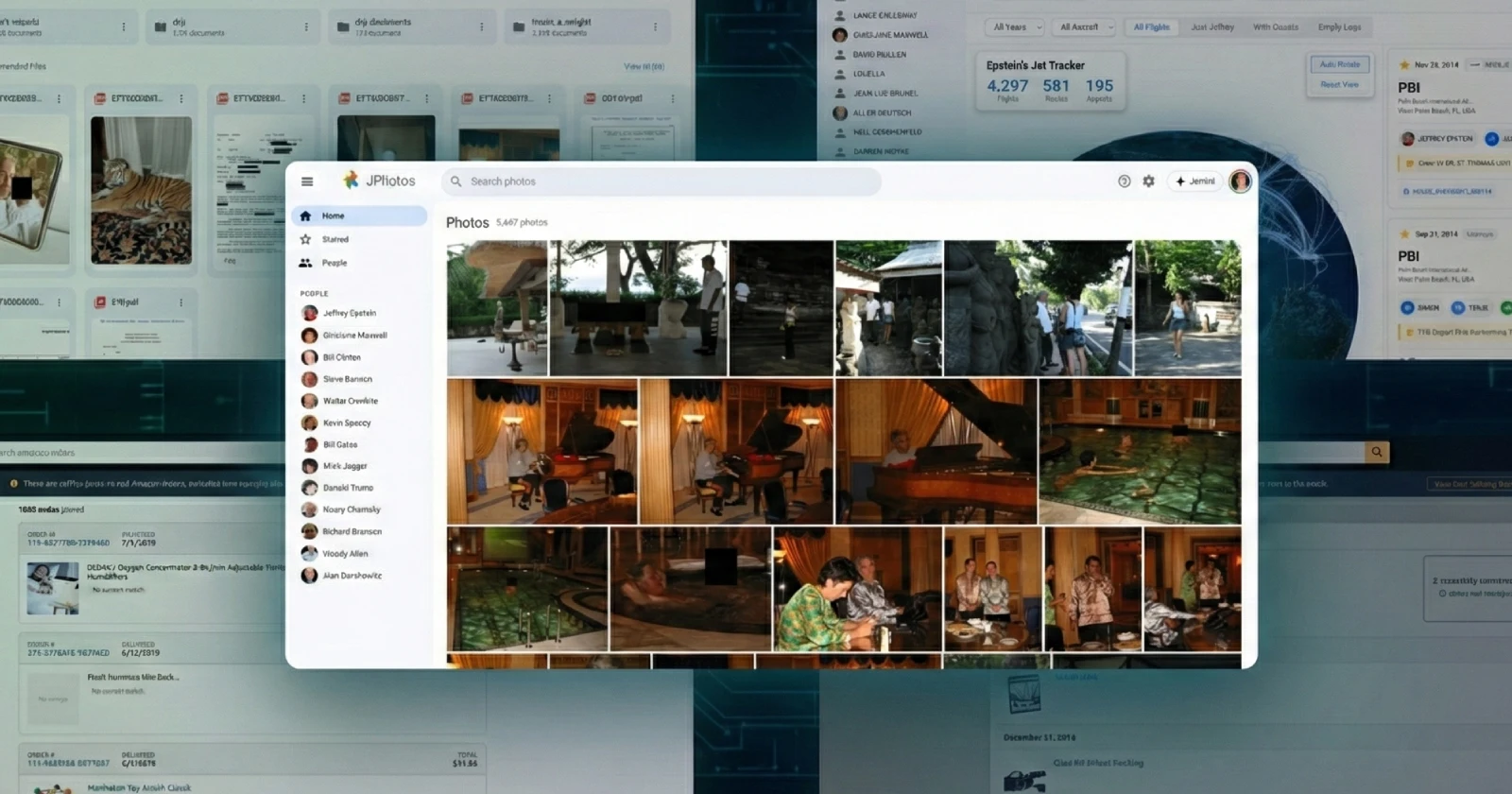
A group of developers, termed “vibe coders,” is rapidly transforming popular applications to facilitate access to documents related to Jeffrey Epstein. This initiative aims to make thousands of leaked emails and images searchable through familiar interfaces. Central to this project is Jmail.world, which mimics the Google suite and organizes the vast array of data into a user-friendly format.
The speed of this development has been notable. Developers have leveraged artificial intelligence to convert previously unsearchable information into easily navigable platforms. In contrast to earlier practices, where document leaks were often presented as unwieldy PDF files, the current approach allows anyone with basic coding skills to create custom search engines within hours.
Leading the charge are developers Riley Walz and Luke Igel, who collaborated with the team at Reducto.ai. This partnership enabled them to utilize advanced extraction tools that convert scanned documents into structured data, making it possible to create functional applications swiftly.
One standout application is JPhotos, a replica of Google Photos that showcases over 1,000 images sourced from the leaked files. The interface closely resembles the original, providing a visually appealing grid of thumbnails that includes everything from interior photographs of Epstein’s properties to various evidence documents.
Another significant tool is JFlights, which functions as a flight tracking dashboard. It catalogs an impressive 4,297 flights and more than 10,352 hours of flight time, allowing users to filter results by year or specific aircraft. This detailed overview captures the movements of Epstein’s fleet over a span of two decades, providing insight into his extensive travel activities.
The suite also features JDrive, a replica of Google Drive that allows users to search through a vast 300-gigabyte collection of documents. Additionally, JAmazon reproduces Epstein’s order history, displaying mundane purchases alongside their respective timestamps.
Innovative tools are continually being introduced. Developer Pat Dennis recently launched a facial recognition search tool that scans documents for specific individuals. This open-source project is accessible on GitHub and enhances the capability to navigate the data efficiently.
Further exploration of the leaked materials has led to creative applications. Advait Paliwal has developed an Apple Music clone designed to play grand jury transcripts, while Diego from Krea AI has created EpsteinVR, a 3D virtual tour of Epstein’s Upper East Side mansion. This immersive experience allows users to navigate through the property as if they were exploring a video game.
As more documents become available, it is likely that additional innovative tools will emerge. This moment reflects a significant shift in how technology can democratize access to information that was once tightly controlled. The “vibe coding” approach may set a new standard for making public documents more accessible, paving the way for enhanced transparency in the future.
This wave of creativity highlights the potential of AI and coding to reshape how society interacts with sensitive information. As developers continue to experiment, it raises important discussions about privacy, ethics, and the responsibility that comes with increased access to data.