Laurel Ridge Community College hosted a graduation ceremony on Friday, marking a significant milestone with the completion of its inaugural power line worker cohort. Ten students received their diplomas, along with seven industry-recognized credentials, setting a robust foundation for their careers in the power line industry.
Kim Blosser, president of Laurel Ridge, expressed pride in the program’s first graduates. “We are so proud of this first graduating class of our power line worker program,” she stated. Blosser highlighted the collaborative effort involved in developing the program, emphasizing the college’s ability to respond swiftly to industry needs. “Higher education is sometimes criticized for not being nimble, but this shows we can indeed stand up programs quickly.”
The power line worker program, which spans 14 weeks, took 18 months to develop. Initially scheduled for launch in 2027, the program was expedited, allowing the first cohort to begin in September 2025. Program manager AnnJane Whitacre noted the teamwork required to achieve this goal. “It was truly a team effort,” she said. “This was our first group, and we had a lot to learn.”
Instructor Jimmy Powers reflected on the strong bond formed among students during the course. “Throughout the 14 weeks, the students built camaraderie and gained confidence in their fieldwork,” he shared. “You all made a very positive impression and influenced me in a very positive way.”
Graduates Nathaniel Kim and Chris Cox voiced their satisfaction with the program. Cox pointed out that the seven credentials they earned will be beneficial in their job search. “We get our CDL (commercial driver’s license), and the CDL is huge because companies typically give you around six months to obtain it. We already have that, so we are a step ahead.”
Kim echoed this sentiment, stating that the program offered a valuable introduction to the field. “Before this, I really knew nothing about linesman work. Now that I’ve been on the pole and worked as a groundsman, I have a better understanding of what to expect when I enter the workforce.”
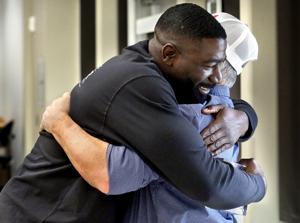
Both graduates acknowledged the deep connections formed within their cohort. “We’re all kind of like brothers,” Cox remarked. “I feel like that really blossomed from day one.”
The success of this program illustrates the potential for educational institutions to adapt and meet the evolving demands of the job market, providing students with the tools they need to succeed.