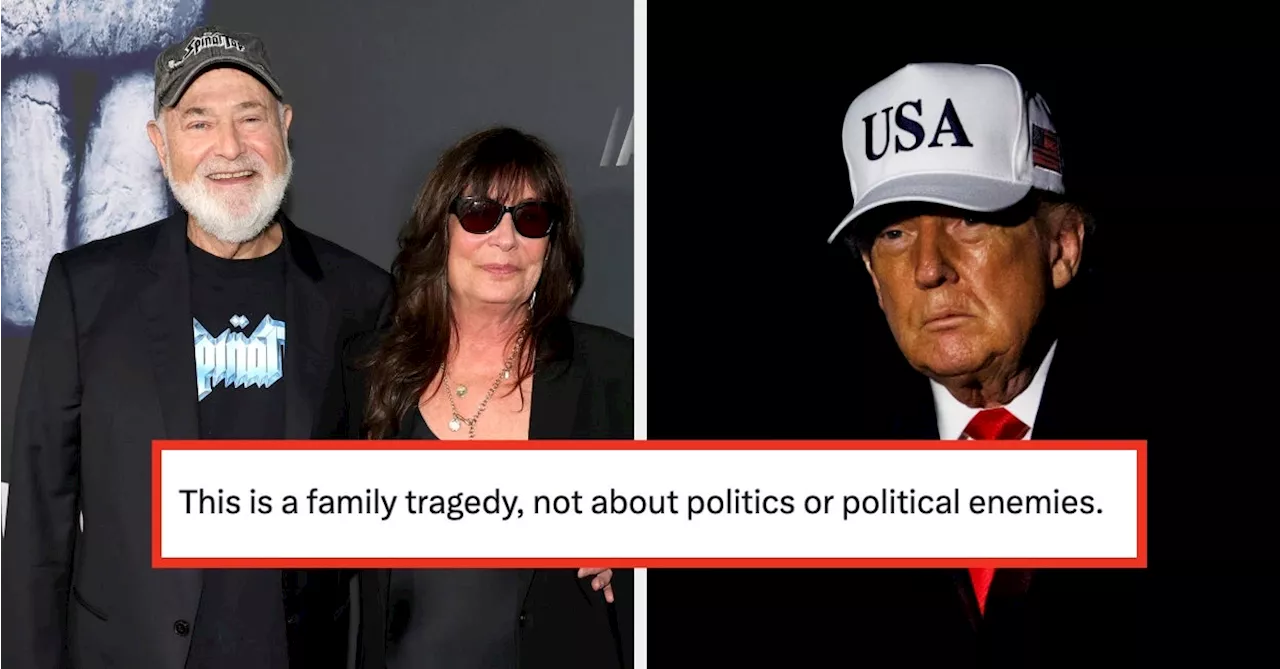
Former President Donald Trump faced bipartisan backlash for his comments following the death of acclaimed actor-director Rob Reiner. The response to Trump’s remarks has been swift and largely negative, with condemnation rising from both Republican and Democratic leaders. Critics accuse Trump of politicizing a personal tragedy, particularly given Reiner’s past vocal opposition to his administration.
Reiner, known for his significant contributions to film and television, passed away on March 10, 2024, at the age of 78. His work, including directing classics such as “The Princess Bride” and “Stand by Me,” earned him a lasting legacy in the entertainment industry. Reiner was also a prominent political activist, often using his platform to express views on social issues and current events. His dual identity as a celebrated artist and outspoken critic of Trump added complexity to the public’s reaction to his untimely death.
In a post on social media, Trump alluded to Reiner’s political leanings, suggesting that they contributed to his demise. This comment, which referenced the term “Trump Derangement Syndrome,” was perceived as deeply insensitive. Critics argue that such language exploits a personal tragedy for political gain, further inflaming an already divided political landscape.
Reactions from members of Congress encapsulated the widespread disapproval. Thomas Massie, a Representative from Kentucky, described Trump’s remarks as “inappropriate and disrespectful,” emphasizing that the focus should be on offering compassion and support to Reiner’s family during their time of grief. His sentiments echoed a growing consensus that political discourse should not overshadow human suffering.
Similarly, Marjorie Taylor Greene, a Georgia Representative, highlighted the importance of recognizing the personal tragedy rather than engaging in political rivalries. She stated that the situation was “not about politics or political enemies,” reinforcing the notion that empathy should prevail in moments of loss.
New York Representative Mike Lawler also spoke out, advocating for a compassionate response to Reiner’s passing. He pointed out that sympathy should transcend political affiliations, calling for a collective expression of support for the grieving family. Oklahoma Representative Stephanie Bice joined her colleagues in urging that the focus remain on prayers and support rather than political spectacle, further emphasizing the need for a respectful approach in the face of tragedy.
The backlash to Trump’s comments has not been confined to political circles. Media outlets and commentators have expressed concern over the implications of politicizing sensitive events. Many analysts pointed to the stark contrast between the gravity of Reiner’s death and the perceived callousness of Trump’s statement. This incident has reignited discussions around the responsibilities of public figures during times of grief and the importance of maintaining civility, even amidst political disagreements.
The combination of Reiner’s passing and Trump’s controversial remarks serves as a poignant reminder of the deep divisions within the political landscape. It raises important questions about the ethics of public commentary and the necessity of demonstrating compassion, even towards those with whom one disagrees. As the nation reflects on this event, the discussions surrounding empathy and respect in public discourse will likely continue to resonate, highlighting the human cost of political rhetoric.
In a time where political tensions often overshadow personal tragedies, the incident emphasizes the critical need for kindness and understanding, serving as a call for all public figures to reconsider the weight of their words during sensitive moments.