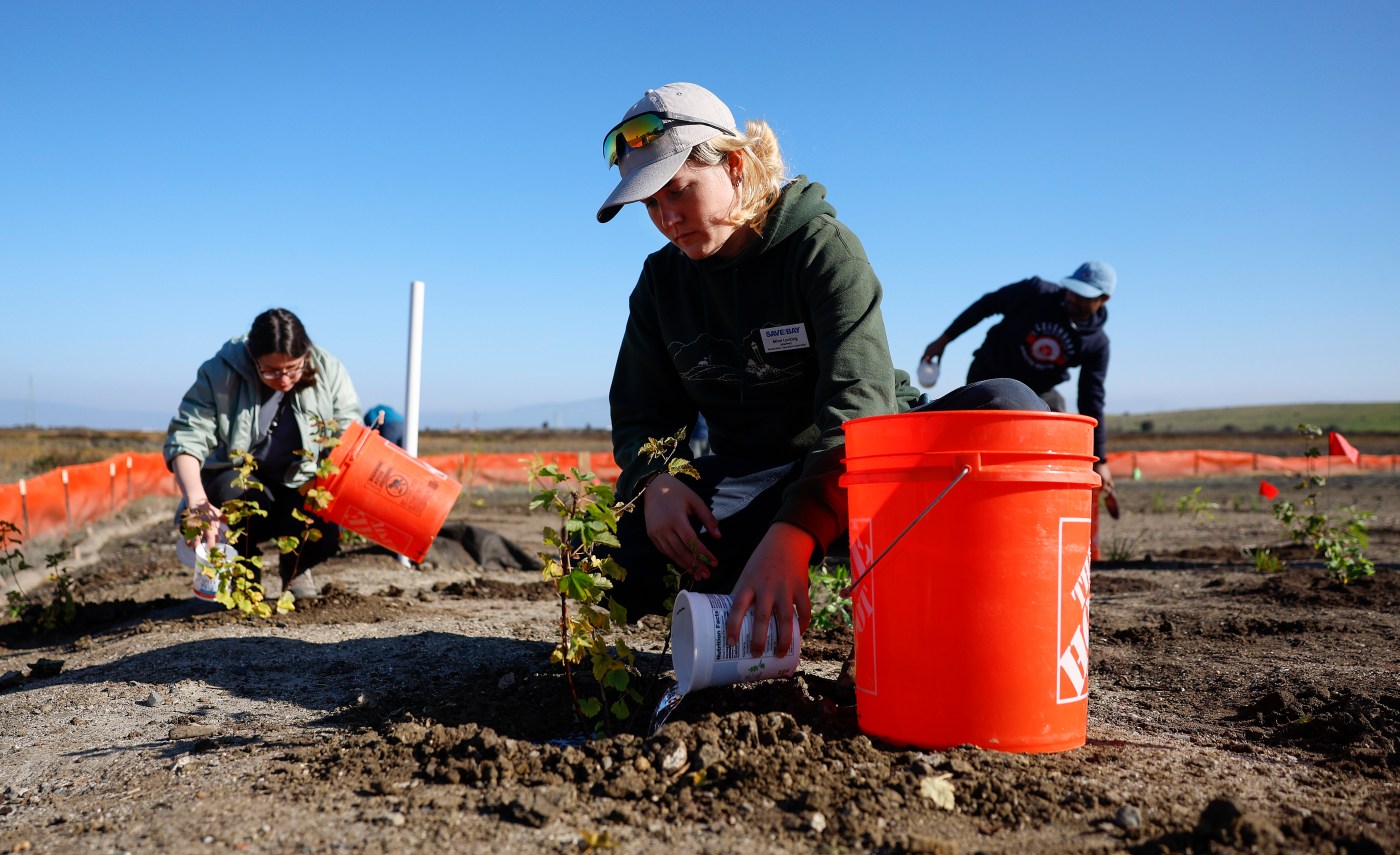
UPDATE: Volunteers are actively planting the Bay Area’s first-ever “living levee” along the Harbor Marsh coastline in the Palo Alto Baylands today, December 10, 2025. This urgent initiative aims to combat climate change effects, including rising sea levels and increased flooding, by using innovative nature-based solutions.
About 35 volunteers gathered early this morning to help establish this critical buffer, which is designed to absorb storm surges and protect vulnerable shoreline communities. The project is both a pioneering environmental effort and a community engagement activity, with another volunteer day scheduled for Saturday morning.
Led by Save The Bay, this groundbreaking project uses treated wastewater to irrigate native plants like black elderberry and marsh baccharis. Jessie Olsen of Save The Bay emphasized the importance of this first phase, stating that the plants are expected to reach full maturity by the end of 2026.
“We often find that these in-person shoreline experiences are a good way to introduce concepts like nature-based solutions,” Olsen said.
City officials describe this project as a significant step in combining wastewater reuse with habitat restoration. Karin North, Palo Alto’s assistant director of Public Works, stated, “This project is unique on the San Francisco Bay shoreline. It uses treated wastewater from the plant to irrigate native plants and restore a transition zone between freshwater and salt marshes.”
The initiative comes in light of a troubling climate adaptation assessment warning that sea levels could rise between 3 to 10 feet by 2100, posing serious risks to multiple communities, including Palo Alto and nearby East Palo Alto. These areas frequently experience flooding during storms and atmospheric rivers.
In preparation for this project, the Palo Alto treatment facility underwent $369 million in upgrades to ensure safe wastewater release into the Bay, preventing harmful algal blooms that threaten marine life. The facility is crucial infrastructure that the levee aims to protect.
Unlike traditional concrete levees, the “living levee” harnesses the power of native plants to provide natural protection against storm surges, reducing local flood risks while enhancing wildlife habitats. The total project cost is approximately $7 million, split between $2 million for design and $4.8 million for construction, with development beginning last September.
Senior engineer Samantha Engelage highlighted the levee’s multifaceted benefits, stating it will also help to accumulate sediment over time, aiding marsh restoration and adaptation to rising sea levels.
Wildlife in the region includes species such as clapper rails, black rails, and the western pygmy blue butterfly, which will benefit from the newly created habitats.
Engelage expressed hope that this project will serve as a model for larger shoreline protection initiatives in the future, noting, “We know a larger project will be needed to address all the levees in this area.”
Similar projects are already underway in the Bay Area, including a horizontal levee in Hayward that uses treated wastewater but is not directly connected to the Bay. Another project in Mountain View is working on marsh restoration but does not use treated wastewater.
Heidi Nutters of the San Francisco Estuary Partnership stated that they aim to inspire cities to rethink wastewater as a resource rather than waste, highlighting the importance of designing natural systems that bolster community resilience.
This innovative approach not only addresses immediate environmental challenges but also fosters community involvement and education about sustainable practices. As this project unfolds, its impact could resonate far beyond Palo Alto, potentially influencing similar initiatives across the region.