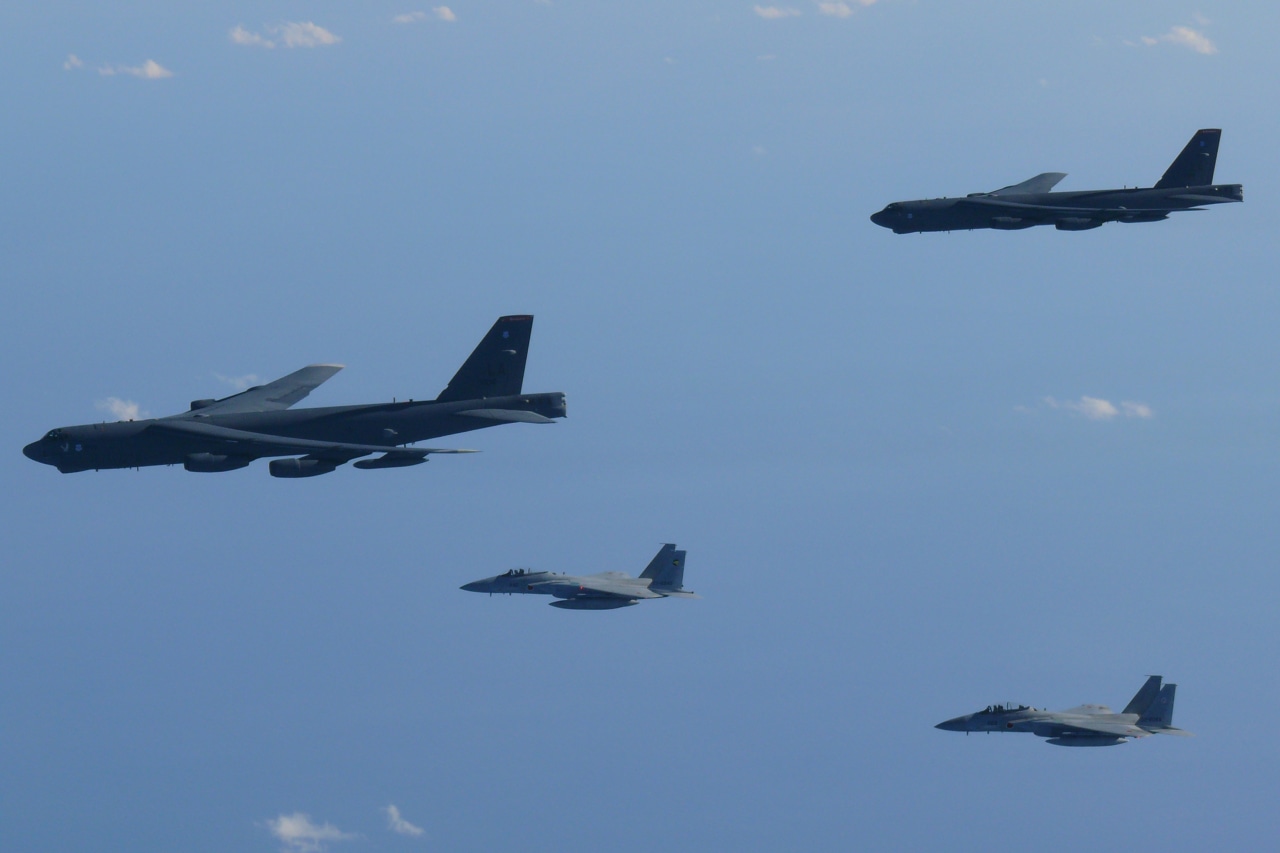
The United States and Japan demonstrated their military alliance on October 30, 2023, with a joint flight involving U.S. B-52 bombers and Japanese fighter jets over the Sea of Japan. This operation aimed to reaffirm the strength of their partnership amid escalating tensions in the region, particularly concerning China’s assertive stance.
Military Coordination Amid Regional Tensions
The B-52 bombers, known for their long-range capabilities, flew alongside the Japan Air Self-Defense Force jets in a coordinated exercise that showcased their operational compatibility. This display of military might is viewed as a strategic move to deter any potential aggression from neighboring countries, particularly China, which has increased its military activities in the area.
U.S. officials emphasized the significance of the exercise, stating it represents a commitment to regional security and stability in response to challenges posed by Beijing. The Pentagon highlighted that joint operations like this are essential for maintaining peace in the Indo-Pacific region, which has witnessed heightened tensions in recent months.
Strengthening Alliances Through Joint Exercises
This flight was part of a broader strategy to enhance defense cooperation between the United States and Japan. By conducting these high-profile exercises, both nations aim to strengthen their operational readiness and underscore their commitment to mutual defense agreements.
Japan’s Prime Minister, Fumio Kishida, has been vocal about the need for enhanced defense capabilities, particularly in light of North Korea’s missile tests and China’s maritime expansion. The recent joint exercise serves as a message to both allies and adversaries that the U.S.-Japan alliance remains robust.
The exercise involved multiple sorties and was closely monitored by military analysts. Observers noted that the integration of U.S. and Japanese forces exemplifies the growing military cooperation between the two nations, which is increasingly necessary in the face of regional challenges.
As the geopolitical landscape continues to evolve, both countries are likely to engage in more joint military activities. These operations not only serve as a deterrent but also foster deeper ties between the U.S. and Japanese armed forces, ensuring they are prepared for any potential conflict in the region.
In a statement following the joint flight, a spokesperson for the U.S. Air Force remarked that such operations are vital for enhancing interoperability and ensuring that both nations can respond effectively to any threats.
As the situation in the Indo-Pacific remains tense, the U.S. and Japan’s commitment to military collaboration signals a united front against any challenges that may arise, reinforcing their strategic partnership in a rapidly changing global environment.