NASA has marked a significant milestone with 25 years of continuous human presence aboard the International Space Station (ISS), a hub for technological advancements that enhance space exploration. Since November 2000, the ISS has served as a platform for groundbreaking research, enabling scientists and astronauts to develop technologies that will support future missions to the Moon and Mars.
Advancements in Robotic Technology
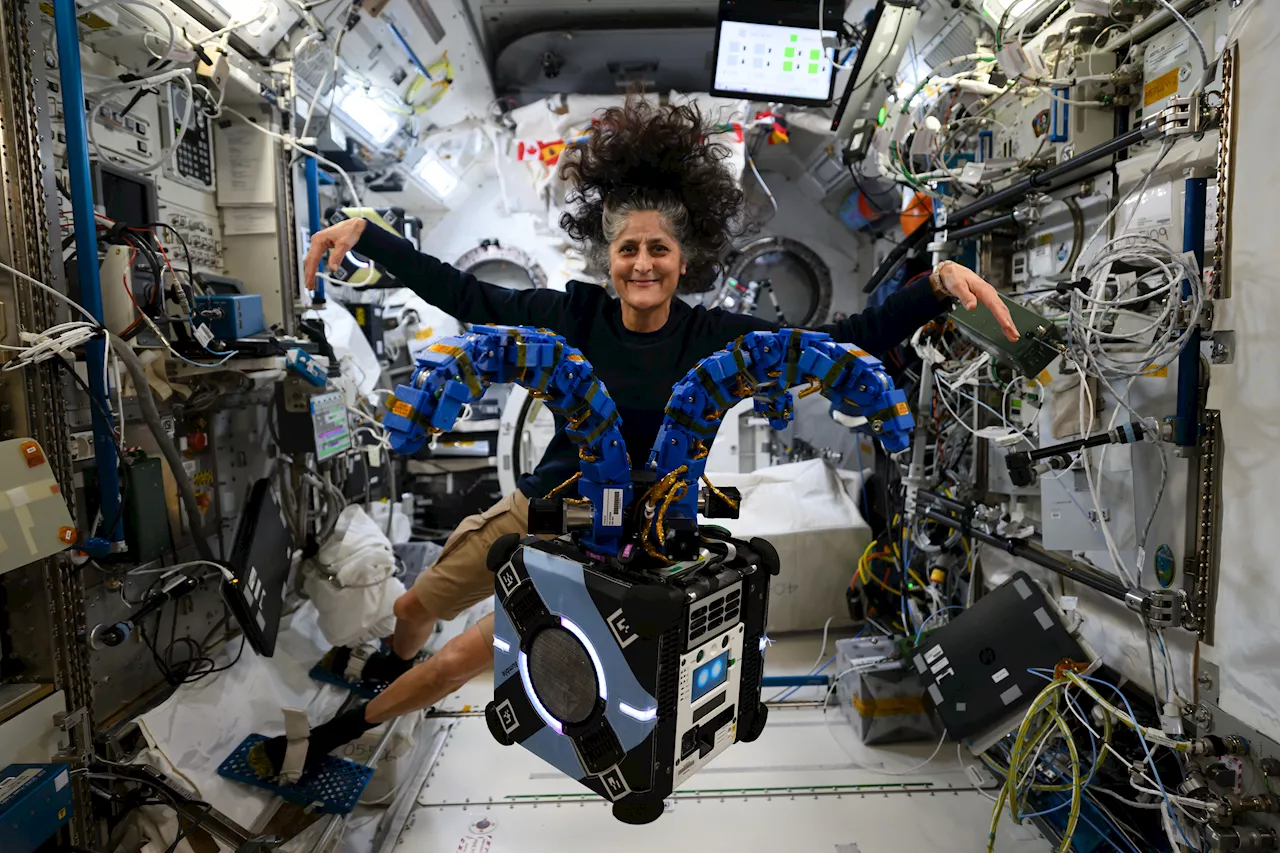
The ISS has been pivotal in the evolution of robotic technology, crucial for various operations, including satellite maintenance and reducing space debris. Among the notable advancements is the Astrobee robotic free-flyer, which NASA astronaut Suni Williams recently demonstrated within the Kibo laboratory module. This innovative technology aims to extend satellite lifespan through improved capture techniques.
Robotic systems have been integral to the ISS since the introduction of the SPHERES robots in 2003. These Synchronized Position Hold, Engage, Reorient, Experimental Satellites supported environmental monitoring and materials testing for over a decade. The evolution continues with the Astrobees, which autonomously perform tasks like inventory management and experiment documentation, showcasing the potential of robotics in space.
NASA’s Robonaut 2, designed to work alongside humans, has the capability to handle both routine tasks and high-risk activities, making it a valuable asset for future missions. As NASA prepares for the Artemis missions aimed at lunar exploration, advanced robotic technologies will play a critical role in ensuring crew safety and mission success.
Life Support and Sustainability in Space
Living aboard the ISS for extended periods demands innovative life support technologies. The station’s systems are designed to optimize limited resources, with a focus on sustainability. The Regenerative Environmental Control and Life Support System efficiently manages air and water recycling. This system transforms wastewater, including crew members’ urine, into clean drinking water, exemplifying how advanced engineering can meet the challenges of long-duration space habitats.
The air revitalization system filters carbon dioxide and contaminants, while the oxygen generation system uses electrolysis to produce breathable air from water. These systems will provide essential data for maintaining crew health during upcoming lunar missions and future expeditions to Mars.
Additionally, additive manufacturing, commonly known as 3D printing, has been tested on the ISS since November 2014. This technology allows astronauts to produce tools and parts as needed, significantly reducing cargo requirements for missions. Future advancements include the creation of human tissues for medical applications, further underscoring the ISS’s role in pioneering life-support technologies.
Solar Power Innovations and Educational Outreach
The ISS has also served as a testing ground for solar power technologies. Its four pairs of solar arrays harness sunlight to provide energy for station operations. Research has focused on advanced solar cell technology, enhancing efficiency and durability in the harsh conditions of space. Notably, the development of the ISS Roll-Out Solar Arrays, which provide a 20% to 30% increase in power, demonstrates the ongoing commitment to improving energy solutions for future spacecraft.
The ISS’s impact extends beyond scientific research; it has become a global educational platform. Initiatives like the Amateur Radio on the International Space Station (ARISS) program connect astronauts with students, fostering interest in science, technology, engineering, and mathematics (STEM). Since its inception, ARISS has engaged over 1 million students across 63 countries, sparking curiosity and inspiring the next generation of explorers.
As NASA continues to prepare for its Artemis missions, the ISS remains a vital asset in advancing human understanding of living and working in space. The lessons learned over the past 25 years will inform future endeavors, ensuring that the spirit of exploration and innovation endures.