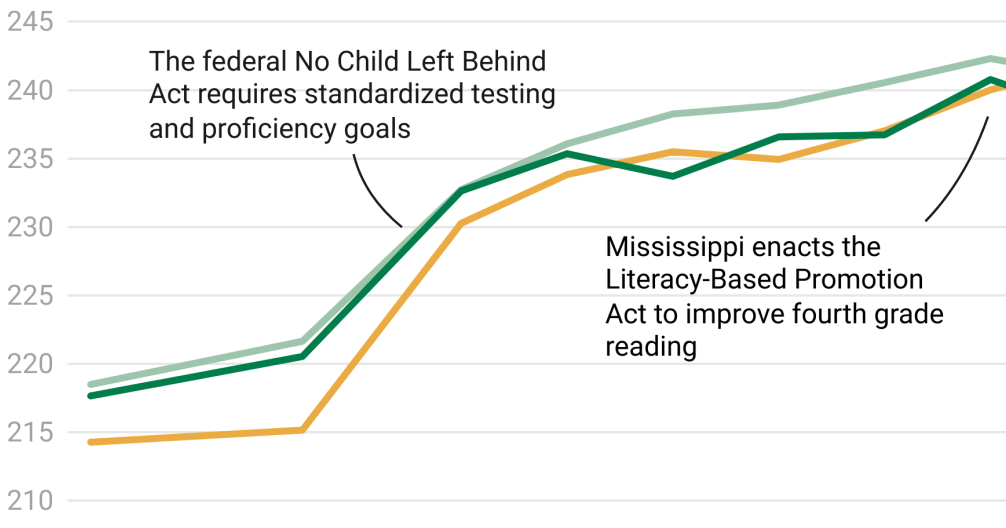
Recent data from the National Assessment of Educational Progress (NAEP) reveals a stark contrast in reading proficiency among fourth-grade students in the United States. While Mississippi has made significant strides, Oregon’s reading scores have declined. This trend has raised concerns about the effectiveness of educational strategies in different states.
The NAEP report, released in early October 2023, indicates that Mississippi’s fourth graders recorded a notable increase in reading proficiency, with scores climbing by a remarkable 5 points compared to the previous assessment. In contrast, Oregon’s scores fell by 3 points, highlighting a growing educational divide between the two states.
Mississippi’s Reading Success
Mississippi’s success can be attributed to comprehensive educational reforms implemented over the past several years. State officials have invested heavily in early literacy programs aimed at improving reading skills among young students. These initiatives include teacher training, curriculum updates, and a focus on phonics-based instruction. The state’s dedication to enhancing literacy has paid off, as evidenced by the increased performance of its fourth graders on the NAEP.
According to Mississippi’s State Superintendent of Education, Rachel Canter, these results reflect a commitment to educational excellence. “We have prioritized reading as a fundamental skill for our students, and the results speak for themselves,” Canter stated. The improvement in Mississippi’s reading scores is seen as a positive step towards closing the achievement gap.
Oregon’s Challenges
In contrast, Oregon faces significant challenges in improving its reading scores. The state’s decline raises questions about the effectiveness of its educational policies and initiatives. Factors contributing to the downturn may include disruptions caused by the COVID-19 pandemic, which affected learning continuity, and varying levels of resource allocation to schools.
Educational experts emphasize the need for targeted interventions in Oregon to address these issues. Dr. Emily Johnson, an education policy analyst, noted, “Oregon needs to reassess its approach to literacy education. The decline in scores is concerning and indicates that more support is needed for teachers and students alike.”
As Oregon grapples with these challenges, Mississippi’s achievements serve as a potential model for reform. The differences in reading proficiency between the two states emphasize the importance of effective educational strategies and the need for ongoing investment in literacy programs.
The 2023 NAEP results underscore the necessity for states to remain vigilant in their efforts to promote reading proficiency among young learners. As Mississippi celebrates its gains, Oregon must confront its declining scores and seek solutions to enhance educational outcomes for all students.