Concerns are mounting regarding the impact of SpaceX’s growing constellation of Starlink satellites on astronomical observations. A recent study led by researchers at NASA indicates that the proliferation of these satellites could significantly hinder the ability of the Hubble Space Telescope and other observatories to capture clear images.
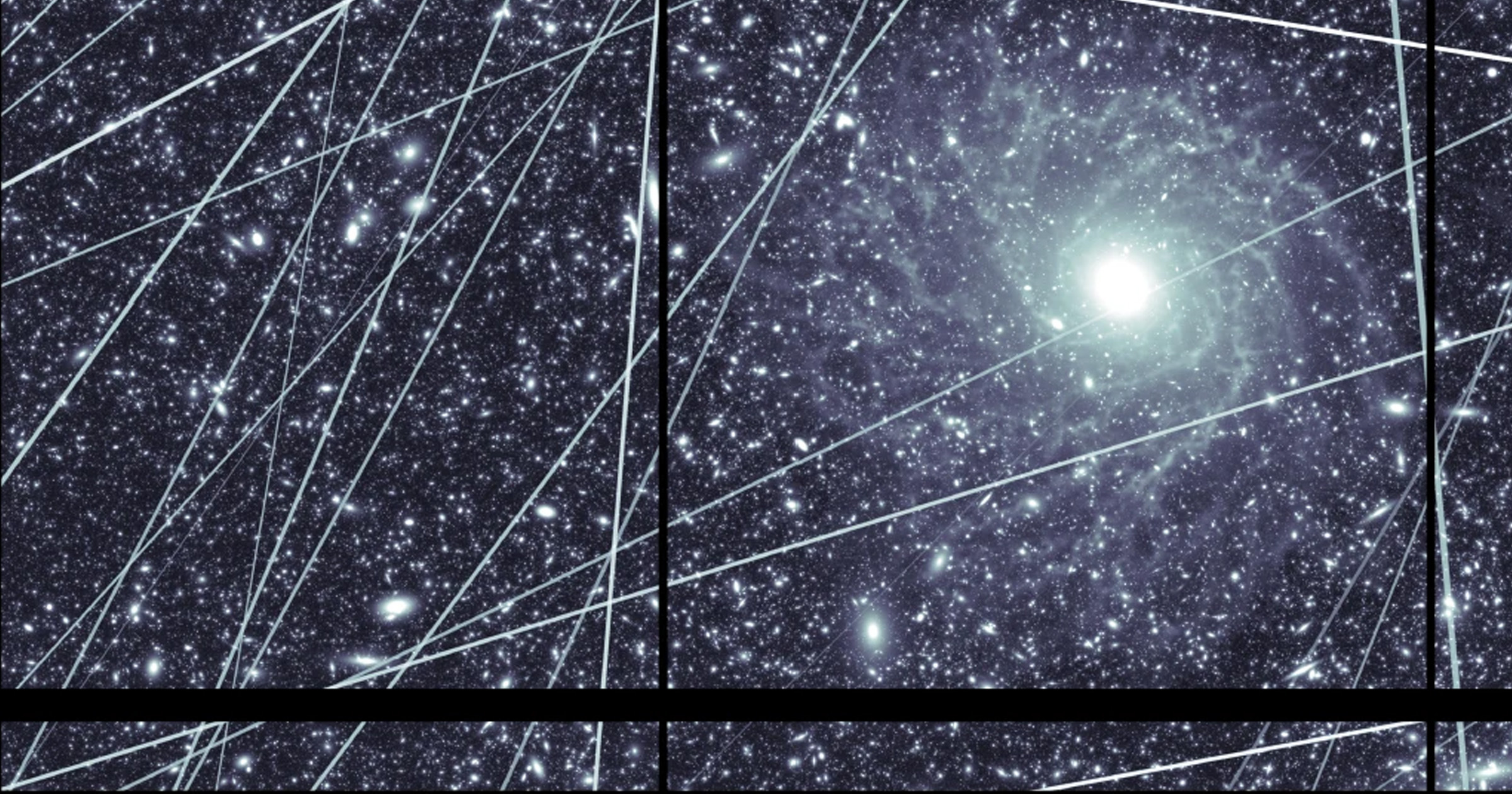
The research, spearheaded by Spanish astrophysicist Alejandro Serrano Borlaff, reveals alarming projections: if satellite deployment plans proceed as expected, approximately one in three images taken by the Hubble will suffer from contamination due to light pollution. This study underscores the escalating problem as both SpaceX and other private companies continue to launch satellites into Low Earth Orbit (LEO).
Currently, SpaceX holds authorization from the U.S. Federal Communications Commission to deploy up to 12,000 satellites, with aspirations to expand this number by an additional 30,000 in the coming years. The researchers suggest that the cumulative effect of these current and future satellite constellations could lead to as many as 500,000 new satellites operating in LEO within the next decade.
“This is the first scientific study whose main objective is to investigate the effects of light pollution on space telescopes, taking into account these plans announced by the industry,” Borlaff stated in an interview with El Pais. The implications of this study extend beyond Hubble; future space telescopes may experience even greater interference.
Impact on Future Observations
The study highlights that the upcoming European Space Agency’s ARRAKIHS mission, expected to launch in the 2030s, could face severe disruptions. Projections indicate that bright streaks of light from satellites may appear in as much as 96 percent of images captured. Similarly, NASA’s recently launched SPHEREx mission could see light pollution contaminate over 99 percent of its observations.
With these statistics, astronomers are increasingly concerned about the long-term viability of their research, particularly as the number of satellites continues to rise. The urgency for international cooperation is evident. Experts emphasize the need for global regulatory frameworks to address the challenges posed by commercial activity in space.
The Road Ahead
As the situation develops, the future of astronomical observations hangs in the balance. Efforts to mitigate the effects of satellite light pollution will require a collaborative approach among nations involved in space exploration. Currently, spacefaring countries, including the United States, have shown reluctance to impose restrictions on satellite launches, complicating the path forward.
The potential for overwhelming light pollution from satellite constellations poses a significant threat to the scientific community’s ability to study the universe. With precious little time to address these challenges, the call for action has never been more critical. As the race to populate the skies continues, the astronomical community is left to grapple with the implications of a future where their observations may be persistently compromised.