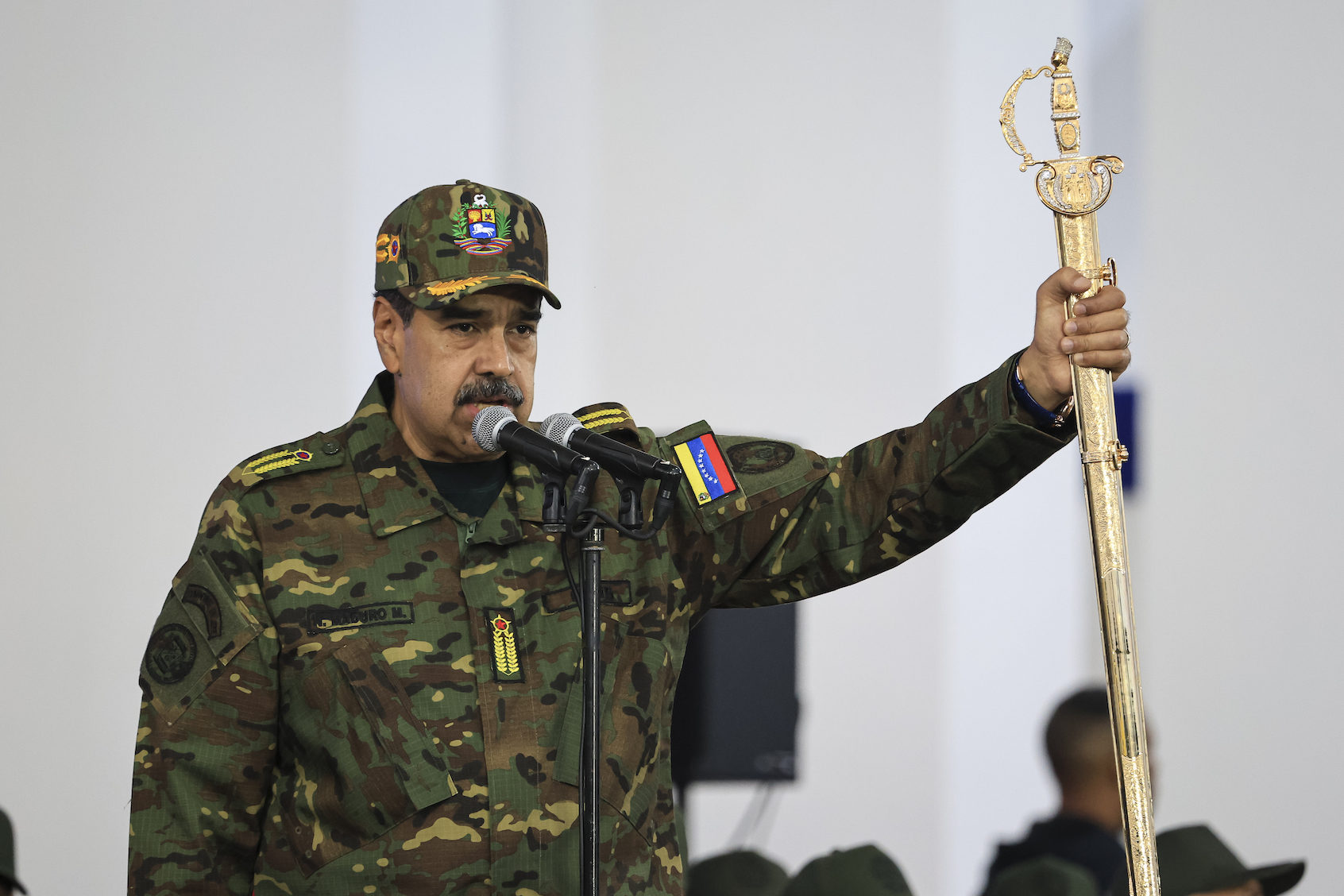
President Donald Trump reportedly issued an ultimatum to Venezuelan President Nicolás Maduro, demanding that he leave the country to ensure his safety amid the threat of a possible U.S. military intervention. This communication took place in late November 2023, as detailed by the Miami Herald.
During a press briefing, Trump confirmed that he and Maduro had spoken but did not elaborate on the specifics of the conversation. “I wouldn’t say it went well or badly, it was a phone call,” Trump stated, providing little insight into the tone or content of their discussion. Sources cited by the Herald indicated that Trump conveyed a “blunt message” to Maduro, urging him to “resign right away.”
Trump’s message reportedly included a stark warning: “You can save yourself and those closest to you, but you must leave the country now.” According to these accounts, Trump suggested that Maduro’s safety would be compromised if he remained in Venezuela. However, sources indicate that Maduro rejected this ultimatum, proposing instead a “global amnesty” for himself and his allies, a request that was swiftly declined by U.S. officials.
Maduro’s administration has faced mounting pressure as the political and economic crisis in Venezuela continues to escalate. In response to Trump’s ultimatum, Maduro reportedly sought to initiate another round of discussions, particularly after the U.S. imposed a no-fly zone over Venezuela. This move was met with silence from the Trump administration, leaving the situation shrouded in uncertainty.
The possibility of U.S. military action in Venezuela remains ambiguous. Trump has accused the Maduro government of contributing to the influx of fentanyl into the United States, a claim that has intensified tensions between the two nations. In October 2023, Trump declared a “non-international armed conflict” aimed at drug cartels with alleged ties to Venezuela, which included extrajudicial missile strikes on civilian vessels suspected of drug trafficking.
The international community is closely watching developments in this situation, raising concerns about the humanitarian implications of any military intervention. As the crisis unfolds, the effectiveness of Trump’s strategy in addressing the complex political landscape in Venezuela remains to be seen.
While the White House has not confirmed specific military plans, the escalating rhetoric highlights the precarious state of affairs in Venezuela. The potential consequences of Trump’s actions could have significant ramifications for both U.S.-Venezuela relations and the broader stability of the region.