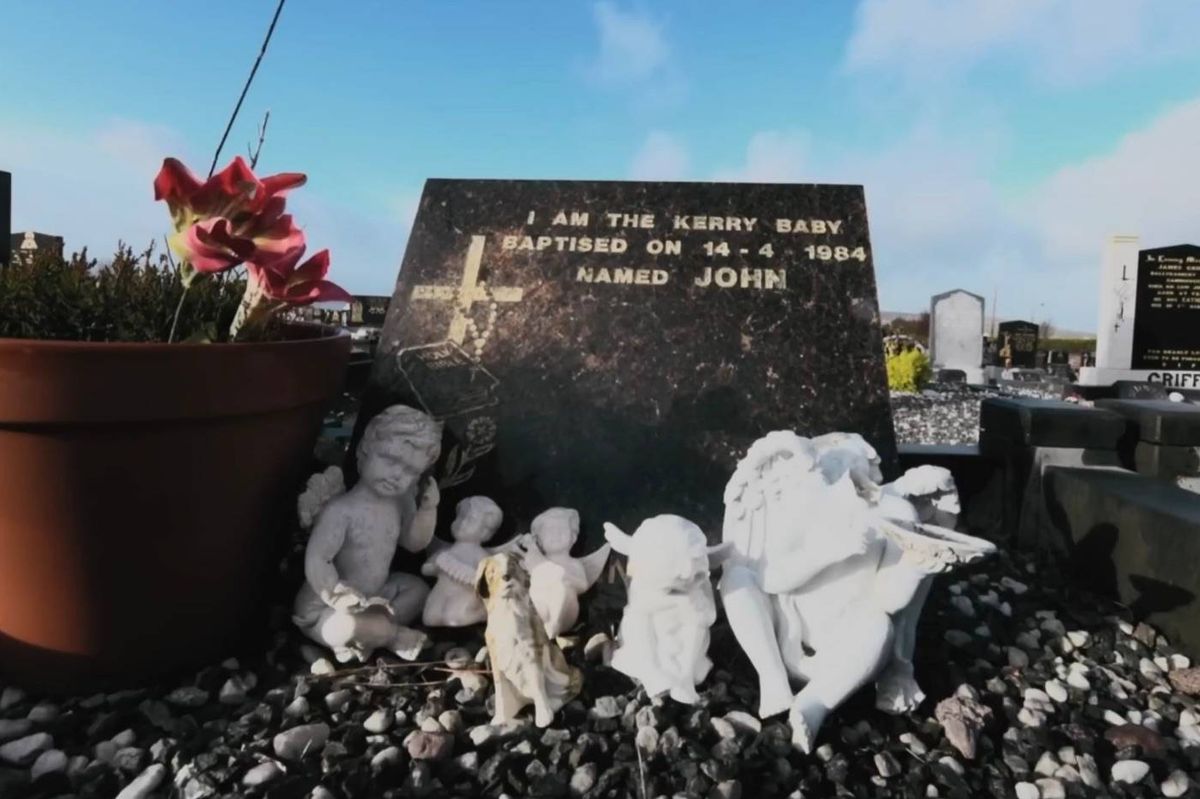
On April 14, 1984, the lifeless body of a five-day-old baby, later named Baby John, was discovered on White Strand beach in County Kerry, Ireland. The infant had suffered from 28 stab wounds and a broken neck, raising immediate fears about the circumstances of his death. Despite extensive investigations, neither the baby’s parents nor the perpetrator have ever been identified, making this case one of Ireland’s most distressing unsolved mysteries.
The shocking discovery was made by local farmer Jack Griffin during an evening jog. He described the moment to the Irish Times, recalling the horror of realizing the lifeless form before him was not a doll but a newborn. “It was pink in colour, face downwards with black hair,” he said, emphasizing the emotional impact of the find.
Following the discovery, police launched a murder investigation and quickly focused on Joanne Hayes, a 25-year-old receptionist from Abbeydorney. At that time, Ireland was a very different society, where divorce and abortion were illegal, and children born out of wedlock faced societal stigma. On the same day Baby John was found, Hayes had been admitted to a hospital, where medical staff confirmed she had recently given birth.
Suspicion arose from the absence of her baby, conceived with a married man named Jeremiah Locke. Detectives believed they had cracked the case when Hayes confessed to birthing Baby John and then killing him, claiming her family helped dispose of the body. Hayes was charged with murder, along with four relatives who faced related charges. However, these confessions were later retracted, with allegations of coercion by police.
Further complicating the investigation, it emerged that Hayes had given birth to another baby boy named Shane during the same week as Baby John’s death. Blood tests revealed that Shane’s blood type matched that of his parents, while Baby John’s blood type was A, suggesting he could not have been Hayes’ child. Despite this evidence, police proposed an implausible theory of superfecundation, suggesting Hayes could have had twins with different fathers. Ultimately, this theory unraveled, leading to the dismissal of charges against her.
The subsequent Kerry Babies Tribunal aimed to investigate police conduct but became notorious for its invasive questioning of Hayes about her personal life. The inquiry faced backlash, particularly after a moment where she had to leave the stand to be sick, highlighting the distress caused by the proceedings.
In a significant turn of events, DNA testing conducted in 2018 confirmed that Joanne Hayes could not have been Baby John’s mother. Former Taoiseach Leo Varadkar issued a public apology to Hayes, acknowledging the injustices she faced during the investigation. Furthermore, the Irish state compensated her and her family with €2.5 million (approximately $2.9 million) for the distress caused by the wrongful accusations.
Justice Minister Simon Harris characterized the treatment of Hayes as “despicable and unacceptable,” marking a pivotal moment in Ireland’s social history. Although Joanne published a memoir titled My Story in 1985, she has largely stayed out of the public eye since.
Recent developments in 2023 saw two individuals, a man in his 60s and a woman in her 50s, arrested in connection with the Kerry Babies case, although they were later released without charge. The unresolved nature of Baby John’s death continues to haunt the community, and Superintendent Flor Murphy has made public appeals for information, emphasizing that any tips will be handled with sensitivity.
As Ireland grapples with its past, the case of Baby John serves as a sobering reminder of the consequences of societal pressures and the failures of the justice system. The mystery surrounding his death remains unsolved, with both his parents and the killer still unidentified, leaving a lingering cloud over this tragic chapter in Irish history.