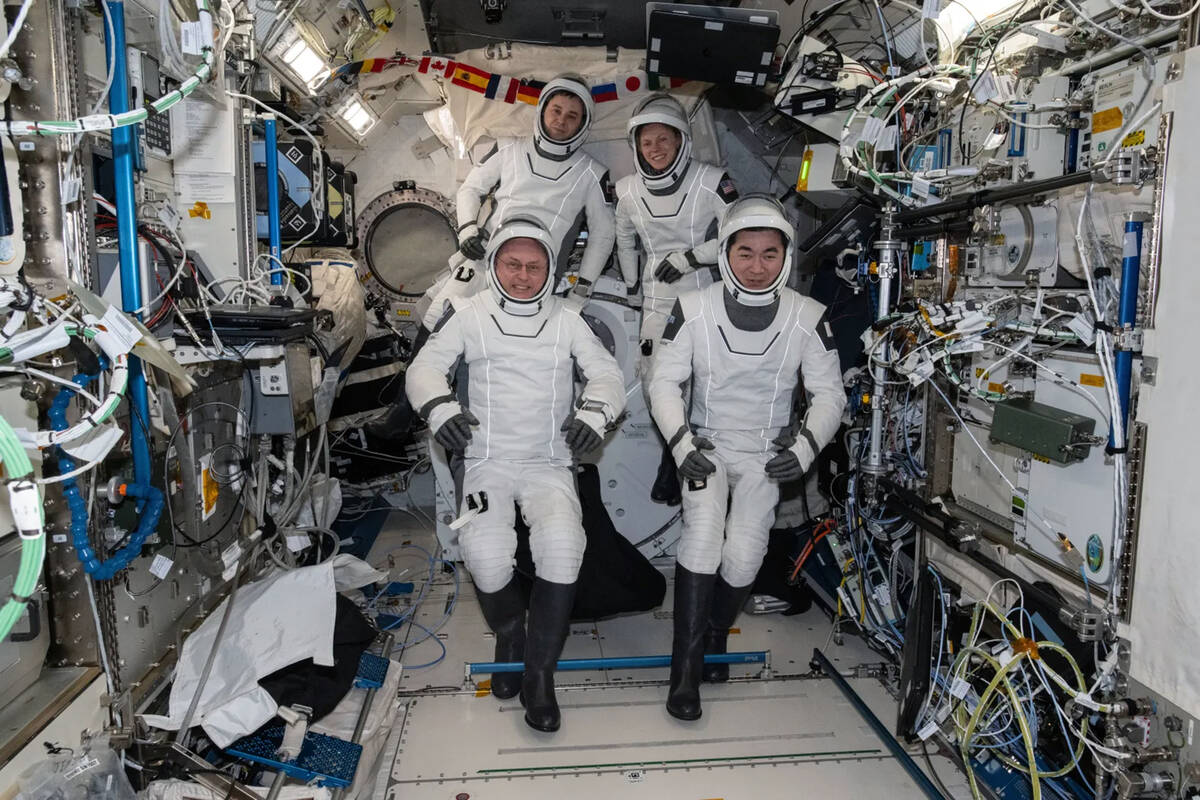
NASA has authorized the SpaceX Crew-11 mission to depart the International Space Station (ISS) on Wednesday, heading for an overnight splashdown in the Pacific Ocean. The crew, consisting of NASA astronauts Zena Cardman (commander) and Mike Fincke (pilot), along with Kimiya Yui from JAXA and Oleg Platonov from Roscosmos, are concluding their mission earlier than planned due to a medical issue affecting one of the crew members.
The targeted departure time is set for 17:05 ET, with the anticipated landing scheduled for 03:41 ET on Thursday. Live coverage will begin at 02:15 ET and can be accessed through NASA+, Amazon Prime, and NASA’s YouTube channel. Originally launched from Kennedy Space Center on August 1, 2025, Crew-11 was expected to remain aboard the ISS until late February, following the arrival of their replacement, Crew-12.
NASA officials have not disclosed the specifics of the medical issue, but it did lead to the postponement of a planned spacewalk involving Fincke and Cardman. Fincke, now on his fourth spaceflight, had previously commanded the entire station as part of Expedition 74, only recently relinquishing his command in a ceremony on Monday. “It’s bittersweet,” said Fincke. “I wish it were longer, but we have what we have, and it was really — it was a lot of fun.”
Both Cardman and Platonov are on their first missions to space, while Yui has previously flown once to the ISS. Fincke, who began his astronaut career in 1996, participated in the last flight of the Space Shuttle Endeavour in 2011. Cardman has now become the final member of her 2017 astronaut class to reach space.
“Our timing of this departure is unexpected, but what was not surprising to me was how well this crew came together as a family to help each other and just take care of each other,” Cardman remarked.
As Crew-11 departs, the ISS’s population will decrease from seven to three. Remaining on board are NASA astronaut Chris Williams and Roscosmos cosmonauts Sergey Kud-Sverchkov and Sergei Mikaev, who arrived at the station last November aboard a Soyuz spacecraft. They will soon be joined by the four members of Crew-12, currently scheduled to launch no earlier than February 15, 2025.
“We’re leaving you with all a lot of work, but also with a lot of knowledge, knowing that you guys are really going to do super well,” Fincke expressed to the crew remaining on the ISS. New commander Kud-Sverchkov encouraged unity among the crew, echoing Fincke’s initial command by suggesting they have a group hug.
The ISS has been continuously inhabited for over 25 years and has primarily operated with three-person crews from 2011 to 2020 after the retirement of the Space Shuttle program. SpaceX has revitalized crewed launches from the U.S. since its test mission, Demo-2, in May 2020. Since then, the company has completed 11 crew rotation missions to the ISS, where the standard crew complement is typically seven.
While SpaceX has previously returned its Crew Dragon spacecraft before the arrival of relief crews, the customary practice includes several days of overlap to allow for a smooth transition. NASA and SpaceX are currently discussing the possibility of advancing Crew-12’s launch schedule. When Crew-12 does launch, it will mark the second human spaceflight from Cape Canaveral Space Force Station’s Launch Complex 40, following Crew-9’s inaugural mission in 2024.
Crew-12 will include NASA astronauts Jessica Meir (commander) and Jack Hathaway (pilot), along with ESA astronaut Sophie Adenot and Roscosmos cosmonaut Andrey Fedyaev. NASA Administrator Jared Isaacman confirmed that operations for Crew-12 will be separate from the potential launch of the Artemis II mission, which could happen as early as February 6 from Launch Pad 39-B at Kennedy Space Center.
NASA is preparing to roll out the Space Launch System rocket and Orion spacecraft for testing, aiming for the first crewed Artemis mission. If successful, this could align with early February launch opportunities, although plans are also in place for potential launches in March and April.