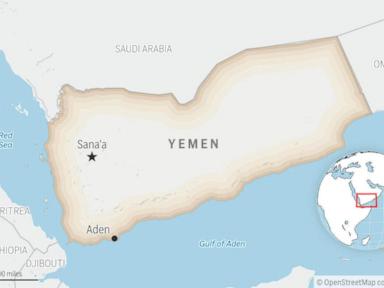
Saudi Arabia has formally urged Emirati-backed separatists in Yemen to withdraw their forces from two governorates, a move that could strain the coalition fighting against Houthi rebels. The statement, issued by the Saudi Foreign Ministry on December 25, 2023, seeks to apply public pressure on the Southern Transitional Council (STC), which has received longstanding support from the United Arab Emirates.
The call for withdrawal specifically targets the governorates of Hadramout and Mahra, which the STC has recently occupied. The Saudi ministry emphasized the necessity for all Yemeni factions to collaborate and exercise restraint to prevent any actions that might destabilize the already fragile situation. “The kingdom stresses the importance of cooperation among all Yemeni factions and components to exercise restraint and avoid any measures that could destabilize security and stability, which may result in undesirable consequences,” the statement read.
Saudi Arabia has aligned itself with other Yemeni forces, such as the National Shield Forces, in the ongoing conflict against the Iranian-backed Houthis, a military engagement that began in 2015. The recent Saudi announcement highlights ongoing mediation efforts aimed at restoring the status quo, with the intent for STC forces to return to their previous positions outside the two governorates and to transfer control of military camps in those areas to the National Shield Forces.
The STC has increasingly adopted the flag of South Yemen, reflecting its aspiration for the region to secede from Yemen, a separate entity from 1967 until its unification in 1990. Following the Saudi announcement, there were calls for demonstrations in Aden to support the political movement advocating for secession, though it remains uncertain whether these protests will materialize in light of the recent developments.
The situation also places additional pressure on the relationship between Saudi Arabia and the UAE. Both nations are members of the OPEC oil cartel and have historically maintained close ties, but they have recently competed for influence and business interests in Yemen.
The Houthis seized control of Yemen’s capital, Sanaa, in September 2014, leading to the exile of the internationally recognized government. Despite Tehran’s denial of providing arms to the Houthis, evidence of Iranian-manufactured weaponry has been discovered on the battlefield and in shipments directed to Yemen, violating a United Nations arms embargo.
The Saudi-led coalition, equipped with U.S. weaponry and intelligence, intervened in the conflict in March 2015 to support Yemen’s exiled government. The prolonged fighting has pushed Yemen, already the Arab world’s poorest nation, to the brink of famine. The war has resulted in over 150,000 deaths, encompassing both military personnel and civilians, contributing to one of the world’s most dire humanitarian crises.
In recent months, the Houthis have escalated attacks on vessels in the Red Sea, significantly disrupting regional shipping routes. Although shipping traffic has increased recently following a lull in attacks, many shipping companies continue to reroute around Africa via the Cape of Good Hope to avoid the Red Sea and Gulf of Aden.
The ongoing chaos in Yemen raises concerns about potential U.S. involvement. Earlier this year, the United States conducted airstrikes targeting the Houthis, a campaign that was paused by former President Donald Trump shortly before a trip to the Middle East. The Biden administration has also launched strikes against the Houthis, utilizing B-2 bombers to target what it described as underground bunkers used by the rebels.
Currently, the Houthis have increased threats towards Saudi Arabia and have taken numerous workers from U.N. agencies and other humanitarian groups as prisoners, alleging without evidence that they are spies. This assertion has been vehemently denied by the U.N. and related organizations.
As the situation continues to evolve, the dynamics between the involved parties remain precarious, with implications for regional stability and humanitarian conditions in Yemen.