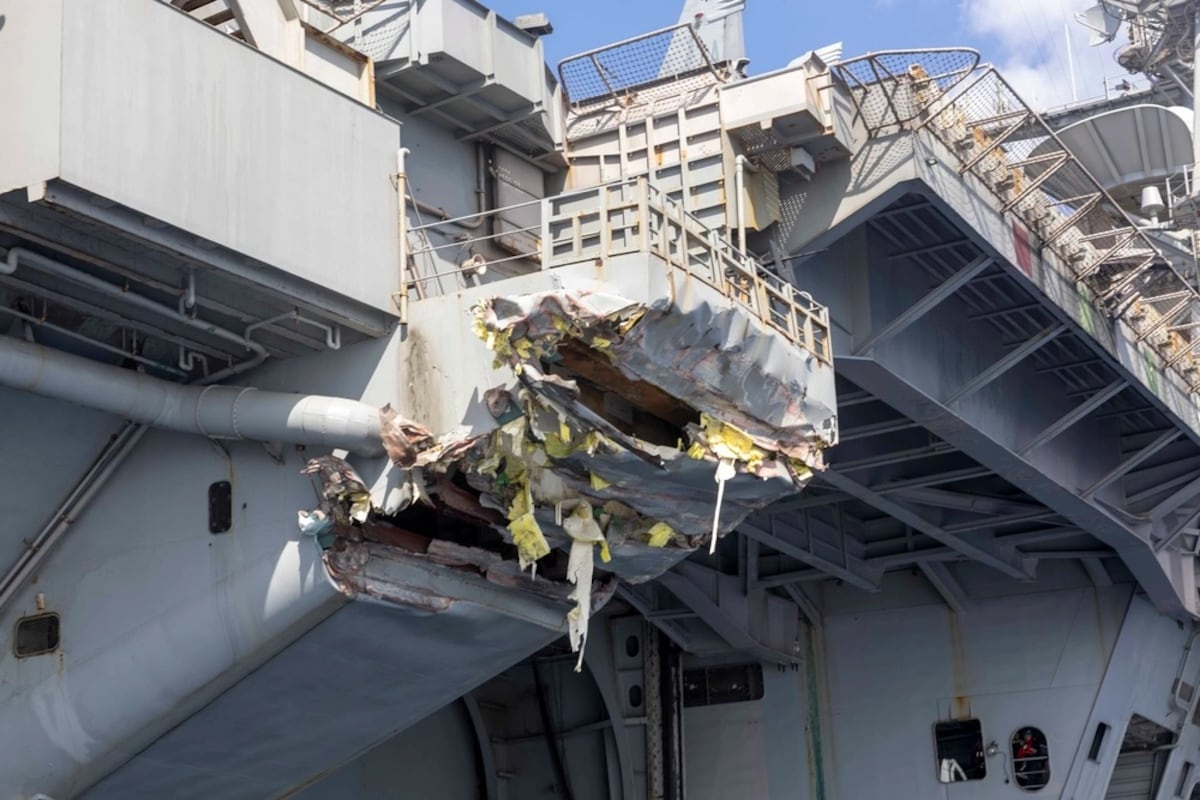
The U.S. Navy’s investigation into the collision of the USS Harry S. Truman with a merchant vessel on February 12, 2023, has identified key factors contributing to the incident. Released last week, the redacted report highlights issues such as fatigue and inadequate seamanship among crew members. The findings emphasize the need for changes in operational procedures to prevent similar occurrences in the future.
Conducted by Vice Adm. Jeffrey T. Anderson, commander of the U.S. 6th Fleet, the investigation began three days after the collision near Port Said, Egypt. The report, now available on the Navy’s Freedom of Information Act Reading Room site, notes that while no lives were lost, the consequences could have been severe. The USS Truman, which was five months into its deployment at the time, managed to continue its mission post-collision.
The report pinpoints several human factors that played a significant role in the incident. Crew members reportedly experienced severe fatigue, often obtaining only two to four hours of sleep within a 24-hour period. The Navy mandates that watch teams receive at least 7.5 hours of sleep daily, yet many crew members indicated they had to choose between meals and rest, sometimes eating just one meal a day. This situation created an environment where over-reporting of sleep duration appeared to be common among sailors.
Critical Findings of the Investigation
The investigation identified four primary causes that contributed to the collision. The first was attributed to the officer of the deck, who exhibited poor seamanship by allowing the USS Truman to travel at a speed of 19 knots without properly assessing the surrounding maritime traffic. Consequently, the officer failed to take necessary precautions to avoid the impending collision, neglecting to adjust the ship’s course adequately.
Secondly, the navigator aboard the Truman did not provide appropriate guidance to the officer of the deck or the watch teams during the vessel’s transit. This lack of leadership resulted in a failure to recommend a safe navigation course to the commanding officer, effectively compromising the ship’s safety.
The third factor involved the watch teams, who did not adhere to basic principles of bridge resource management. The report highlighted that their low seamanship training and experience hindered their ability to recognize and respond to errors in navigation as they unfolded.
Lastly, the report criticized Capt. Dave Snowden, the commanding officer of the USS Truman, for relinquishing responsibility for safe navigation to the navigator and officer of the deck. Following the incident, Snowden was dismissed from his position a week later.
The investigation also noted the inability to gather information from the crew of the merchant vessel, Besiktas-M, which limited the assessment of its role in the collision. Nevertheless, investigators found that the merchant ship did not maintain its course and speed, violating maritime navigation rules and exhibiting poor seamanship.
Recommendations for Future Safety
In light of these findings, the Navy has made several recommendations aimed at improving operational safety. The report suggests that the commander of Naval Air Forces develop a standalone crew endurance policy that emphasizes circadian watch rotations and structured meal and work schedules.
Furthermore, the commanders of the Naval Safety Command, Naval Air Forces, and Naval Surface Forces are urged to assess areas for improvement and reinforce the significance of risk assessment within their operations. The report also recommends the development of training modules for commanding officers and executive officers on effective fatigue management, potentially utilizing wearable technology to monitor sleep and performance, similar to practices used in professional sports.
The report concluded with a section titled “Other Opinions—What Could Have Happened?” which remains redacted, leaving some aspects of the investigation undisclosed. The comprehensive nature of the findings, however, underscores the Navy’s commitment to enhancing safety protocols and ensuring the well-being of its personnel as they navigate complex operational environments.