The world’s leading container shipping companies are altering their sailing schedules due to rising tensions related to the ongoing conflict between the United States, Israel, and Iran. This situation poses significant risks to ocean freight operations in the Persian Gulf, a critical hub for numerous American and European manufacturers. As a result, several carriers have announced temporary cancellations of bookings, skipped port calls, and implemented surcharges for shipments passing through the area.
Carrier Responses to Regional Instability
MSC, the largest container line globally, announced on March 1 that it would suspend all bookings for global cargo to the Middle East “until further notice.” Based in Geneva, the company is closely monitoring the situation and is collaborating with relevant authorities to ensure operational safety. Bookings will resume once the security situation improves.
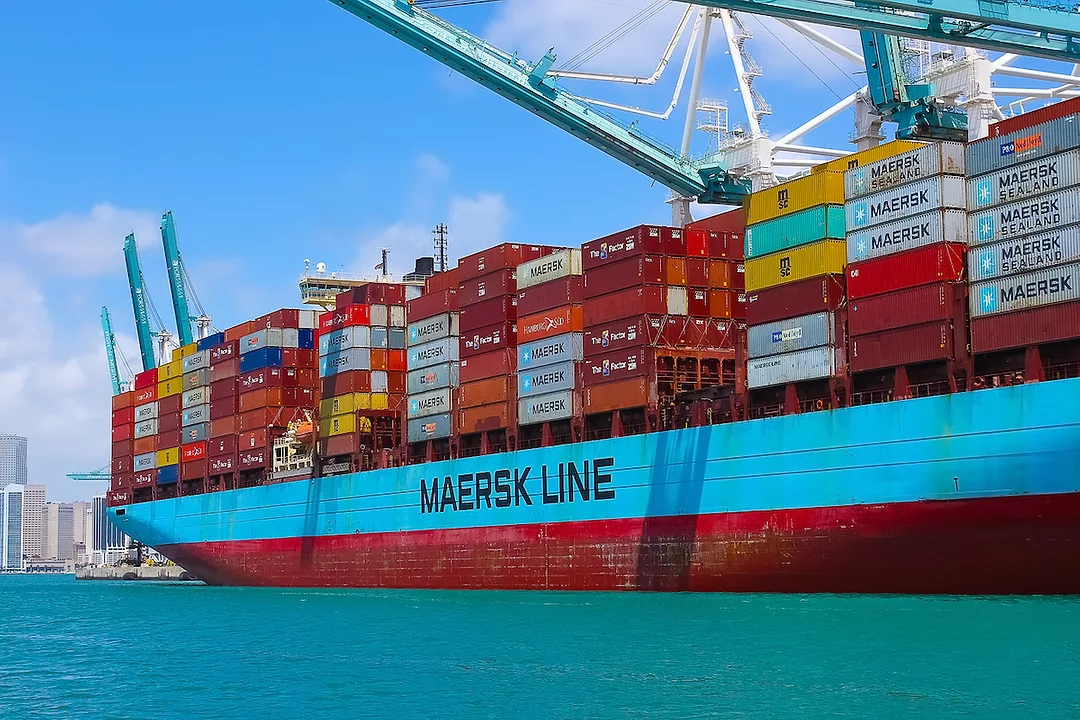
In a similar move, Maersk, based in Copenhagen, declared on March 2 that it would halt refrigerated and hazardous shipments to and from several Gulf nations, including the United Arab Emirates, Oman, Iraq, Kuwait, Qatar, Bahrain, and Saudi Arabia. The company also suspended all new bookings between the Indian subcontinent and these Gulf states. Previously, Maersk had indicated it would avoid the Strait of Hormuz and had already suspended transits through the Red Sea. Following these announcements, Maersk’s shares experienced a notable increase, reaching their highest point since 2022.
CMA CGM, headquartered in Marseille, France, also reacted swiftly. On March 2, the carrier suspended hazardous cargo bookings to a wide range of destinations, including Iraq, Bahrain, Kuwait, and various other Gulf countries. Just a day earlier, on March 1, CMA CGM had paused refrigerated cargo bookings in the region and had stopped trips through the Suez Canal, imposing an “emergency conflict surcharge” of $2,000 per 20-foot container.
The situation has prompted Cosco, China’s largest shipping line, to instruct vessels that have entered the Gulf to seek safe waters and to prioritize navigational safety. Ships headed to the region are advised to proceed with caution, which may involve reducing speed or waiting in designated areas until further instructions are provided.
Further Actions from Other Major Players
Meanwhile, Hapag-Lloyd, a leading German shipping firm, has joined the ranks of carriers avoiding the Strait of Hormuz and rerouting ships away from the Red Sea. As of March 2, the company noted that “no alternative discharge ports have been designated at this stage,” which may lead to extended delivery timelines. In response to the increased risks, Hapag-Lloyd has instituted a “war risk surcharge” of $1,500 per 20-foot container.
Ocean Network Express, based in Singapore, announced on March 2 that it would temporarily suspend acceptance of new bookings for cargo moving to and from the Persian Gulf. The company is assessing the situation for goods currently in transit or planned to travel soon.
These developments underscore the precarious nature of global shipping and the far-reaching effects of geopolitical tensions. As the situation continues to evolve, these major carriers emphasize safety as their top priority, adapting their operations to mitigate risks and ensure the security of their shipments.