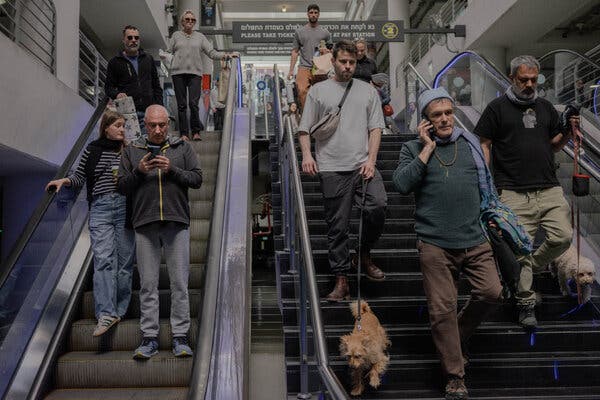
Sirens warning of incoming missile fire from Iran have prompted urgent evacuations to bomb shelters across Israel. This escalating threat has revealed a significant shortage of protected spaces in a nation that has long been on alert for conflict with Iran. A report published by Israel’s state comptroller in January indicates that over three million people, nearly a third of Israel’s population, live in areas lacking “standard protection” from missile attacks.
The report, which draws on data from early 2025, underscores the vulnerability present in many communities, particularly in Arab regions where safe spaces are scarce. According to the same report, only 37 out of 11,775 public shelters are located in Arab municipalities, and eight of those shelters are deemed unfit for use.
Atiya al-Asam, a prominent activist for the Bedouin community in southern Israel, articulated the heightened fears of residents. “People are facing real danger,” she stated. Many Bedouin communities, especially those that have not received government recognition, suffer from inadequate shelter facilities and lack basic services such as running water, sewage systems, electricity, waste collection, and paved roads.
The urgency of the shelter shortage was starkly highlighted during the Israel-Iran conflict in June 2025, when 32 individuals were killed and thousands were injured, as reported by the Israeli government. Officials noted that the availability of shelters and fortified rooms was instrumental in saving lives during the conflict.
In response to ongoing threats, the Israeli military’s Homefront Command has initiated discussions regarding the enhancement of protected spaces and has collaborated with local municipalities to improve existing facilities. This information comes from two Israeli security officials who spoke under conditions of anonymity to discuss sensitive matters.
Despite these efforts, the state comptroller’s report reveals that more than six million people in Israel do have access to a combination of public and private shelters, as well as fortified rooms. In Tel Aviv, one of Israel’s largest and wealthiest cities, municipal officials express confidence in the available shelter resources.
Eyal Kedar, an official involved in emergency response for the municipality, acknowledged the need for continual improvement but maintained, “In terms of numbers, there’s enough for more than those living here.”
While the current situation showcases the ongoing threats posed by Iranian missile attacks, it also emphasizes the pressing need for more comprehensive shelter solutions across the country, particularly in underserved communities. The ongoing conflict and the potential for future escalations make addressing these vulnerabilities critical for the safety of all Israeli citizens.