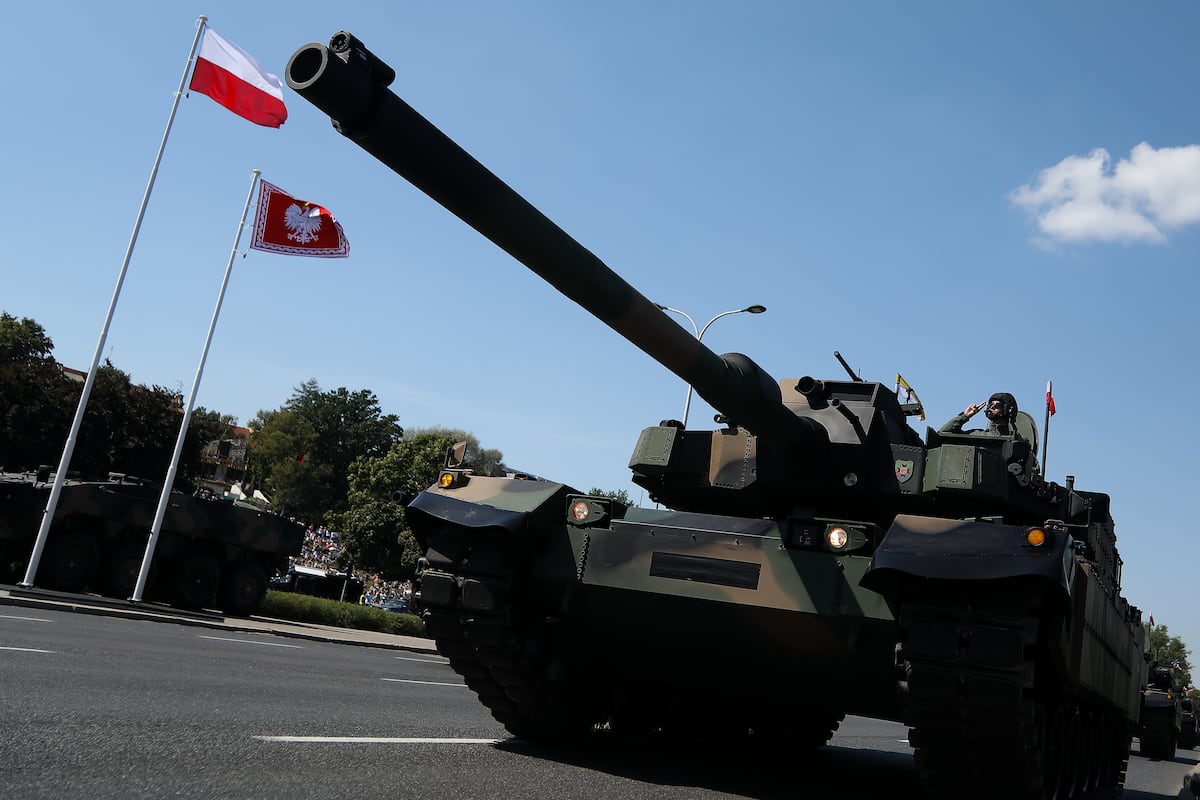
European NATO countries have significantly reduced their reliance on the United States for arms imports over the past year, according to a report by the Stockholm International Peace Research Institute (SIPRI). This shift reflects a growing trend where NATO members are increasingly sourcing military equipment from countries such as South Korea, France, and Israel.
SIPRI’s analysis indicates that the U.S. comprised 58% of major arms imports by European NATO states during the 2021-2025 period. This marks a decline from 64% in the previous five-year span, as detailed in a report published on March 9, 2024. The surge in defense spending following Russia’s invasion of Ukraine in 2022 has been a catalyst for this change, leading to a more than threefold increase in arms imports across the region.
European leaders are keen to diminish their dependency on U.S. military supplies, driven by concerns over the reliability of the American commitment to European defense. The report highlights that threats perceived from Russia, coupled with uncertainties regarding the U.S. defense posture under former President Donald Trump, have intensified demand for arms among European NATO members.
SIPRI notes that while European defense manufacturers have ramped up production, and EU investment has supported domestic arms initiatives, there remains continued reliance on U.S. imports. Notably, European nations have particularly sought U.S. combat aircraft and long-range air-defense systems in recent years.
By the end of 2025, twelve European countries had a total of 466 F-35 fighter jets either ordered or pre-selected, including 39 jets ordered within the last year. South Korea emerged as the second-largest supplier to European NATO members, capturing 8.6% of their arms imports, up from 6.5% the previous year. Israel’s share also increased significantly to 7.7% from 3.9%, while France’s share rose to 7.4% from 6.5%.
Global arms exports have surged at the fastest rate in a decade, spurred by Europe’s heightened defense needs in response to perceived threats. SIPRI reported a 9.2% increase in major arms transfers between states from the previous five-year period, the most substantial growth since 2011-2015. The ongoing military support to Ukraine has played a pivotal role in this trend, with many European nations also bolstering their own military capabilities.
The volume of U.S. arms shipments to Europe saw a dramatic rise of 217% during the 2021-2025 period compared to the prior five years, a figure that includes arms destined for Ukraine. SIPRI attributes this increase to various countries purchasing weapons for transfer to Ukrainian forces, including air-defense missiles and guided bombs.
Despite the shift in import sources, the U.S. remains the largest arms exporter globally, holding a 34% market share in 2021-2025, followed by France at 9.8%. Russia’s share has dwindled to 6.8%, a significant decrease from previous years.
For many nations, U.S. arms offer advanced capabilities and a strategic avenue to foster relations with the United States, while the U.S. views these exports as a means to reinforce its foreign policy and bolster its defense industry. As the global arms landscape evolves, Germany has ascended to become the world’s fourth-largest arms exporter, with 24% of its exports directed to Ukraine. Italy has also risen in rankings, now sixth, with 59% of its arms exports going to the Middle East.
By the end of 2025, the U.S. had outstanding orders for 936 combat aircraft, followed by France with over 180 aircraft in its order book. The data suggests a potential shift in the global arms export landscape in the coming years, with nations like Germany and Israel also showing significant orders for advanced military systems.
As global arms dynamics shift, the implications of these trends will continue to influence defense strategies and military readiness in Europe and beyond, particularly in light of ongoing conflicts and emerging geopolitical tensions.