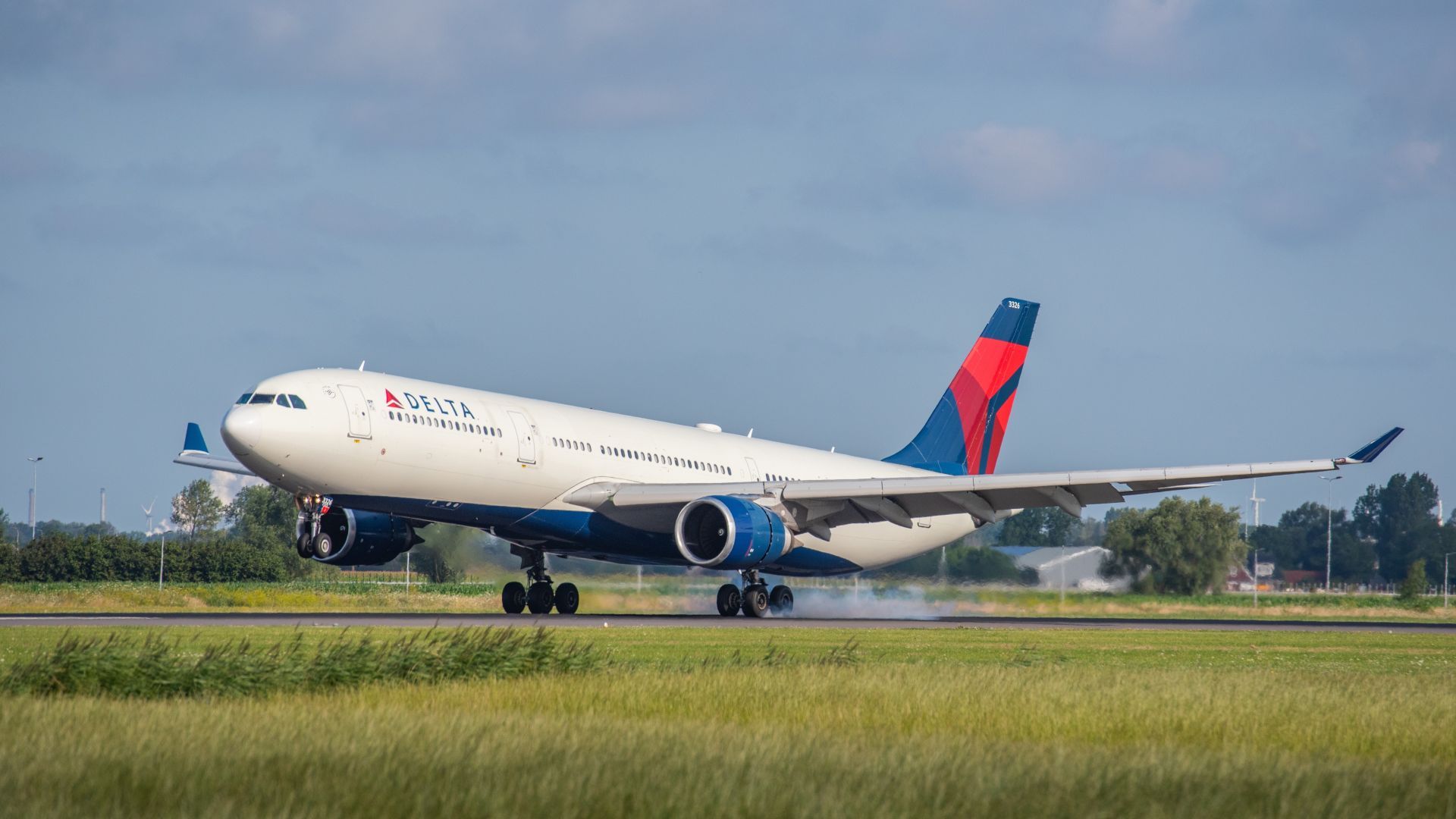
A Delta Air Lines flight was forced to divert to Dallas on November 28, 2025, due to a technical issue involving smoke indications on board. The flight, designated DL837, was traveling from Hartsfield-Jackson Atlanta International Airport to Honolulu Daniel K. Inouye International Airport when the Airbus A330-300 encountered a malfunction related to a floor panel heater unit.
The aircraft, registration number N820NW, was cruising at an altitude of 34,000 feet when the crew received the smoke alert approximately one hour into the flight. Following standard safety protocols, the pilots donned oxygen masks and decided to divert to Dallas/Fort Worth International Airport (DFW), where the plane safely landed and taxied to Gate E15 under its own power.
Upon arrival, emergency services met the aircraft, and Delta mechanics conducted an inspection. According to a statement from Delta Air Lines, “Due to a mechanical issue, Delta flight 837 from Atlanta (ATL) to Honolulu (HNL) diverted to Dallas Fort-Worth (DFW), following all standard procedures and landing safely without incident.” The airline emphasized that passenger safety remains its top priority.
Details of the Diversion
Flight DL837, typically a daily service, operates with a capacity of 282 passengers, divided among DeltaOne, Premium Select, and economy classes. On this occasion, the A330-300 required a crew of three pilots. The flight departed Atlanta at 10:10 AM, just 16 minutes behind schedule.
Once on the ground at DFW, Delta’s technical team quickly resolved the issue, allowing passengers to reboard the aircraft approximately two hours after landing. The plane resumed its journey to Honolulu, taking off from Dallas at around 1:36 PM. The flight from DFW to HNL lasted approximately seven hours and 45 minutes, culminating in a landing at 5:56 PM, which resulted in a total delay of two hours and 55 minutes.
Despite the diversion, the impact on passengers was relatively mild, as they were not rebooked onto other flights. This decision may have been influenced by the logistical challenges of accommodating a large number of travelers on alternative routes, as Dallas serves primarily as a hub for Delta rather than a primary destination. Following the completion of repairs, N820NW continued its operations without further incident.
Recent Mechanical Challenges in Aviation
The incident involving DL837 is part of a broader context of mechanical issues affecting airlines in the United States. For example, on November 26, 2025, an American Eagle Bombardier CRJ-900 experienced smoke in the cabin while taxiing at Philadelphia International Airport, leading to an evacuation and rebooking of passengers. Additionally, on November 19, a Delta Air Lines Boeing 767-300ER had to divert to Los Angeles due to oil loss in its engine during a flight from Honolulu to Salt Lake City.
Although major carriers like Delta Air Lines and American Airlines maintain rigorous maintenance standards, the complexity of modern aircraft means that mechanical failures can still occur unexpectedly. Procedures are in place to mitigate risks associated with such failures, ensuring passenger safety during flight operations.
In summary, while Delta Air Lines faced a diversion of flight DL837, the situation was handled effectively, with minimal disruption to passengers. The aircraft was repaired and continued its journey to Hawaii, demonstrating the airline’s commitment to safety and operational efficiency.