Cate Blanchett unveiled the second round of the Displacement Film Fund at the International Film Festival Rotterdam (IFFR) on March 15, 2024. This initiative, which aims to support filmmakers from conflict-affected regions, spotlighted five world premieres of short films created by directors from Iran, Syria, Afghanistan, Somalia, and Ukraine. Each filmmaker received a grant of €100,000 (approximately $120,000) to bring their unique stories to life.
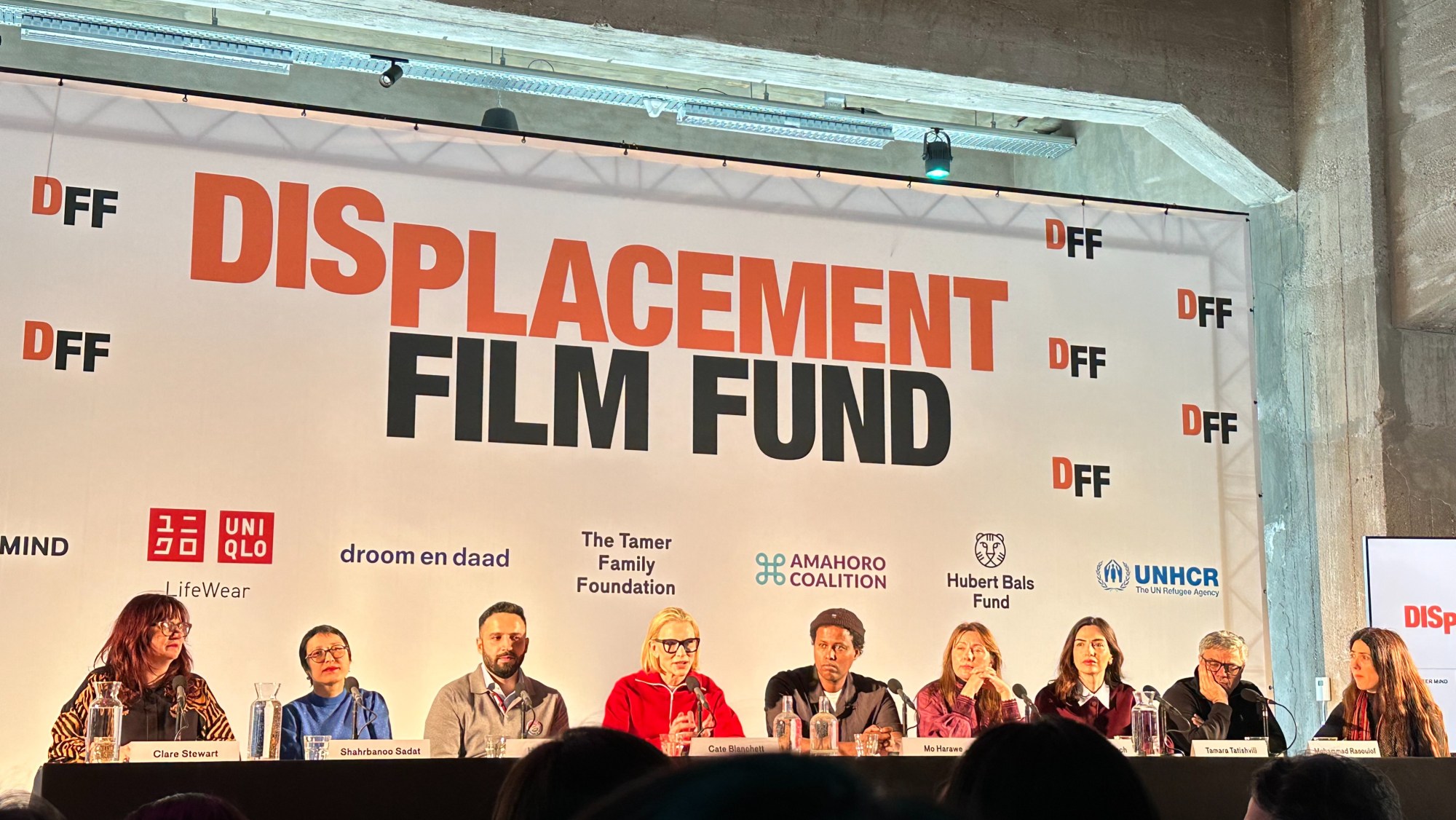
During a press conference held in Rotterdam, Blanchett joined acclaimed directors including Mohammad Rasoulof from Iran, Maryna Er Gorbach from Ukraine, Mo Harawe from Somalia, Shahrbanoo Sadat from Afghanistan, and Hasan Kattan from Syria. The discussions focused on the significance of their films and the broader goals of the fund, which is strategically partnered with the United Nations High Commissioner for Refugees (UNHCR).
New Grants and Support for Displaced Filmmakers
The launch of the second round of the Displacement Film Fund was announced during the event, with the Amahoro Coalition, Master Mind, the Tamer Family Foundation, and UNIQLO continuing as founding partners. The SP Lohia Foundation has joined as a new major partner, contributing to the initiative’s expansion. Blanchett described the fund as “a passion project,” emphasizing the diversity and individuality of the films presented.
“The experience of being displaced is not monolithic,” Blanchett stated. “There are commonalities and themes that emerge, but they’re wildly different, and each film is so distinct and comes from the inner being of all of these filmmakers.” She highlighted the importance of showcasing multiple perspectives, particularly in today’s world, where she feels truth is often obscured.
Blanchett also pointed to the films’ potential to challenge “stigmas” and “misunderstandings” surrounding displacement in a time marked by conflict and violence. She expressed concern about how society is becoming increasingly detached from our shared humanity.
Looking Ahead: Distribution and Audience Engagement
As the event concluded, Blanchett called for “courageous distributors” to step forward and support the filmmakers. She believes that audiences are eager for the kind of cinematic experiences these films offer. “There’s been so much desire to see these films,” she remarked, noting the disconnect between public interest and prevailing negative narratives surrounding migration and displacement.
The press event was hosted at the Fenix Museum of Migration, an art museum dedicated to human migration, underscoring the thematic relevance of the films. Blanchett asserted the need to harness the momentum gained from the fund’s initial grant cycle to secure distribution opportunities for the filmmakers.
In a broader context, the IFFR began with a call to protect artistic freedom, voiced by festival director Vanja Kaludjercic. She highlighted cinema as a unifying force during turbulent times, echoing Blanchett’s sentiments about the crucial role of storytelling in fostering understanding and community.
The Displacement Film Fund not only aims to support filmmakers but also seeks to facilitate a dialogue around the complex realities of displacement, ensuring that diverse voices are heard and recognized in the global narrative. As new projects take shape, the anticipation for these films continues to grow, marking a significant step forward in cinema’s engagement with pressing humanitarian issues.