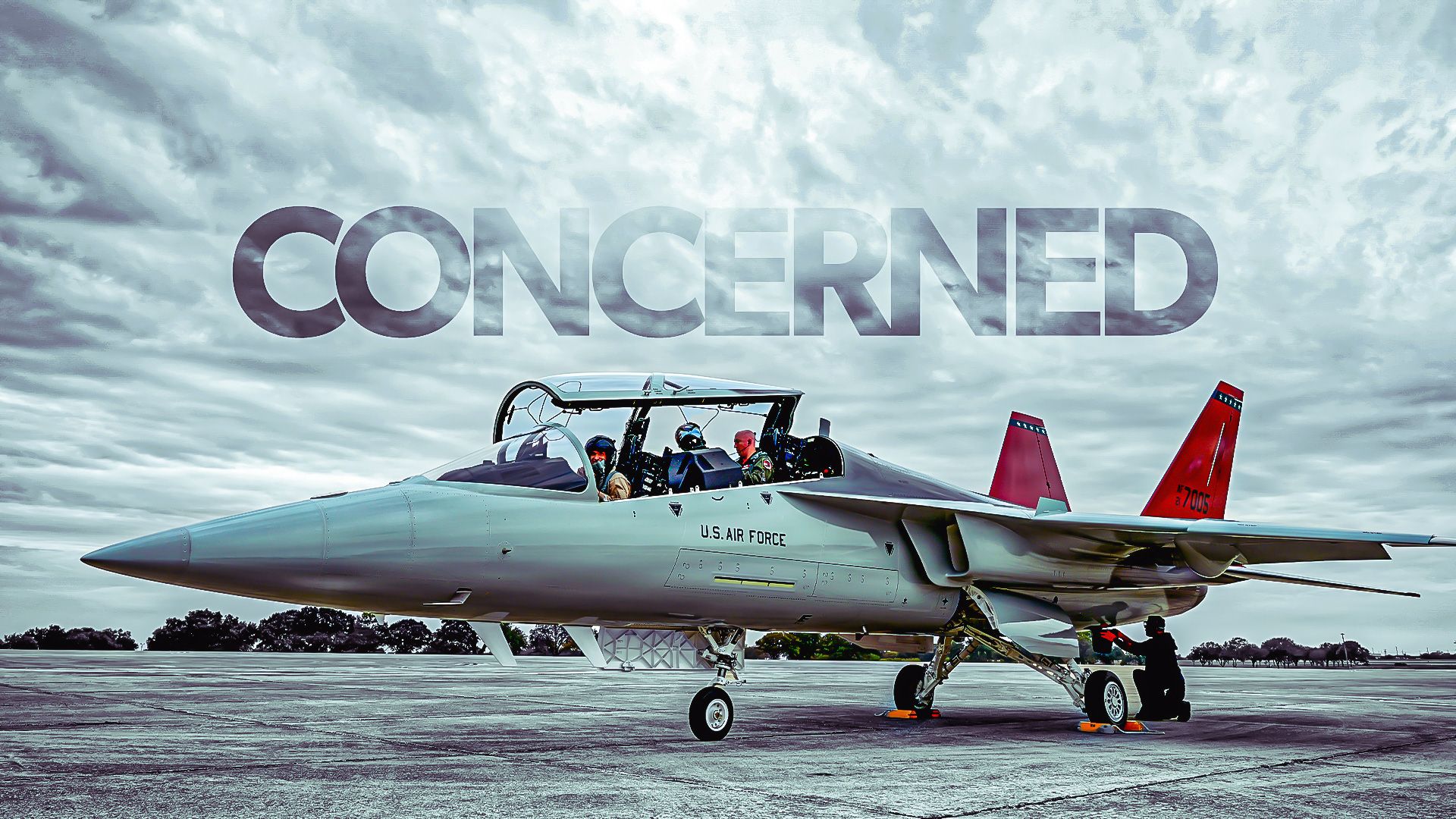
The U.S. Air Force’s pursuit of a next-generation trainer aircraft, the Boeing T-7A Red Hawk, has encountered significant obstacles, threatening the modernization of its pilot training system. Initially unveiled as a solution to replace the aging Northrop T-38 Talon, which has been in service since 1959, the T-7A was designed to provide a digital training platform for future pilots. However, as the program progresses, concerns over cost, engineering delays, and regulatory compliance have raised alarms within the Air Force.
The Northrop T-38 Talon has served as a primary trainer for over six decades, but it lacks the advanced capabilities needed to prepare pilots for modern combat aircraft such as the Lockheed Martin F-35 Lightning II. The T-7A was selected in 2018 to bridge this gap, aiming to enhance pilot training in high-G maneuvers and tactical cognition in complex environments. Yet, the structural integrity of the program is now under scrutiny, as any instability could have far-reaching impacts on pilot production and overall force readiness.
Engineering Challenges and Financial Strain
The T-7A program has faced numerous engineering challenges that have resulted in delays and increased costs. The aircraft, developed using advanced digital engineering methods, initially promised to streamline production and minimize risks. However, real-world testing exposed several issues, including the need for structural reinforcements due to supplier quality problems, complications with the escape system design, and software integration challenges. These hurdles have pushed the timeline for initial operational capability to 2027, a significant delay from earlier projections.
Financially, the T-7A’s development has become a burden for Boeing, which has reportedly absorbed over $2 billion in losses associated with the aircraft’s engineering and production challenges. As the program approaches Milestone C, the acquisition checkpoint for transitioning to full-rate production, the Air Force is reassessing its cost structure and planning for sustainment. This financial scrutiny is particularly critical given the Air Force’s simultaneous commitments to other modernization efforts, including the Northrop Grumman B-21 Raider and ongoing F-35 procurement.
The program’s fixed-price development contract, valued at approximately $9.2 billion, was intended to mitigate unexpected cost overruns. However, the current financial pressures may lead to slower deliveries and constrained upgrade pathways, further complicating pilot production capacity.
Training Doctrine and Environmental Compliance
The T-7A’s role extends beyond mere aircraft specifications; it represents a fundamental shift in pilot training doctrine. As air combat has evolved into a more software-defined environment, the demands placed on pilots have changed. The T-7A is equipped with an embedded training system designed to simulate complex combat scenarios, which is central to its value proposition. If the simulation capabilities fall short, training quality may suffer, potentially creating a disparity between training and actual combat readiness.
Additionally, the introduction of the T-7A is subject to compliance with the National Environmental Policy Act (NEPA). This requires the completion of Environmental Impact Statements (EIS) before new aircraft can be operational. The T-7A is set to be introduced at several major bases, including Joint Base San Antonio and Columbus Air Force Base. While some bases have completed their environmental reviews, others are still navigating the regulatory process, which can affect the timeline for implementation.
The operational readiness of the T-7A is not just about the aircraft itself; it also hinges upon how quickly the necessary infrastructure and regulatory approvals can be aligned. Delays in this area could exacerbate the existing pilot production challenges, as the aging T-38 fleet becomes increasingly costly and difficult to maintain.
Ultimately, the T-7A Red Hawk is positioned as a crucial element in the future of U.S. Air Force pilot training. However, the convergence of engineering setbacks, financial pressures, evolving training needs, and regulatory complexities poses significant challenges. As the Air Force aims to modernize its pilot training pipeline, ensuring the successful integration of the T-7A will be vital to maintaining readiness for future combat operations.