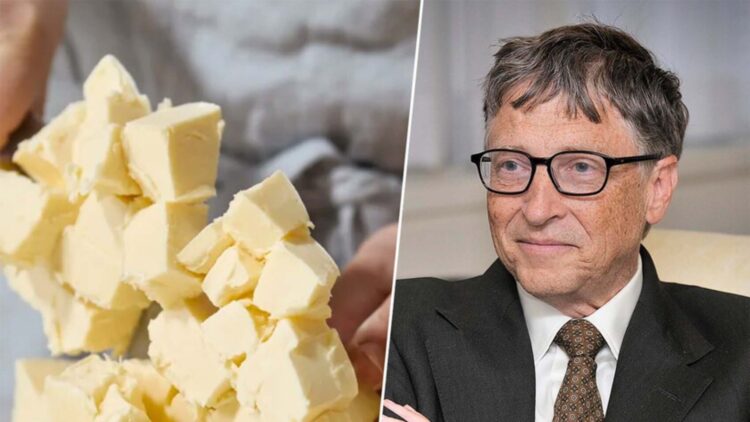
A groundbreaking innovation in food production has emerged, with the company Savor, supported by Orca Sciences and backed by Bill Gates, unveiling a method for creating butter without traditional farming or greenhouse gas emissions. This revolutionary butter, which is claimed to taste identical to conventional varieties, represents a significant leap towards sustainable food production.
Transforming Food Production
The innovative process developed by Savor leverages advanced biochemical techniques to convert carbon dioxide from the atmosphere and hydrogen extracted from water into edible fats. This method yields a product with a molecular structure that mirrors that of traditional butter but eliminates the need for agricultural land and livestock, particularly cows. According to a study published in the journal Nature Sustainability, researchers at the University of California, Irvine found that this technique produces less than one-third of the emissions associated with conventional agricultural practices.
Lead author of the study, Professor Steven Davis, emphasized the environmental benefits of this new approach, stating, “The synthesis of food without agricultural raw materials could prevent enormous amounts of emissions and protect the planet’s biodiverse lands.” He highlights that this method could alleviate the competition between ecosystems and agriculture, paving the way for a future where food production is no longer dependent on climate conditions, soil quality, or animal husbandry.
A Sustainable Vision for the Future
Bill Gates, a prominent advocate for sustainable technologies, shared insights on his blog regarding the benefits of this new butter. He noted that it “does not release greenhouse gases and uses less than one-thousandth of the water required by traditional agriculture.” Gates described the production method as “sustainable, scalable, and delicious,” asserting that its taste is comparable to that of conventional butter due to its chemical identity.
While the current costs associated with this technology remain high, experts believe that as production scales up, it could become economically viable. Davis remarked, “The beauty of fats is that it’s all chemistry: they can be produced under high pressures and temperatures with great efficiency.” This potential for cost reduction could significantly impact global food production, leading to a more sustainable future.
In addition to butter, Savor is also working on creating lab-grown fats that mimic those found in meat, milk, and palm oil. The overarching goal is to realize a vision of “farm-free” food, generated through clean chemistry and scientific precision. Should these initiatives succeed, the implications for environmental conservation and the global food industry could be profound.
As society grapples with the challenges of climate change and food security, innovations like Savor’s air-based butter offer a glimpse into a future where food can be produced sustainably, without the detrimental impacts of traditional agriculture. With the backing of influential figures like Gates, this venture could redefine the landscape of food production in the years to come.