Bac Ninh, a city in northern Vietnam, is undergoing a significant transformation as it has become a focal point for foreign investment, particularly following the relocation of factories from China. This shift, driven in part by tariff increases imposed during Donald Trump’s presidency, has positioned Bac Ninh as a key player in the global manufacturing landscape.
Once celebrated for its rice fields and traditional music, Bac Ninh has become one of Vietnam’s busiest industrial zones. The influx of foreign investment has surged, particularly from South Korean and Japanese companies, as they seek to capitalize on Vietnam’s rising status as a manufacturing hub. Notably, in 2008, Samsung established its first phone factory in the region, making Vietnam its largest offshore manufacturing base. This trend has now expanded to include numerous Chinese companies diversifying their operations to avoid U.S. tariffs and trade restrictions.
However, Bac Ninh’s rapid rise is not without challenges. Rising labor costs and worker shortages are beginning to expose the limitations of this economic boom. According to Peng, an employee at a telecoms equipment company that relocated from Shenzhen, “It is becoming difficult to recruit workers,” highlighting a significant shift in the labor market. Labor costs have reportedly surged by 10% to 15% since 2024, with expectations for further increases.
Vietnam’s leaders are responding to these challenges by enhancing infrastructure. A new highway connecting Bac Ninh to the Chinese border has significantly reduced travel time, while plans for a railway to connect Hanoi with Haiphong, the country’s largest seaport, are also underway. On December 19, 2023, Bac Ninh commenced the expansion of an industrial zone focused on high-tech manufacturing, which includes sectors like electronics, pharmaceuticals, and clean energy.
The competition for investment is intensifying as other Southeast Asian countries, including Indonesia and the Philippines, seek to attract foreign companies. To bolster its standing, Vietnam has launched a series of major projects, totaling over $129 billion, ahead of a pivotal National Party Congress in January 2024. This demonstrates the country’s commitment to securing its economic future.
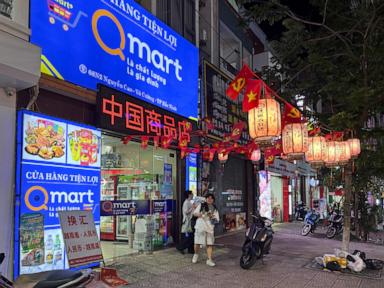
In Bac Ninh’s downtown, signs in Chinese reflect the increasing presence of Chinese firms, while convenience stores brandishing names like Tmall, after Alibaba’s flagship marketplace, cater to the growing investor community. Language schools teaching Chinese to locals have also emerged, indicating a shift towards greater integration with the Chinese market.
Despite these advances, Vietnam is too small to completely replace China as the world’s manufacturing powerhouse, given that China’s economy is approximately 40 times larger. Jacob Rothman, co-founder and CEO of Velong Enterprises, noted that China’s well-established manufacturing ecosystem, backed by decades of government support and investment, is not easily replicated elsewhere.
Brian Bourke, global chief commercial officer at SEKO Logistics, emphasized that while many factories are relocating to Vietnam, the country still lags in infrastructure and logistical capabilities compared to China. As costs rise, companies are incentivizing potential workers with higher wages, bonuses, and even incentives like a box of instant noodles on their first day, as reported by state media.
Despite the challenges, Vietnam has benefitted significantly from the trade tensions between the United States and China. In 2024, Vietnam recorded a trade surplus of $123.5 billion with the U.S., making it a vital partner for American businesses. The ongoing discussions between President Trump and Chinese leader Xi Jinping regarding trade tariffs have brought a degree of uncertainty, prompting companies to diversify their manufacturing locations.
While larger corporations can pivot their production lines, smaller companies face difficulties in adapting to new environments, particularly with expensive equipment. Rothman remarked that the “race to move outside of China is still happening, and it’s accelerating.”
Vietnam continues to attract substantial foreign investment, with cumulative foreign investment reaching $28.5 billion as of September 2023, reflecting a 15% increase from the previous year. However, scrutiny over Vietnam’s role in potential tariff evasion is causing some manufacturers to hedge their bets, with some opting to relocate portions of their production to countries like India.
To secure its economic future, Vietnam aims to transition from low-cost assembly to higher-value manufacturing, such as electronics and clean energy equipment. The government is offering incentives, including tax breaks on imported machinery, to modernize factory operations. Currently, about a third of manufacturing relies on non-automated equipment, with only 10% utilizing robotics.
Vietnam’s strategy also includes diversifying its export markets beyond the U.S., targeting the Middle East, Latin America, Africa, and India. The government has tasked overseas trade offices with promoting Vietnamese products and sharing market intelligence.
As Bac Ninh and Vietnam navigate this evolving landscape, Prime Minister Pham Minh Chinh has framed the stakes clearly: the nation must innovate and expand its reach to secure its place in the global economy. As the competition for manufacturing dominance intensifies, the path forward remains uncertain yet filled with potential.