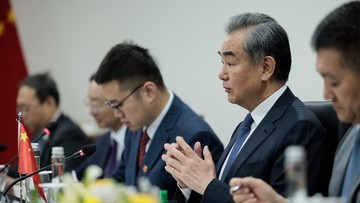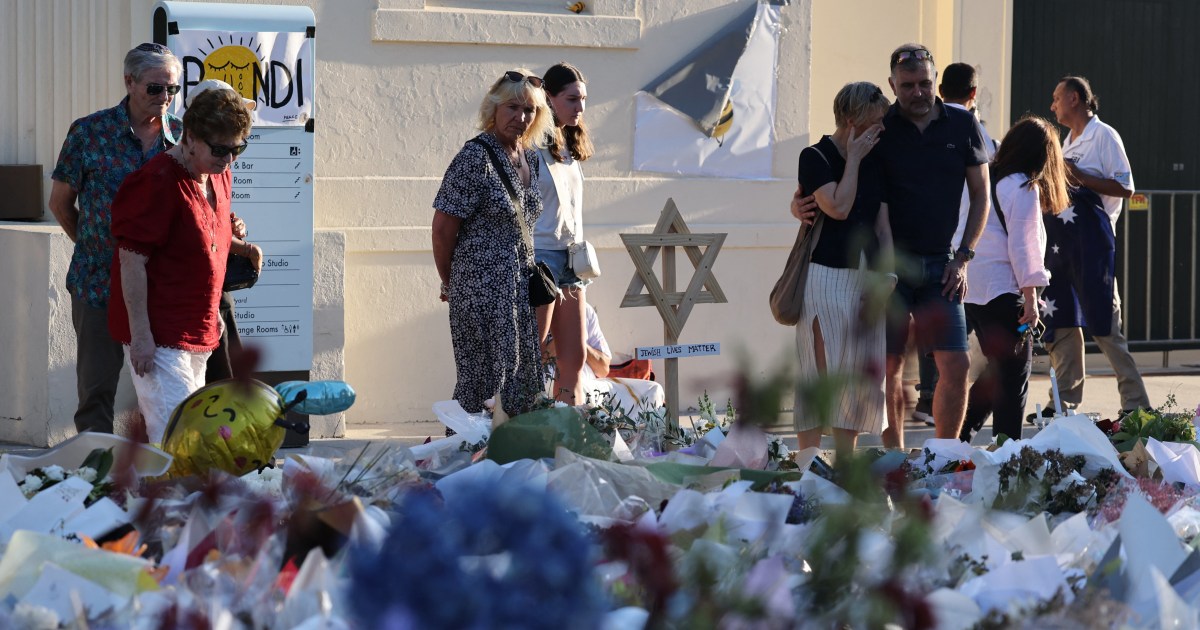
Authorities in both Australia and the United Kingdom are implementing stricter regulations on pro-Palestinian protests following the Bondi Beach attack, which resulted in the deaths of 15 people at a Jewish gathering. In New South Wales, where the attack occurred during a Hanukkah celebration, police have been granted enhanced powers to disperse unauthorized protests. This move coincides with proposed new hate speech laws aimed at prohibiting slogans such as “globalize the intifada.”
The situation escalated after two individuals were arrested in London for allegedly chanting the term “intifada” during a pro-Palestinian demonstration. The recent actions reflect a significant shift in law enforcement strategies in response to rising tensions surrounding the Israeli-Palestinian conflict. Critics express concern that these measures may infringe on civil liberties and freedom of expression.
The term “intifada,” meaning “uprising” in Arabic, references two major Palestinian uprisings against Israeli occupation, known for both violent and nonviolent actions. Supporters of the phrase “globalize the intifada” assert it symbolizes international solidarity against Israeli policies. Conversely, Israeli officials and various Jewish organizations contend that the term incites violence and fosters antisemitism, leading to contentious policing decisions.
Chris Minns, the Premier of New South Wales, noted that the implications of pro-Palestinian demonstrations were evident in the Bondi attack, which was officially deemed a terrorist act. He announced reforms that would empower his government to prohibit unauthorized protests for three months. “When you see people marching and showing violent bloody images, it’s unleashing something in our community that the organizers of the protest can’t contain,” he stated.
In conjunction with these measures, Minns revealed plans to introduce further restrictions on hate speech, specifically targeting the “globalize the intifada” slogan and other expressions deemed hateful. This decision aligns with similar actions taken by the London Metropolitan Police and Greater Manchester Police, who have indicated they will arrest individuals using the controversial phrase during protests.
The Bondi Beach attack, which claimed the lives of a rabbi and a Holocaust survivor, was intended to target the Jewish community directly. Following the incident, law enforcement agencies in the U.K. issued a joint statement underscoring the altered context of protests in light of violent acts, asserting that “words have meaning and consequence.”
In the U.K., the police have already arrested hundreds for demonstrating in support of Palestine Action, a group recently banned under British terrorism laws for its actions against military facilities. The British government has suggested, without providing evidence, that this group has shown a willingness to use violence to achieve its aims.
While many Jewish organizations have welcomed the recent changes in both Australia and the U.K., some critics argue that these measures may blur the lines between political expression and criminal conduct. The organization Index on Censorship, which advocates for free speech, asserted that law enforcement must demonstrate the inherent harm of the phrase “globalize the intifada.”
Marji Mansfield, a 69-year-old retired financial consultant, expressed concern over the criminalization of political speech. She has faced charges for supporting Palestine Action and denied that the slogan incites violence. “It seems bizarre that our government and the government in Australia are seeking to criminalize words that are saying, ‘stop these illegal international crimes against humanity,’” she stated.
The U.N. High Commissioner for Human Rights, Volker Türk, highlighted potential conflicts between U.K. measures limiting pro-Palestinian protests and international human rights obligations. Mark Stephens, co-chair of the International Bar Association’s Human Rights Institute, emphasized the need for clarity in defining incitement to violence versus legitimate political discourse, especially in a volatile climate.
As authorities grapple with these complexities, the challenge remains to balance public safety with the preservation of free speech. “If you can’t say ‘globalize the intifada,’ someone will come up with something else which isn’t illegal, and that becomes the new phrase du jour,” Stephens observed.
In Australia, the debate continues over the extent to which authorities can regulate political expression. David Ossip, president of the New South Wales Jewish Board of Deputies, claimed that calls for the intifada to be globalized promote violence against Jews. Conversely, the Jewish Council of Australia, a progressive group advocating for Palestinian rights, cautioned that targeting universities and protest movements could lead to further demonization.
Authorities in New South Wales have charged Naveed Akram, the surviving suspect in the Bondi Beach attack, with 59 offenses, including terrorism and 15 counts of murder. Akram, 24, was charged after regaining consciousness in a Sydney hospital following a police shooting. He is alleged to have carried out the attack alongside his father, Sajid Akram, aged 50.