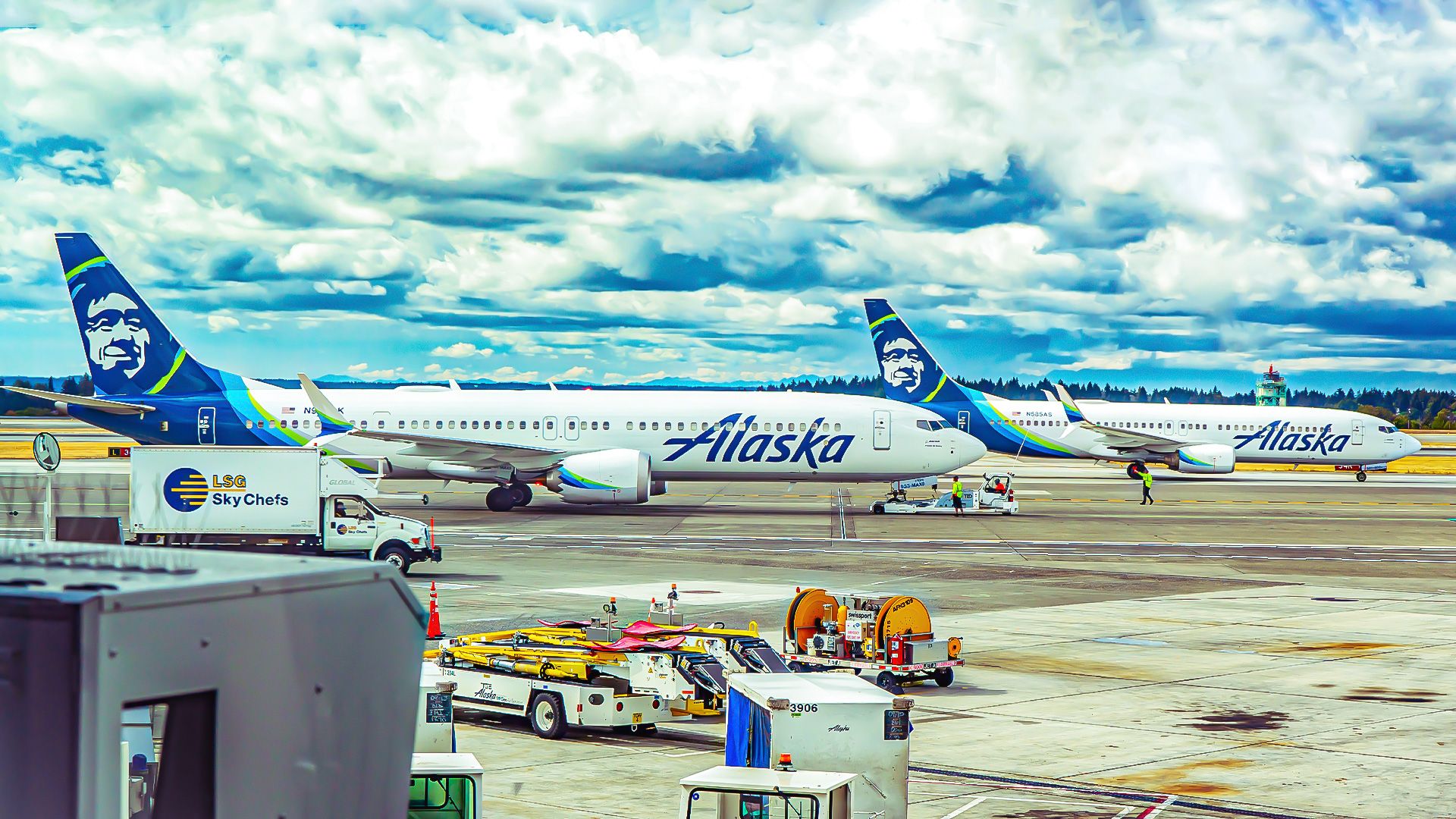
Alaska Airlines is exploring the possibility of painting some of its Boeing 737 MAX aircraft in Hawaiian Airlines’ livery following its acquisition of the Hawaiian carrier. This strategic move is part of Alaska Airlines’ commitment to maintaining Hawaiian as a distinct subsidiary while managing the unique operational challenges presented by their differing fleets and branding under a single operating certificate.
The integration of Hawaiian Airlines into Alaska Airlines introduces several complexities. Alaska Airlines primarily operates the Boeing 737 fleet, while Hawaiian Airlines utilizes a diverse array of aircraft, including the Airbus A321neo, A330, 717, and 787. As part of the merger, Alaska Airlines plans to refurbish Hawaiian’s Boeing 787-9 aircraft and has announced intentions to retain the A330 fleet, which is cost-effective for long-haul routes from Hawaii. However, the future of the A321neo fleet remains uncertain, prompting speculation about whether Alaska Airlines will repaint some of its 737s in Hawaiian colors to assume the operational role of these aircraft.
Fleet Strategy and Integration Challenges
Historically, Alaska Airlines has maintained an all-Boeing fleet since retiring its last McDonnell Douglas MD-83 in 2008. This has allowed the airline to streamline operations and training. Following the acquisition of Virgin America, Alaska briefly operated Airbus A320 family aircraft, but by 2023, it had phased out all Airbus models, reinstating a pure Boeing fleet.
The merger with Hawaiian Airlines complicates this strategy, particularly with Hawaiian’s A321neo fleet, which comprises only 18 aircraft. Alaska Airlines’ leadership has expressed concerns about the economic viability of maintaining such a small fleet, especially given its commitment to Boeing 737 operations. Shane Tackett, Alaska Airlines’ Chief Financial Officer, noted in December 2025 that the limited size of the A321neo fleet raises questions about its future in the airline’s operations.
The Airbus A321neo, while effective for certain routes, presents challenges due to its different engine type, the Pratt & Whitney PW1100G, which lacks commonality with the CFM LEAP-1B engines used on Alaska’s 737 MAX fleet. This discrepancy adds complexity to maintenance and operational efficiency, diminishing the likelihood of retaining the A321neo fleet unless Alaska can significantly expand its numbers.
Future Operations and Equipment Decisions
As Alaska Airlines moves forward, the integration of Hawaiian’s Boeing 787-9 orders into its fleet marks a significant shift. The airline has plans for a substantial expansion of long-haul flights from its hub at Seattle Tacoma International Airport, aiming to compete more effectively with Delta Air Lines. The existing A330-200 fleet will be refurbished, retaining its role in serving long-haul routes, while the fate of the A321neo fleet hangs in the balance.
The operational shifts also extend to Hawaiian’s Boeing 717 fleet, which currently handles interisland flights in Hawaii. Tackett indicated that Alaska is contemplating replacing the 717s with 737s, potentially creating a uniform fleet that could enhance operational efficiency.
For interisland operations, Alaska Airlines aims to streamline its fleet, possibly deploying 737 MAX aircraft for these shorter routes. This transition would make the A321neo fleet less relevant, as the 737 MAX could effectively serve the same markets. The airline’s commitment to a single type of narrow-body aircraft reinforces its strategy of minimizing costs and simplifying operations.
As Alaska Airlines navigates these complex decisions, the future of Hawaiian Airlines’ branding and fleet remains a focal point. While the allure of maintaining the A321neo fleet exists, financial and operational pressures will likely steer the airline toward a more cohesive fleet strategy centered around the Boeing 737 MAX.
In conclusion, Alaska Airlines’ acquisition of Hawaiian Airlines presents not only opportunities but also challenges in fleet management and branding. As the airline evaluates its operational strategies, the potential repainting of 737 MAX aircraft in Hawaiian livery symbolizes a commitment to integrating the two brands while focusing on cost-effective and efficient operations.