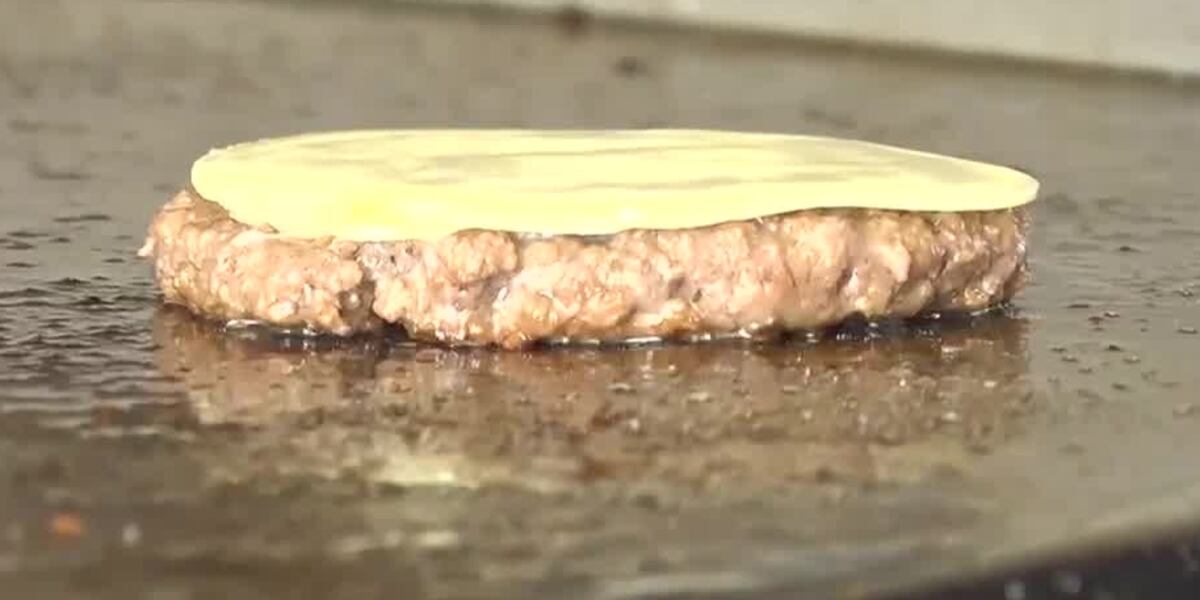
UPDATE: The University of Vermont (UVM) has officially launched its innovative “Better Burger,” now available at the Davis Center cafeteria. This new offering combines 70% locally sourced Vermont beef with 30% roasted mycelium, a sustainable mushroom root, in an effort to reduce the environmental impact of dining options for students.
UVM Executive Chef Dan Miele emphasized the importance of this initiative, stating, “They grow fast, they don’t require a lot, they just keep producing.” This shift aims to not only enhance sustainability but also to maintain the quality of food served. The “Better Burger” debuted in January 2026 and has quickly become the default choice at the cafeteria.
Chef Miele noted that the concept originated from training sessions at the Culinary Institute of America, where they discovered the company 50cut, which specializes in hybrid beef and mycelium patties. “When we saw this product, it was really important to still incorporate our local beef program into it,” he explained, leading to the unique ratio of beef to mycelium.
The “Better Burger” is not just about sustainability; it also boasts culinary benefits. “They tend to stay juicier for longer than a traditional beef patty,” Chef Miele added. UVM dining services employee David Workman confirmed the quality, stating, “When they feel medium, they’re actually done. They’re really very tender.”
Despite its introduction, the response from students has been mixed. According to Chef Miele, approximately 70% of sales have favored the “Better Burger,” indicating a significant acceptance among the student body. However, some students continue to request 100% ground beef options. UVM freshman Avery Schunk shared her experience, noting, “I don’t really know what beef tastes like, so for me there’s no impact.”
As the “Better Burger” continues to gain traction, UVM is focused on promoting sustainable practices while catering to diverse student preferences. The cafeteria remains committed to offering traditional beef options for those who prefer them, ensuring that all palates are accommodated.
This innovative approach not only highlights UVM’s commitment to sustainability but also serves as a potential model for other institutions looking to reduce their environmental footprints while providing quality dining options. The university is poised to monitor feedback and adjust offerings as necessary, making this a developing story worth watching.
Stay tuned for more updates on this exciting initiative.