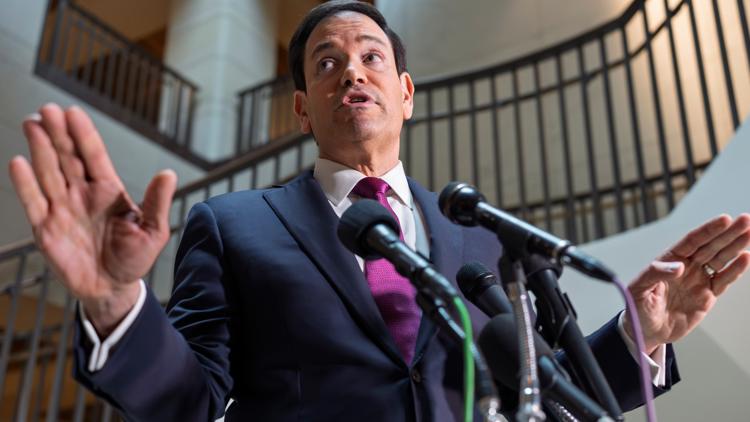
UPDATE: Tensions escalate at the U.S. Capitol as lawmakers demand immediate answers regarding the Trump administration’s strategy and exit plan in the ongoing conflict with Iran. Just hours ago, officials held closed-door briefings with all members of Congress, aiming to avert a critical vote on a war powers resolution that could limit Trump’s military actions against Iran.
The stakes are high as lawmakers express growing concerns over the **costs to American lives and dollars** amid a conflict that threatens to widen further in the Middle East. Secretary of State Marco Rubio defended the administration’s position, stating, “The president determined we were not going to get hit first. It’s that simple.” His comments come after a weekend airstrike that killed Iran’s Supreme Leader Ayatollah Ali Khamenei, stirring questions about U.S. involvement and objectives.
At least **six U.S. service members** have already lost their lives in the escalating conflict. The Trump administration has signaled a need for **$2 billion** in supplemental funding to continue military operations. This situation has led to a surge in calls within Congress for a war powers resolution, marking one of the most significant votes lawmakers can cast regarding military engagement.
Senate Democratic Leader Chuck Schumer voiced his apprehension about “mission creep” in a long-term war, urging caution as senators grilled officials during a morning Armed Services Committee hearing. Senators expressed frustration over Trump’s seemingly reactive decision-making, with Sen. Angus King labeling it “very disturbing” that U.S. military actions might be swayed by Israel’s Prime Minister Benjamin Netanyahu.
As the conflict unfolds, many lawmakers are questioning the rationale behind the strikes. Some senators, like Elizabeth Warren, challenge how this aligns with Trump’s “America First” promise, fearing that military engagement could lead to further troop deployments—something the nation has tried to avoid after decades of war in Iraq and Afghanistan.
The potential for a leadership vacuum in Iran raises alarms, as the death of Khamenei could spark unrest. Sen. Richard Blumenthal expressed his fears of “boots on the ground” becoming necessary, while Sen. Kirsten Gillibrand emphasized that Congress must define the country’s war powers.
On the Republican side, some leaders assert it is not America’s place to dictate Iran’s future. “That’s going to be largely up to the Iranian people,” stated Senate Majority Leader John Thune. Meanwhile, Sen. Tom Cotton drew parallels to the U.S. actions in Venezuela, suggesting that the aftermath of military strikes can lead to unpredictable leadership shifts.
Both the House and Senate are bracing for upcoming votes on war powers resolutions that will determine the extent of Trump’s military authority. Lawmakers are reminded that, according to the U.S. Constitution, it is Congress that holds the power to declare war, not the president alone.
As bipartisan discussions intensify, House Democratic Leader Hakeem Jeffries criticized the financial implications of the conflict, asking, “Why are we spending billions of dollars to bomb Iran?” Conversely, House Speaker Mike Johnson warned against the dangers of limiting the president’s military options during active combat.
The urgency of the situation cannot be understated as Congress prepares for decisive votes that will shape the future of U.S. military engagement in Iran. With the midterm elections approaching, every decision made now could have far-reaching implications for both American lives and foreign relations in a volatile region.
As the nation waits for further developments, the implications of these decisions will resonate deeply with the American public. Stay tuned for urgent updates as this story continues to unfold.