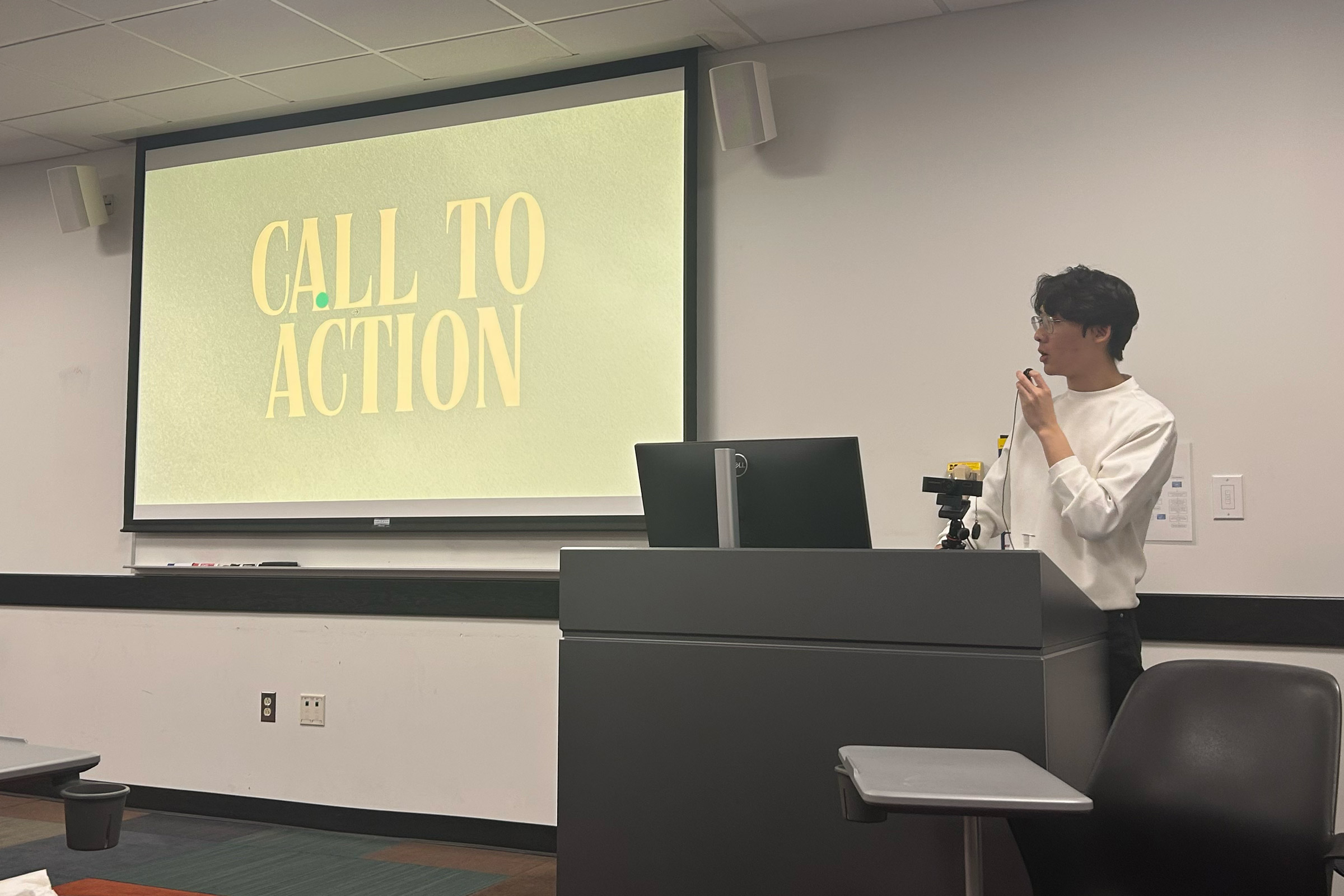
UPDATE: A critical town hall hosted by the United Asian American Organizations (UAAO) took place last night at the School of Social Work in Michigan, addressing the urgent impact of U.S. Immigration and Customs Enforcement (ICE) on Asian American communities. The event, which drew numerous students and community members, focused on mobilizing solidarity and action against increasing ICE enforcement.
The gathering commenced with alarming details about ICE’s expanding presence in Michigan and across the nation. Attendees were encouraged to connect with their own communities and recognize the pervasive threats of deportation and detention faced by many. “Think of how close you might be to someone who is in ICE detention,” urged Tyler Nguyen, a senior at the University of Michigan and UAAO board member. “These are important issues that directly affect our neighbors and loved ones.”
Nguyen emphasized the historical significance of the term “Asian American,” rooted in political activism from the 1960s and 1970s. He framed the discussion within a broader context of coalition-based activism, stating, “We are here to educate, represent, and address the issues that affect our communities.”
A particularly shocking moment of the town hall was the presentation of a case involving ChongLy “Scott” Thao, a Hmong American man detained by ICE in Minnesota earlier this year. Nguyen highlighted the indignity of Thao’s treatment, illustrating the reckless bias of ICE enforcement. “ChongLy was taken from his home without dignity and held for hours until they realized he was a U.S. citizen,” Nguyen noted, calling this incident a stark example of the escalating attacks on Asian communities.
The town hall aimed to draw parallels between current ICE practices and historical discriminatory policies, such as the internment of Japanese Americans during World War II. Nguyen reminded participants of the 1798 Alien Enemies Act, which allowed for the internment of Japanese Americans, calling for awareness and action against similar discriminatory practices today.
Following the presentation, attendees engaged in breakout discussions regarding the impact of ICE on Asian Americans in Michigan, including a recent ICE raid near a school in Ypsilanti. Conversations revealed a chilling reality: under recent immigration crackdowns, citizenship status does not guarantee safety from detainment.
Participants proposed various strategies for mobilization, including organizing fundraisers, tracking ICE activities through group chats, and contacting elected officials to amplify their voices. “We need to show up for ourselves and for others,” stated Angelica Garcia, a UAAO board member, during an interview. She highlighted the importance of making Asian American experiences visible in discussions about immigration enforcement.
LSA sophomore Paolo Gabriel Poquiz echoed similar sentiments, pointing out that the implications of ICE’s actions are often overlooked in broader narratives. “ICE was founded in the wake of the War on Terror, and it’s essential to understand how that history impacts us today.”
As the urgency around ICE’s enforcement grows, the UAAO event serves as a rallying cry for the Asian American community to come together, educate themselves, and take action. The conversation continues, with attendees determined to mobilize against the increasing threats posed by ICE.
Stay tuned for more updates on this developing story as the UAAO plans further actions to advocate for the rights and dignity of Asian American communities.