The United States Supreme Court issued a significant ruling on March 15, 2024, striking down several tariffs imposed by former President Donald Trump. This decision has highlighted a rift within the court, showcasing a division not only among justices but also reflecting broader political tensions in the country. The ruling was delivered with a 6-3 majority, featuring a surprising alignment of some conservative justices with their liberal counterparts.
The court’s decision centers on the legality of Trump’s tariffs, which he argued were necessary to combat a public health crisis caused by drug imports from countries like Canada, Mexico, and China. The administration contended that the International Emergency Economic Powers Act (IEEPA) provided the president with the authority to impose such tariffs. However, the plaintiffs in the case, small businesses Learning Resources and Hand2mind, challenged this interpretation, asserting that the IEEPA did not grant Trump the power to enact “reciprocal or drug trafficking tariffs.”
Chief Justice John Roberts, who authored the majority opinion, emphasized that tariffs are essentially taxes. He pointed to Article 1, Section 8 of the Constitution, which clearly states that only Congress has the authority to lay and collect taxes. This interpretation aligns with the court’s “major questions doctrine,” which mandates that Congress must explicitly delegate significant powers to the executive branch.
In a pointed remark, Roberts noted that historically, “No president has invoked the statute to impose any tariffs — let alone tariffs of this magnitude and scope.” His commitment to constitutional principles was clear, reaffirming the judiciary’s role in interpreting the law.
While the ruling marked a notable departure from the court’s previous pro-Trump decisions, it serves as a reminder of the ongoing struggle between constitutional democracy and emerging authoritarianism. The dissenting justices, Samuel Alito, Brett Kavanaugh, and Clarence Thomas, appeared to lean towards a more expansive interpretation of executive power.
Kavanaugh even suggested potential pathways for Trump to circumvent the court’s decision, indicating that it might not significantly restrict presidential tariff authority in the future. Thomas, in his dissent, made a historical argument for the president’s prerogative to impose duties, likening it to the rights once held by the British monarch.
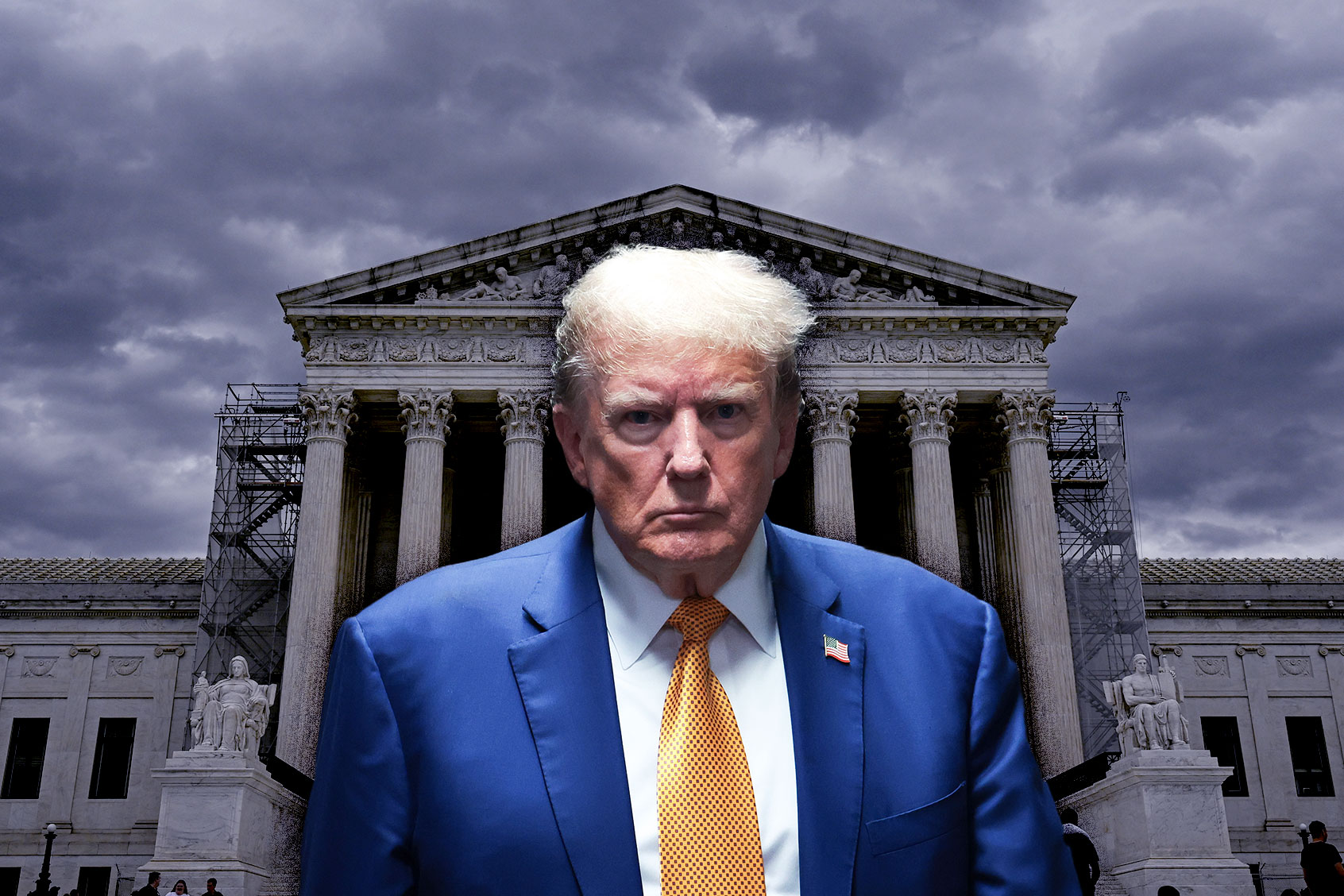
Trump’s immediate response to the ruling was one of indignation. He described the decision as a “disgrace” and criticized the justices for defying his authority. In remarks to the press, he stated that alternatives would be sought to replace the tariffs that the court rejected, asserting that his administration would continue to leverage trade policies for economic strength.
The former president expressed his belief that the court’s ruling inadvertently strengthened presidential power regarding tariffs, claiming, “In order to protect our country, a president can actually charge more tariffs than I was charging in the past.” He announced plans for a new round of tariffs, set to begin on February 24, 2025, asserting that he had the authority to act under the 1974 Trade Act.
Trump’s fondness for tariffs has been a longstanding aspect of his economic strategy, utilizing them as tools for both revenue generation and economic leverage. Critics argue that his approach to tariffs goes beyond fiscal policy, reflecting a desire for concentrated power.
As the political landscape continues to evolve, the Supreme Court’s ruling represents more than a legal decision; it highlights the ongoing tensions between democratic principles and authoritarian impulses in American governance. The outcome of this case serves as a pivotal moment in the broader discourse on executive power and the role of the judiciary in safeguarding constitutional rights.
For now, the court’s decision has provided a temporary reprieve from the encroachment of authoritarianism, but the struggle for the soul of American democracy remains far from resolved.